Hands-on with Pax Autocratica
Genres? Yeah, Let’s Do All of Them!

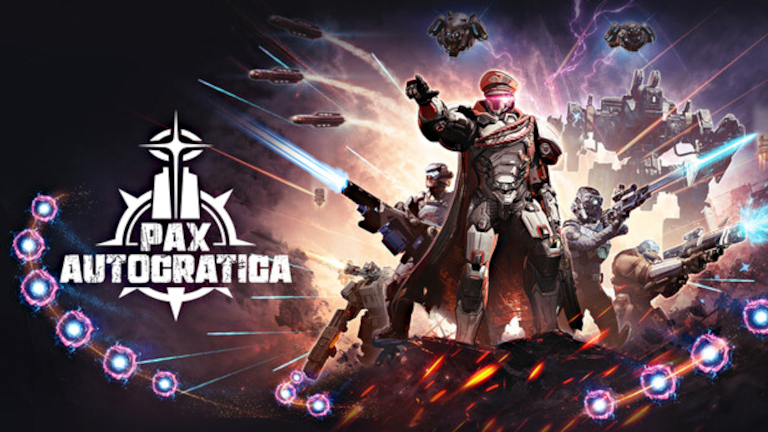
When a press release describes a game as a “satirical colony sim FPS roguelite,” I naturally get a bit skeptical. That’s three full genres and a tone crammed into one bowl of word soup. History isn’t exactly littered with examples of small teams pulling off that kind of mashup cleanly. Sure, there are outliers like No Man’s Sky, but most developers don’t have the luxury of working on revisions for nearly a decade.
As such, when I sat down with the Early Access build of Los Angeles-based developer Multiverse’s Pax Autocratica, I expected to spend most of my time discovering which of those systems got the shaft. Typically, this kind of wild ambition can lead to a game that lacks unity and cohesion. Instead, I came away impressed by how much of this totalitarian colony sim actually works. Yes, there are some issues with load times. But Multiverse might just make good on its lofty aspirations, since Autocratica is already quite fun.
Join the Regime, As if You Had a Choice
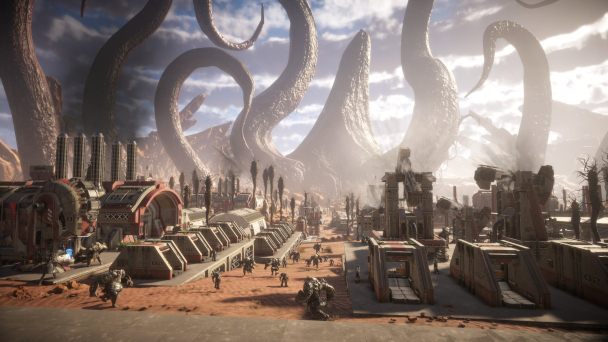
You play as a leader of Auroria, an interstellar state ruled by the “Father of the People.” This kind of framing device will be familiar to Elder Scrolls fans, as you find yourself strapped into an interrogation chair. As the only survivor of an encounter with a hivemind faction called the Urslan, the questioning gets interrupted by an invasion. From there, you’re sent into the Tyris System to reclaim territories across four sectors (one locked until full release), where you’re thrust into Autocratica‘s colony management sim and a first-person shooter.
Colonization is one of the game’s more surprising elements. You’re not required to micromanage gathering or construction yourself. Instead, you can assign troops to mining, crafting, or research based on their skills. Remarkably, they can coach each other and improve, but there’s a real chance the mentoring can fail. One thing worth mentioning: the auto-assignment system doesn’t always account for a solider’s actual stats, so you may find a research-minded conscript stuck swinging a pick-axe unless you step in and manually reassign them.
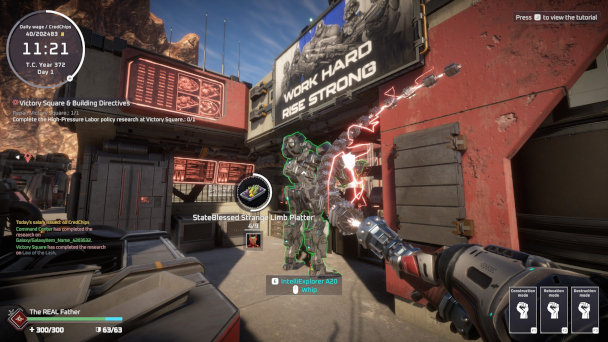
Construction uses a top-down “god mode” perspective provided by your jetpack. Here, you’ll issue orders and any free soldier will start to pitch in, and you can even assist if you want to hurry things along. But dive in a bit deeper if you want to optimize, sending your best worker in to make your operation run as efficiently as possible. Facilities range well beyond the basics, too. Over the course of a run you’ll end up constructing everything from kitchens and jails to shipyards and dedicated soldier-training nodes, each upgradeable multiple times for better gear, more prisoner capacity, and stronger buffs. Underneath all of it is a set of citizen stats: Fear, Happiness, Hunger, and Loyalty. Keep those in balance and your colony sticks with you. Let them slide and you’ll have a rebellion problem on your hands rather than a production one.
Space Is Big. So Are the Stakes.
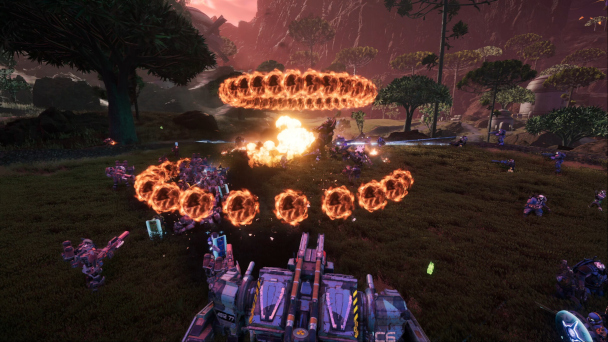
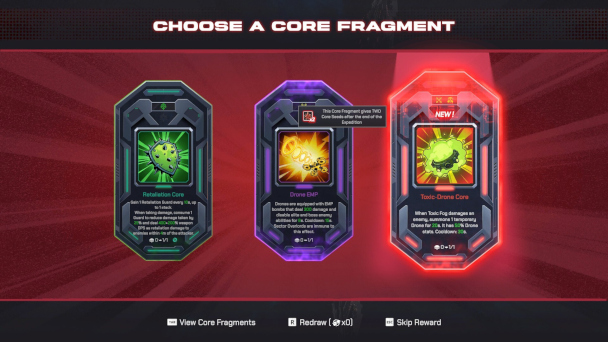
When you’re ready to fight, you’ll assemble a fleet to explore areas of interest in each space sector. Your expedition consists of your flagship plus any additional ships capable of carrying more troops. You’ll find everything from harvestable resource nodes to enemy-held positions you need to clear in first-person combat, including elite enemies and outright Sector Overlords who aren’t shy about flooding the screen with bullets, missiles, and drones. There’s a nice sense of tension built into these encounters: enemies will grow stronger the longer the fight lasts, but ending your expedition resets both the enemy’s strength and your progress. Once you reach the 100% threshold, you’ll unlock a decisive showdown complete with additional NPC allies. At present, the action isn’t quite strong or sophisticated enough to work as a standalone experience, but it’s a welcome break from your other duties.
While taking cover and gunning down legions of enemies is fun and surprisingly polished, prisoner management is where Autocratica‘s satirical tone takes center stage. By capturing an enemy rather than killing them, you can bring them back to base for some slightly uncomfortable options. Interrogation and indoctrination demand a bit of torture and carry a chance of killing the prisoner, while putting them in the Soldier Training Center lets you sacrifice them for experience. Alternatively, you can execute them outright if you need to tweak your own troops’ morale or fear levels. Yes, it’s dark, but it’s also well done, feeding back into other systems with palpable results. And that’s where Multiverse really deserves credit: even at this early stage, Pax Autocratica‘s different components mesh together rather than existing in isolation. At present, exploring those connections is part of the fun.
The One Thing Holding It Back
For a small team trying to connect colony sim depth, roguelite structure, and full first-person combat, something has to give. And right now, it’s technical polish that’s lacking. Load times between the base and expeditions are noticeably long, sullying the momentum of Autocratica‘s individual components. It’s not just my build; Multiverse has publicly acknowledged working on it, citing improved load times among the fixes going into the Early Access launch. That said, optimization is almost always the last thing a team tackles, so if Multiverse can nail everything else, a bit of patience might be justified.
Pax Autocratica is a truly ambitious project for a studio of Multiverse’s size. The fact that the game’s systems actually talk to each other is the real achievement here. Yes, it’s rough in places, and the load times are the most obvious symptom of a small team juggling a lot at once. But there’s a clear, coherent vision just underneath this roughness. Early Access is the right place for this game to be right now, and I’ll be curious to see how much of that vision survives the balancing process ahead.