Theos: Cities of Myth review
Olympian Ambitions, Some Mortal Delivery Problems

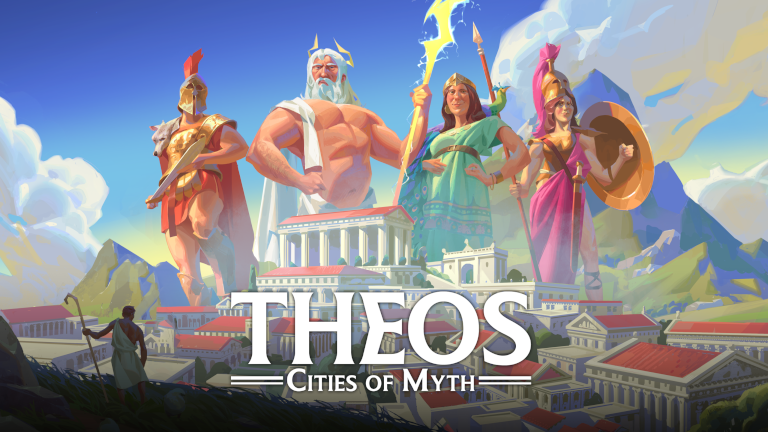
When digital urban planning shifted away from Will Wright’s contemporary settings and toward historical ones, I became a student of city management sims. Caesar, Zeus, The Settlers, Pharaoh, and its Cleopatra: Queen of the Nile expansion taught me just as much about history as my junior high school teachers. Thank you, Stronghold, for demonstrating the difference between catapults and trebuchets. Admittedly, the lessons occasionally involved questionable taxation and a disturbing indifference toward workplace safety, but curiosity was piqued. Theos: Cities of Myth returns to that curriculum, this time with the Greek gods overseeing the classroom. Yes, some old problems are still sitting in the back.
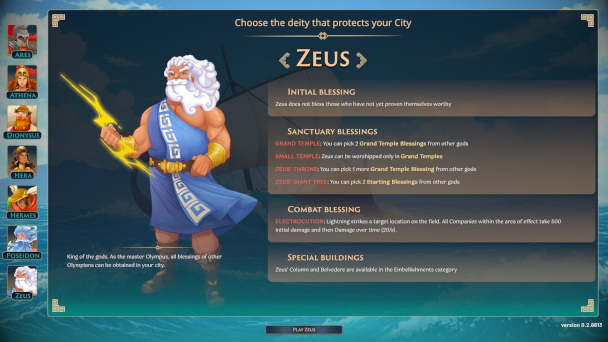
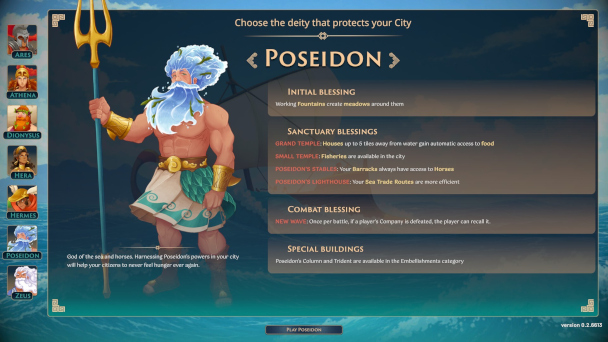
Triskell Interactive, the studio behind Pharaoh: A New Era, builds on the broad foundations of Zeus: Master of Olympus. Its mythological version of Ancient Greece runs on service workers and production chains, with a patron deity determining the direction of your polis. A city begins with a Sanctuary, a rather hefty commitment of space that makes religion part of the layout from the start. Seven gods offer different incentives: Athena supports an educated, culturally ambitious population, while Ares favors military strength. Their demands shape development even when the most immediate question is where to squeeze in another warehouse.
Lord of Olympus, Architect of Infrastructure
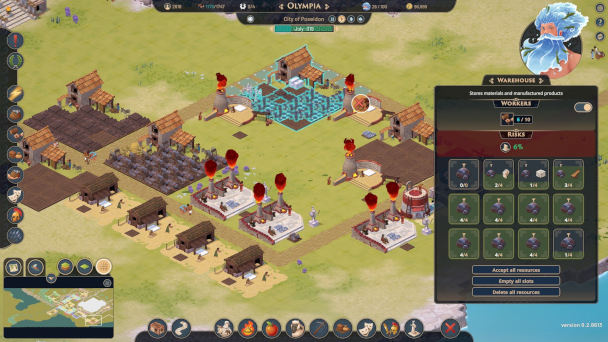
From there, your infrastructure requires roads and housing, followed quickly by water and a reliable food supply. Agriculture requires suitable land and a distribution chain: growing food matters little if you don’t have storage and the agora, your marketplace, cannot get it to residents. Those residents provide the labor that helps to keep production and services operating, so expanding one part of town creates demands elsewhere.
Maintenance and fire protection need attention early, while philosophy schools and theaters join the plan as expectations rise and your population increases. Houses develop when their needs are met, accommodating a larger population and supporting additional growth. Watching your humble little settlement acquire all the comforts of a 350 BCE civilization remains satisfying. Much of that is built around the design philosophy where improvement needs several smaller decisions to work together.
By Zeus, There’s Homework
Fortunately, Cities of Myth offers a guided introduction to the basics, although understanding how its systems fit together still takes some practice. Everything from road placement, basic housing, services, and the things that connect those industries are explained gradually. As such, you’ll probably head into the game understanding how to read that growing sprawl of little buildings. Yes, the pace might feel a bit slow if you’ve already made your way through games like Pharaoh.
But undoubtedly, this will help newcomers avoid those kinds of dependencies that can cause a frustrating halt to growth. That said, completing an instruction isn’t the same as understanding why a neighborhood is stagnant. A few more troubleshooting exercises might have helped here especially when it comes to delivery coverage. That said, it’s a competent introduction that gives us almost everything we need to start additional learning on the job.
Civil Engineering That Would Please Plato
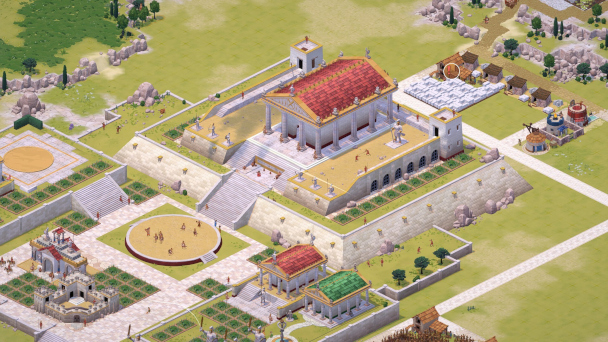
One of the useful concessions for modern players is controlling the walkers who carry goods and services through your town. Selecting a service building lets you edit its patrol, placing flags along the roads to determine where the workers will travel. Of course, routes have a distance limit, including the journey back, so there’s a bit of planning involved. Notably, you can direct services toward the homes that really need it instead of letting your employee wander. New service buildings get an automatic route, while neighboring service buildings can share an already-defined patrol, reducing some of the set-up. Alongside pause and speed controls, these tools help make Theos a bit more accommodating. I also like how road layouts are handled.
Thankfully, the interface is pretty practical, too. Undoubtedly, the UI’s strength is noticeable when you’re issuing a specific command. Patrol flags turn a rather abstract problem into a visible path, and the route editor shows the travel limit, while warnings show any buildings without a valid patrol. However, the broader menus are a bit plain. Here, understanding why a district is faltering still means having to link a few pieces of information yourself. One example: a fountain doesn’t guarantee water if its carrier’s route misses certain houses. Ideally, the game could explain the connection between a household’s shortage and the service more directly.
It’s All Ancient Greek to Me
Realistically, the biggest challenge is handling growth. More homes mean more mouths to feed and more streets to supply, while industries compete for a limited workforce. A city can have plenty of one commodity but still struggle because the necessary resource to move to the next stage is either scarce or poorly distributed. Fortunately, trade gives access to those missing materials while colonies increase the complexity of the city-sim puzzle. And this is where Theos is at its best. Enlarging a district prods you into thinking about the arrangements supporting it.
Unfortunately, the patrol system is the source of one of the game’s biggest issues. Automatic routes can leave streets underserved, and manually correcting them becomes rather tedious when several of your neighborhoods need attention. Yes, having direct control is cool, but repeatedly managing basic services interrupts the flow of expansion planning.
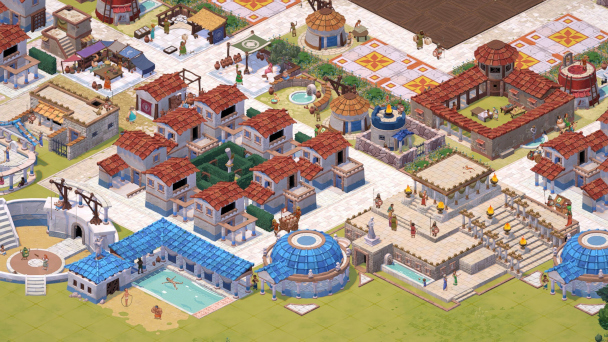
Rapid building deterioration also adds pressure, highlighting any gaps in your maintenance coverage planning. Smarter automatic routing and clearer warnings about uncovered housing would be helpful here. Warfare could also use some improvement. Simple unit counters and repetitive encounters limit strategy and battles are less developed than the economies that fund them. Protecting your city should feel like an engaging extension of your core duties. At present, it feels like an obligation.
A Polis Worth the Paperwork
Small qualms aside, there’s a lot of charm in Cities of Myth. There’s gratification in watching a modest settlement grow into a city of busy residential streets and stately temples. Like most city builders, it’s relaxing to take a moment to admire your work, as the roadways etch their way into the arid, rocky topography as workers scurry with carts and citizens soak in stately pools.
The game’s Adventure mode supplies a succession of scenarios and divine objectives, while Sandbox gives the freedom to choose a patron and evolve a city on your own terms. That combination gives both returning students and city-sim grads a place to settle. Best of all, Theos: Cities of Myth captures a lot of the pleasure that made historical city builders such effective teachers, even if its administrative chores occasionally overpower the lesson. Better automation and richer combat would make it easier to recommend without reservation. As it stands, there is plenty here to keep an old Pharaoh enthusiast enrolled for at least another semester.
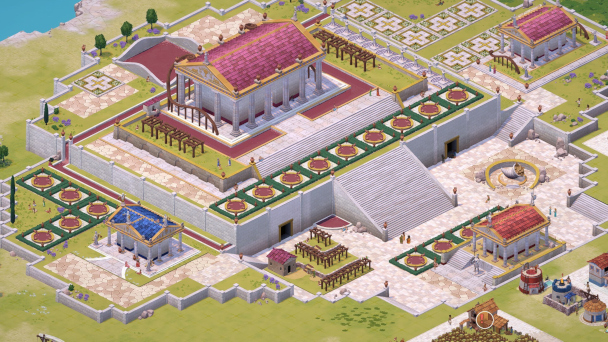
Theos: Cities of Myth was played on PC with review code provided by the publisher.
Overview
GAMEPLAY - 70%
CONTROLS - 70%
CONTENT - 75%
AESTHETICS - 70%
PERFORMANCE - 65%
VALUE - 80%
72%
GOOD
Theos: Cities of Myth scratches that old Zeus and Pharaoh itch, especially when you're dutifully planned neighborhood finally start to thrive. Fussy patrol routes and underwhelming battles sometimes spoil the fun, but there’s plenty here to tempt you into building just one more district.