Virtue and a Sledgehammer review
Twenty Pounds of Unfinished Business

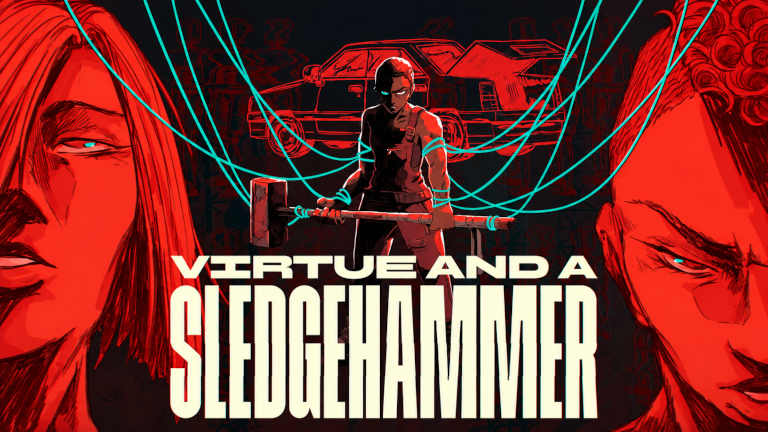
Virtue and a Sledgehammer sends its protagonist, Pratelle, back to her mountain hometown with her mother’s body in the trunk of her car and a sledgehammer in hand. The town’s human residents have been replaced by mechanical versions of her old neighbors. Her sister Nina’s research made it possible to digitize their memories and personalities, placing them in robotic bodies. Pratelle’s response is to break all of it.
Deconstructeam and Selkie Harbour have made a short, angry game that explores grief, family, fitting in, and technological hubris. Best of all, they trust you to feel its impact (pun intended) without the kind of hand-holding that many modern games incorporate. It’s not a sunny experience and tedium will likely set in, but if you appreciate unconventional games that might haunt you, Sledgehammer is worth picking up.
A Big Swing That Pays Off
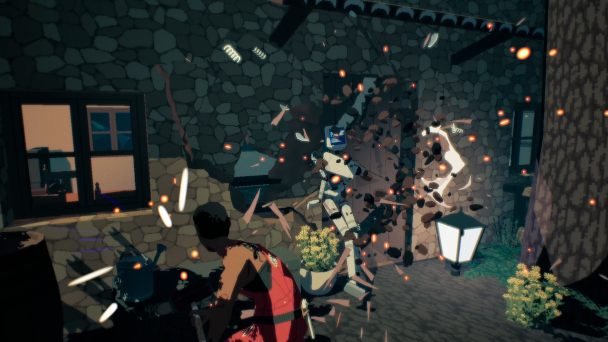
Gameplay is rooted in catharsis. There are no ranged weapons to fall back on. Instead, Pratelle uses her twenty-pound hammer to destroy furniture, walls, and robots. The weapon is slow and deliberately weighty. A tap of the action button provides a push, while a longer hold swings the weapon in a wide arc.
Winding up for longer produces a mighty overhead blow that sends things reeling backward. And there’s immense satisfaction in watching a group of hostile robots approach and knocking them down like bowling pins. Likewise, hammering your way through a house instead of walking around it taps into a deep-rooted power fantasy.
A Walking Sim with Wanton Destruction
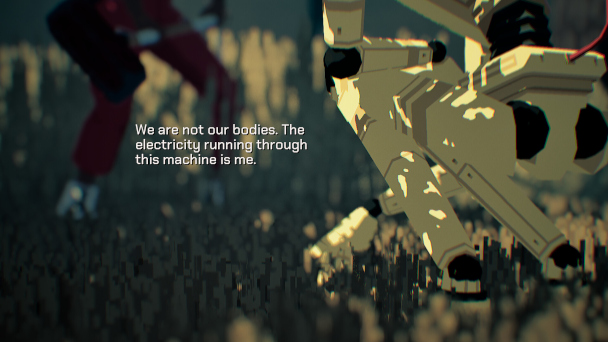
These robots carry the memories and personalities of people Pratelle knew. Intriguingly, some beg to be spared, some ask to be put out of their misery, and some are simply content in bodies that no longer tire. A gardener tending his plants is not an antagonist in any traditional sense, and smashing him is a remarkable test of your conscience.
Yet the rage room-style release gets complicated quickly. Destruction becomes a way to grieve, like smashing an emptied liquor bottle into tiny fragments. Then it starts to feel like a way to avoid grieving, and you’ll probably wonder whether sledgehammering through a village is getting you anywhere. Flashing red lights point the way forward, but it’s still easy to become disoriented among the ruins and wonder whether there’s any release from this Sisyphean nightmare. Smartly, the developers leave room for your own reading of Pratelle’s anger. The robots lay lifeless on the ground while I still seethed with aggression.
If You’re Not Angry, Are You Even Playing?
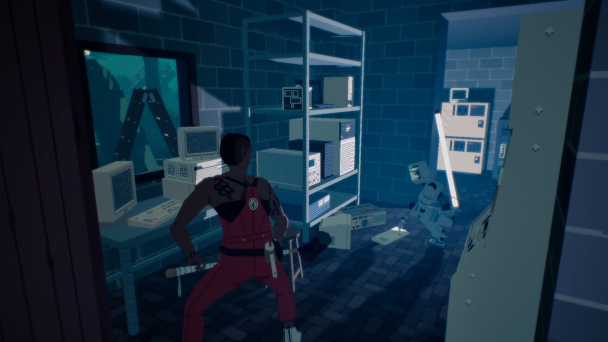
One of the game’s more interesting complications arises from Pratelle being a lesbian and half Arab. Some robots retain her neighbors’ old prejudices, attacking her and hurling slurs. Wisely, the game doesn’t soften these reminders of the hostility Pratelle faced as a child, showing how mechanical copies of bigots can carry their hatred into the future. It’s during these moments that Virtue and a Sledgehammer becomes especially poignant. Pulverizing the racists and homophobes didn’t erase the damage their hatred had done and left me pissed.
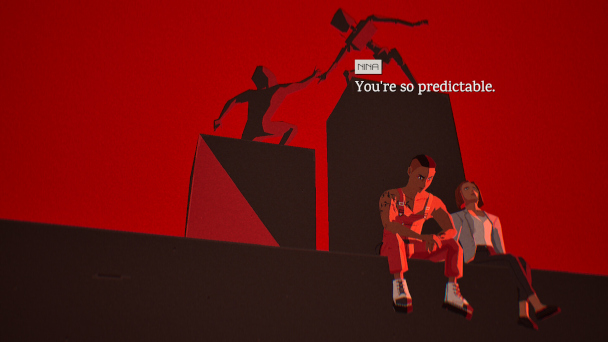
Those encounters change how the sledgehammer feels in your hands. When a bot hurls hatred at you, your swing stops being some kind of abstract answer to a philosophical problem and becomes something more personal. You’re no longer just deciding whether machines deserve mercy. You’re being reminded that on the playground, street, and in the town that that you never belonged here to begin with. Getting even might be a fantasy Pratelle has harbored for years, but there’s a good chance she isn’t finding the gratification she once imagined. Yes, a game about breaking shit might just demonstrates the futility of violence.
When You Only Own a Hammer, All Problems Resemble Nails
Other feelings are nearly as messy. Scattered memory fragments reveal Pratelle’s history with her sister and mother, and their relationships are unmistakably uneasy. Love and resentment coexist, and the bond they shared defies easy judgments about who is helping whom. This complexity helps keep the slurs from seeming like shock value. They’re one piece of a childhood marked by hostility and painful comparisons with her sister, explaining some of the anger behind the hammer swings. I appreciated how the script largely avoided sentimentality, revealing some seldom-discussed truths about family.
Yet Virtue isn’t without flaws, with repetition being the most noticeable blemish. Over a runtime of roughly three to five hours, depending on how thoroughly you explore, you have two swings, a shove, and a small roster of enemy types, with combat that doesn’t evolve much. The opening minutes and closing stretch ask the same thing of you, and the sturdier late-game robots add more annoyance than challenge.
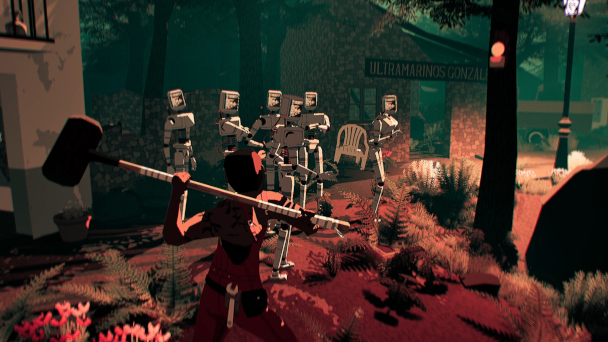
By the final act, the smashing can feel like a chore rather than a release. Some rough edges don’t help: without a minimap or waypoint HUD, navigation can still turn confusing despite those red lights. Occasionally, abnormal physics leave pieces of buildings hanging in midair. The blocky, PS2-flavored visuals suit the material and create real atmosphere, but the similar-looking robots can become as familiar as the combat.
The Messiness of Life, Now in Interactive Form
That said, it could be argued that repetition is part of the point. A catharsis that never changes starts to look like a loop you can’t escape. The game’s best moments come when the monotony turns the act of smashing things into something closer to mourning. Sure, it won’t suit anyone looking for an action game with an ever-expanding bag of tricks, but that limited moveset serves the story that the game wants to tell.
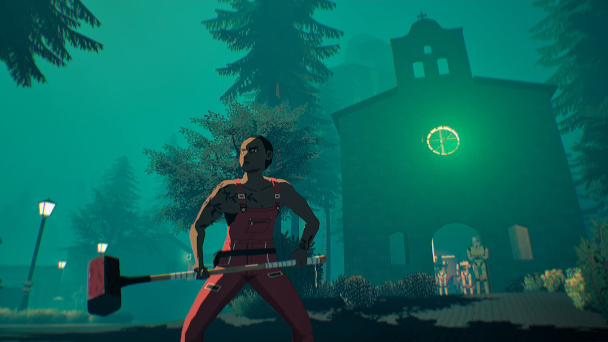
Think of Virtue and a Sledgehammer as a short, uncomfortable piece of interactive art about grief, prejudice, and our faith in technological solutions. Look past the simple mechanics and let the game’s mood wash over you. It might only take a sitting or two, but it’s likely you’ll feel a bit bruised by the end.
Virtue and a Sledgehammer was played on PC with review code provided by the publisher.
Overview
GAMEPLAY - 75%
CONTROLS - 75%
CONTENT - 70%
AESTHETICS - 75%
PERFORMANCE - 75%
VALUE - 75%
74%
GOOD
Swinging a hammer through your hometown is fun until the people inside start giving you reasons to stop. Virtue and a Sledgehammer gets repetitive, but its tangled family drama and uncomfortable questions make it worth seeing through.