Hands-On with Rayman Legends Retold
The Limbless Legend Returns

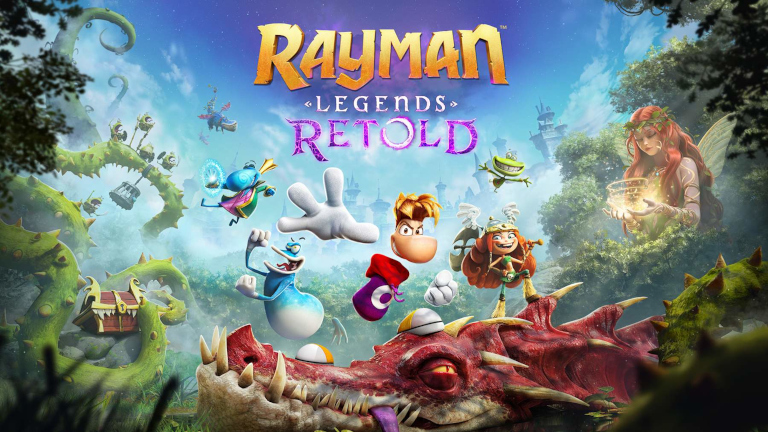
Thirteen years is a long time to leave a hero waiting. Rayman Legends remains one of the better platformers of its era. And while the title received its share of competent ports, Ubisoft’s platformer has largely been stagnant when it comes to new ideas.
Rayman Legends Retold isn’t the wholly new sequel we might want, but it feels like a proper return for our limbless hero. Sure, it’s still built around the responsive, spirited platforming of the 2013 original. But Ubisoft Montpellier and Ubisoft Milan have reconstructed Rayman’s cartoonish world, restructuring its stages into a more coherent adventure while adding enough new material to elevate this above the usual high-resolution reissue.
Old Tricks, New Look
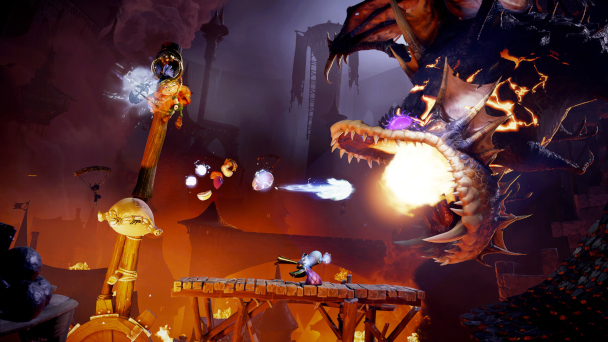
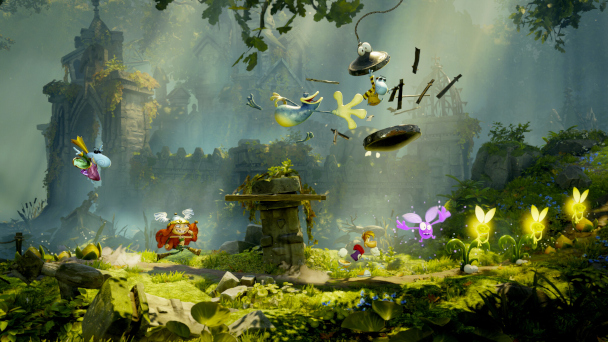
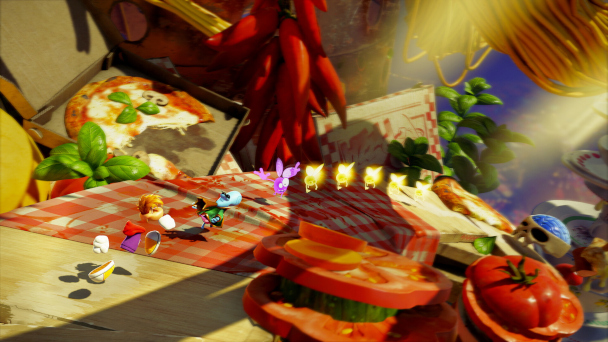
Undoubtedly, Montpellier and Milan’s ambitions are noticeable. The hand-painted look of the original has been replaced by a 2.5D presentation complete with three-dimensional characters and environments. Forests now have more depth, distant creatures frolic in the backdrop, and the camera occasionally swings into dramatic angles that the old art style couldn’t accommodate. Fabric, fur, foliage, and stone now all have detailed textures, while lighting gives caves, kitchens, and haunted ruins a heightened cartoonish atmosphere.
Whether this is a straight-out improvement will probably be a matter of taste. The original game’s visuals channeled the look of an animated storybook, and a few of the new character models look overly polished by comparison. Now, busy foreground details can compete with platforms during faster sequences. Still, the remake seems to understand that readability is essential. Best of all, the game’s animation retains the exaggerated “stretch and squash” quality that makes Rayman distinct from his platforming peers.
A Familiar Spring in His Step
More importantly, movement still feels spot-on. Rayman and his companions build up speed quickly, leap with precision, hover with their hair or wings, and punch enemies without bringing the action to a grinding halt. As expected, returning stages preserve the original game’s tendency for introducing an idea, riffing on it, and then tossing it out before the gimmick grows tiresome. One moment might involve bouncing across shields or slicing through ropes. The next could be a hectic chase with the environment collapsing right behind you.
The opening is still approachable, but Retold shouldn’t be mistaken for a low-effort mascot platformer. Its challenge escalates sharply as hazards become more plentiful and safe footing grows scarcer. Optional Teensies often tempt you to take demanding detours, while Invasion stages turn courses into brutal races against the clock. The returning musical levels are satisfying because every jump, punch, and slide matches the rhythm. And yes, missing the beat usually means getting impaled, scorched, or squashed. After all these years, no one quite takes a beating as well as Rayman.
Fortunately, the balancing feels demanding without being overly punitive. The controls are responsive enough that failure usually reveals what went wrong, and a quick restart encourages another attempt. Players who want a tougher test can chase every collectible, tackle the Cave of Trials, and pursue cleaner times. Up to four people can share the same couch, although I didn’t get to experience this. And since I played a cloud-based demo with a fair amount of lag, it’s quite possible that I might be overestimating the level of challenge.
A Fairy Useful Safety Net
Still, if Retold proves too tough, Ubi has a method to adjust the difficulty. Die repeatedly at the same checkpoint and Betilla will offer a Fairy Blessing. Players can also activate the blessing manually through Betilla or the Settings menu. Once enabled, it prevents damage, grants free flight, allows passage through breakable obstacles, automatically damages enemies, and can revive the player and nearby companions floating in bubbles. In theory, it lets someone bypass a troublesome sequence without asking them to abandon the stage or search for a more experienced player. That said, I did discover a few spots where it didn’t work in this early build.
Additional settings reduce the need for precise physical inputs without automatically charging through stages. Dragon rides can use automatic fire, while running, gliding, and some Murfy interactions can be changed from holds or repeated presses to toggles. Mercifully, the controls can be remapped, camera shake can be disabled, and visual highlights can make characters and interactive objects easier to distinguish. I could see this option being immensely useful when four players and a swarm of Lums fill the screen.
All Legends Are Stories
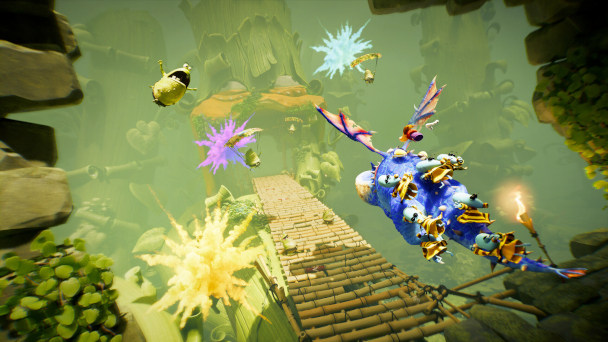
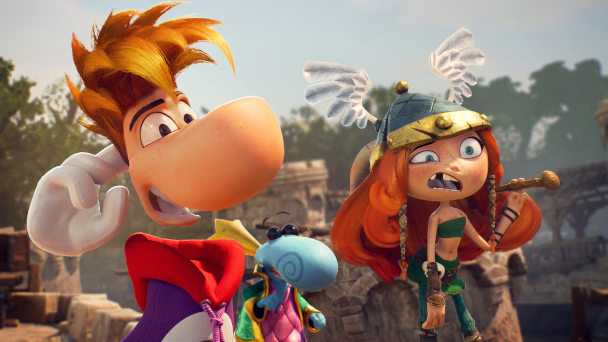
Some of Retold’s new additions help flesh out the game. This time out, players can expect a more substantial storyline focused on a shadowy antagonist spreading corruption through the Glade of Dreams. Meanwhile, fully voiced cinematics bring Rayman, Globox, Murfy, and other characters up to contemporary expectations. That said, don’t expect an intricate drama; this is still Rayman, with a focus on play rather than plot. Likewise, an expanded soundtrack with contributions from Christophe Héral and Grant Kirkhope provides an aural upgrade.
The largest addition is a sixth realm, the Land of the Livid Dead. Rather than appearing as a single bonus destination, this new area has been turned into a complete world. Its gloomy ruins and corrupted growths provide a nice gothy getaway that offers a break from the sun-drenched areas of the Glade. Four additional musical stages join the returning favorites, including a wonderfully absurd stage set to “Macarena.”
A Welcome Encore
There’s one looming question hanging over Rayman Legends Retold: why remake a game that still plays well and remains readily available? The new visual direction will not appeal to everyone, and much of the campaign follows a blueprint that longtime fans already know. Yet the current build makes a persuasive case with its inventory of improvements and tweaks. From the voiced storyline and new musical stages to its accessibility features, Retold presents a substantially expanded package. Factor in the inclusion of Rayman Origins: Enhanced Edition, and the $39.99 price point seems exceedingly reasonable for two full platformers.
Rayman Legends Retold is scheduled for release on December 3, 2026
for PC, PlayStation 5, Xbox Series X|S, and Nintendo Switch 2.