OPUS: Prism Peak review
Slowing Down to Reveal Life’s Veiled Truths

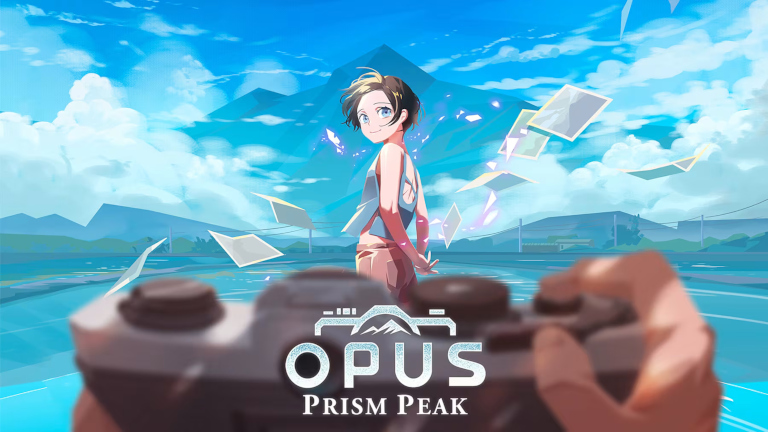
There’s a certain wisdom that comes from taking the time to stop and examine things. OPUS: Prism Peak, the latest narrative adventure from Taiwanese developer SIGONO (OPUS: Echo of Starsong, OPUS: Rocket of Whispers) understands this concept better than most contemporary games. Yes, it’s a game about photography. But more importantly, Prism Peak is a game about what we miss when we move too fast in life. It’s an indispensable reminder of what we can regain if we just stop and pay attention to things.
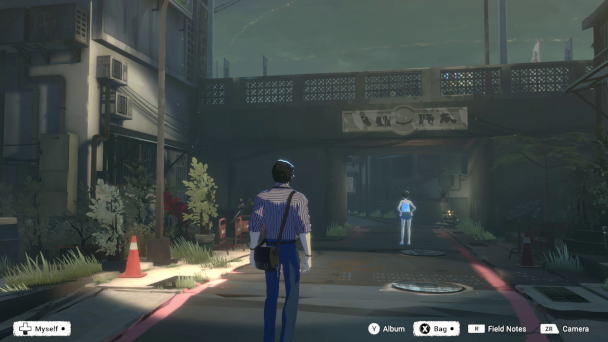
Prism Peak follows Eugene, a 40-year-old photojournalist who is down on his luck and currently on his way to his grandfather’s funeral. From the opening moments of the game, SIGONO wastes no time showing the emotional weight that Eugene carries. Short flashbacks from his early life gradually segue into a series of layoffs, unsuccessful business ventures, and notably, no mention of a partner who could help shoulder some of the disappointment. Yet, photography has provided Eugene with a means of hope, capturing moments of beauty and allowing for connection.
Life, Slightly Out of Focus
Prism‘s jump from Eugene’s hopeful childhood where he’s learning to frame a photograph to becoming a weary middle-aged man forced to pawn his camera is one of the more poignant prologues in contemporary gaming. And while we often encounter protagonists ready to rebound from a single instance of misfortune, the extended erosion of unrealized ambitions feels remarkably realistic, especially for a game set in a fantastical spirit realm.
Had Eugene’s professional disappointments, strained relationships, and broken dreams taken place in a more realistic world, Prism Peak might have been too much of a downer. But here, the shift in context allows for a more artful and ambiguous exploration of life. And that’s where the title roots its narrative impact. By contextualizing Eugene’s grief and regret in a world of spirits, memories, and half-understood encounters, SIGONO generates reflection rather than just a tragic tale of despair.
Reality Gets a Filter
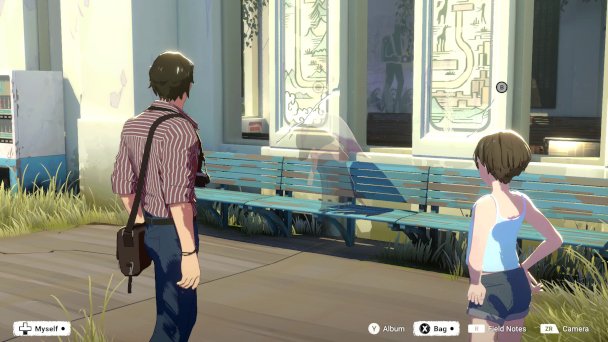
That spirit realm, referred to as the Dusklands, is where Eugene finds himself stranded after heading to the funeral, alongside a young girl named Ren who has lost her memories. The pair’s unlikely companionship forms the emotional core of the second act. The animal spirits Eugene encounters each represent people who have influenced his life, and part of the your goal is determining who each spirit represents. Ideally, Eugene arrives at some kind of understanding, and smartly SIGONO isn’t interested in a collection of tidy solutions.
The memories and emotions that others can bring up are often messy, reflecting a reality that isn’t often shown in games, or even most mainstream media, for that matter. Sometimes Eugene was inadvertently treated badly by someone in the past. Other times, he was the one who failed to be there for someone else. But realization only emerges when there’s adequate time for reflection. Yes, Prism Peak is poised to make you think about your own life. And at $25 USD for about ten hours of rumination, it’s cheaper than a therapist.
More Than Point-and-Shoot Philosophy
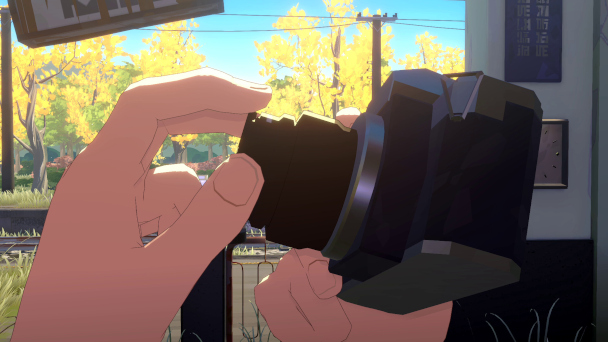
Unsurprisingly, Prism Peak structure reinforces the idea of slowing down and paying attention. The game rewards you for paying attention to detail, telling the story of two worlds through magazine clippings, letters, signs, books, and more. Sure, these are things that can be overlooked, but when collected and considered, they add an additional layer of exposition. Wisely, the photography mechanic doesn’t feel like a gimmick. Instead, you’ll balance framing, timing, exposure, focus, and filters. Best of all, it’s more than just pressing a button, with Prism Peak making you think about what deserves to be remembered.
One things I really enjoyed was that the game explored what life was like for an adult. Visual novels and adventure games tend to have younger protagonists, and while we do get games that feature adults in the lead role, there’s still plenty of room to explore different stages of life. And Eugene’s crisis, of being a middle aged man who didn’t become what he had once hoped, provides the kind of storyline that I feel many people can connect with. And while it’s relatable, I can’t think of many films, shows, or even recent books that have tackled the issue.
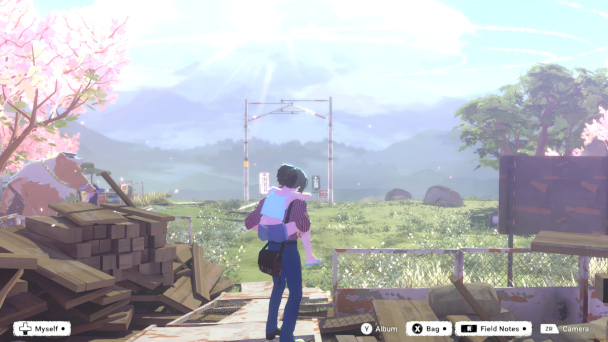
Eugene and Ren’s relationship is where Prism Peak finds additional connection. It’s begins as a transactional alliance, as the two characters are trying to find their way through the Dusklands. But without giving anything away, it radially evolves into something more reciprocal and revealing. Ren’s curiosity and emotionality makes an interesting counterbalance to Eugene’s guarded demeanor, and defectively becomes the catalyst for facing things that he’s long repressed. Likewise, Eugene offers safety and connection when Ren’s missing memories convey uncertainty. I like how their bond rarely felt forced or overly sentimental. It grew is small, believable steps, mirroring the theme that emotional understanding can be a drawn-out process.
Monochromatic Memories, Vivid Worlds
Prism Peak combines qualities of a visual novel with some graphic adventure elements. Nicely, flashbacks are presented in a black-and-white style, while the exploration and story scenes are rendered in 3D. The tonal contrast works well, where a washed out past is juxtaposed against vividly colored creatures. It’s also backed by an orchestral soundtrack that can soar or be quiet and meditative when the script needs it. Performance wise, it ran fine on GPU-powered desktops and a laptop, but the overall framerate on Steam Deck was a bit sluggish, especially when the camera retreated to show the environment.

But the journey isn’t without a few more stumbling points. The gameplay can be repetitive, and while the linear approach doesn’t mean there’s traditional backtracking, you might have to reply Prism to glean every expositional detail. There’s also no manual save option, which occasionally means playing longer than intended to reach an auto-save. But in the grand scheme of things, Prism’s peaks can make you overlook its minor pitfalls.
The Moments We Almost Miss
OPUS: Prism Peak left me thinking about the moments in life we overlook too easily. We might file away these events as mistakes or regrets without giving them the attention they rightfully deserve. And that’s where the game is a achievement. Instead of spectacle or a tidy resolution, Peak embraces the messier side of life, conveying an honesty that missing from much of today’s junk food entertainment. Take a look at SIGONO’s latest. You’ll probably walk away with a slightly different perspective on things.
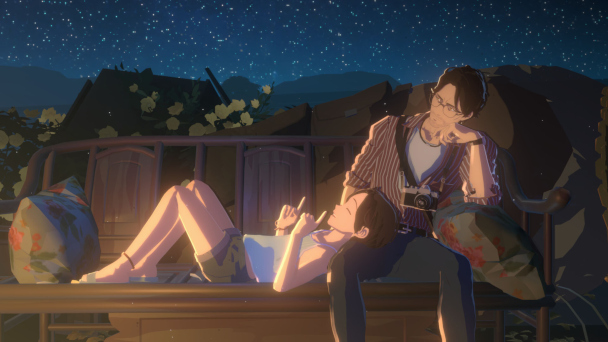
OPUS: Prism Peak was played on PC with review code provided by the publisher
Overview
GAMEPLAY - 80%
STORYTELLING - 90%
CONTENT - 80%
AESTHETICS - 85%
ACCESSIBILITY - 85%
VALUE - 85%
84%
VERY GOOD
OPUS: Prism Peak is a slow-burn adventure that uses photography and a surreal spirit world to explore regret, memory, and life’s overlooked moments. It stumbles a bit with pacing, but the game’s emotional honesty and poignant storytelling will linger long after the final frame.



I turned 36 today. I guess I need to play this and take a break from schoolgirl high jinks