Culdcept Begins review
A Cult Favorite Strives for Western Success Once More

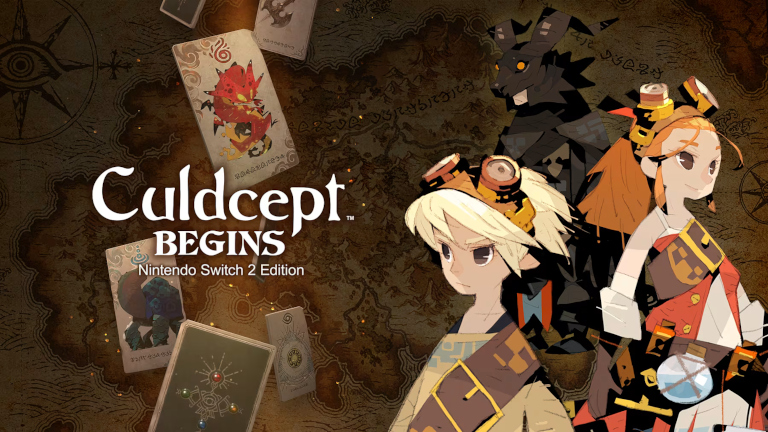
2003’s Culdcept (a PlayStation 2 localization of the Japanese release, Culdcept Second Expansion) arrived in the West at the wrong time. Strategy games were still fighting for mainstream attention, collectible card games were relatively rare on consoles, and many reviews focused less on the game’s ingenuity than on its purportedly intimidating rule set. The general consensus wasn’t that Culdcept was bad. But that the title demanded quite a bit of patience. To many prospective players, it sounded more like homework than leisurely entertainment.
As such, I skipped Culdcept when it debuted at the standard $49.99 asking price. But when it was sent to the bargain bins just a few months later, curiosity finally got the best of me. Within a few matches I wondered why I’d listened to all those warnings in the first place.
Rather than being prohibitively dense, Culdcept simply expected players to learn how each of its interconnected systems worked. And that was the kind of knowledge that anyone who had bought property in Monopoly or tapped a land in Magic: The Gathering would understand fairly quickly. Over two decades later, Culdcept Begins feels like the second chance the series has always deserved. With at least a decade of card battlers behind us, I think we’re all ready for Culdcept‘s accessible brand of board-based strategy.
Do Not Pass Go, Do Try This Game
Set before the events of the inaugural 1997 release, Culdcept Begins is both a prequel and also a suitable entry point for newcomers. Either way, the game preserves the rather ingenious formula that has cultivated a small but devoted fanbase. Best of all, Begins doesn’t attempt to reinvent or make unnecessary changes to Omiya Soft’s franchise. Instead, it provides some polish and balances the game’s mechanics, thoroughly modernizes the presentation, and removes some of the rough edges that once scared newcomers away.
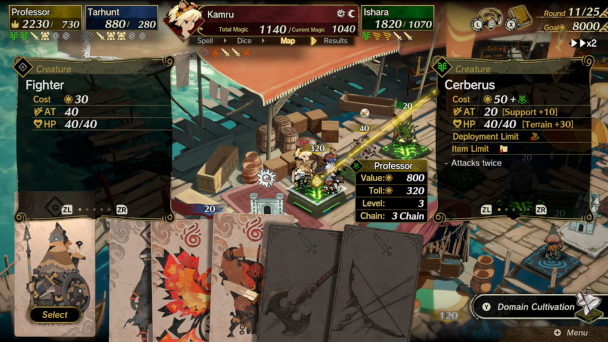
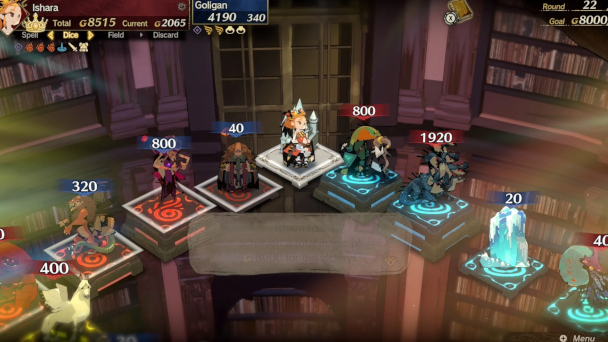
Trying to explain Culdcept succinctly has always been difficult, but “Monopoly meets Magic: The Gathering” likely remains one of the better and most concise summaries. Players loop around a game board collecting magical land cards rather than purchasing real estate. Landing on any neutral territory allows you to summon creatures from your deck.
This transforms those spaces into properties that charge tolls whenever opponents stop there. Like Monopoly, acquiring corresponding territories increases their value and lets you invest additional magic into them. But every property is defended by creatures drawn from a customizable deck, meaning ownership isn’t always permanent. Opponents can challenge your monster with one of their own, triggering some surprisingly deep card battles decided by equipment, spells, and elemental affinities.
Property Management, But with Monsters
Pleasingly, it’s a concept that still feels original. Every turn asks players to simultaneously mull over several different decisions. Should you spend your mana upgrading valuable territory, or save those resources for combat? Do you opt for another district bonus, or detour toward a decisive tile? Is it worth attacking your opponent’s land now, or should you wait to assemble a stronger combination of cards? Despite these dilemmas, gameplay is relatively easy, showing the level of sophistication found in many modern board games.
Cunningly, victory comes not from mastering any single mechanic. Instead, success emerges from understanding how to control the board, build a deck, and adapt to randomized dice throws. Undoubtedly, there are winning tactics to be gleaned but being flexible might just be the best strategy. This approach ensured that Culdcept has a bit of longevity.
Fortunately, Culdcept Begins introduces its ideas better than most previous entries. This time out, the tutorials are clearer, the terminology is easier to digest, and the campaign gradually adds mechanics instead of overwhelming players out the gate. Culdcept veterans will be able to tackle advanced deck construction almost immediately, but newcomers are given enough breathing room to understand different systems before the additional complexity inevitably arrives. Yes, Culdcept is still a strategic game with plenty of moving parts. But here, it feels like the game wants you to succeed. And I have a feeling that it just might this time.
 A Balance Patch Two Decades Later
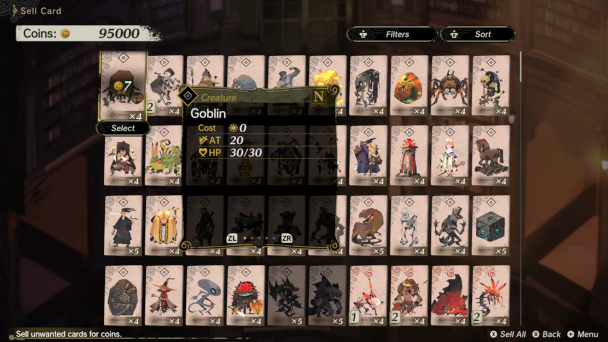
Pleasingly, returning players will discover several changes beneath the familiar foundations. Most importantly, Begins rebalances hundreds of its cards while also introducing new creatures, spells, and equipment. Collectively, these changes and additions strengthen the game’s deck-building possibilities without undermining the series’ elemental relationships.
Interface improvements make managing decks, checking card collections, and assessing abilities during battles a bit easier. Match pacing also feels improved, thanks to faster animations, retooled menus, and quality-of-life additions that help keep the pacing lively. Sure, none of these tweaks fundamentally change what Culdcept is. But collectively, they make the game more approachable without sacrificing any of its strategic depth.
Less of a Lore Dump, More of a Tutorial
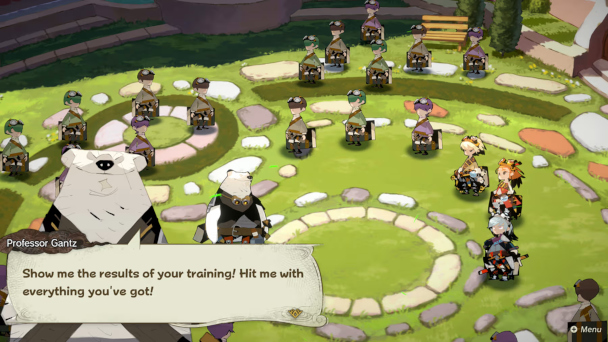
That careful balance between accessibility and complexity extends into the campaign itself. Like previous games, the story serves primarily as a framework for introducing increasingly challenging matches. Yet Culdcept Begins manages to make things surprisingly engaging. Some light political intrigue, magical artifacts, rival Cepters, and ancient conflicts provide just enough motivation to encourage you from one board to the next.
More importantly, the writing understands restraint. Rather than burying players beneath endless exposition, conversations are concise, character motivations are pretty clear, and dialogue pushes things along before handing control back to you. Sure, it doesn’t quite hide its structured lessons and characters don’t have too much depth, but it’s probably the best storytelling I’ve seen from the series.
Hand-Drawn Beats AI Every Time
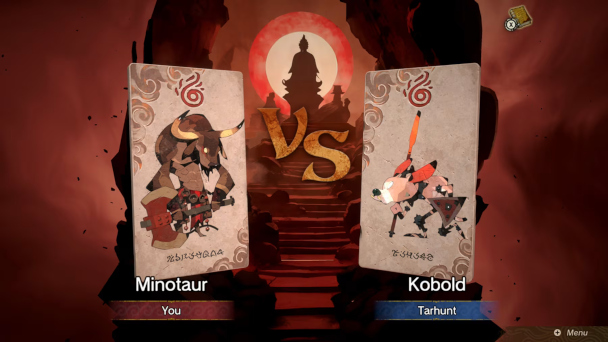
Visually, Begins benefits from an astute art style. There are a lot of fantasy games out there that are chasing photorealism or rely on generative shortcuts, making artwork feel strangely sterile. Instead, it embraces a handcrafted aesthetic. Here, character portraits possess expressive linework, creatures resemble illustrations from a fantasy card game, and spells are colorful without sacrificing readability of the board. The result is a game that seems lovingly illustrated rather than algorithmically assembled. Best of all, boards are easy to read, menus are intuitive, and performance on Switch 2 is consistently smooth. The soundtrack complements that presentation with some adventurous orchestral themes. It’s not an exceptional soundtrack, but there are some stirring moments.
Of course, no discussion of Culdcept would be complete without mentioning the game’s multiplayer component. Human opponents remain the ideal way to experience the game’s wonderfully unpredictable strategy, since no CPU-driven opponents can replace the enjoyment of bluffing, negotiating, or trying to manipulate your opponent. As with previous outings, every seemingly safe lead can disappear after one perfectly timed invasion or devastating spell. For me, that’s the litmus test of any online competitive game and Begins excels.
At Long Last, the West Is Ready
Looking back, it’s easy to see why Culdcept has struggled to find a Western audience. The concept was somewhat unfamiliar, the learning curve could be intimidating, and early impressions often undersold the moment when all of the game’s systems just clicked into place. Today’s players, however, live in a world where deck builders, roguelikes, tactical RPGs, and board game adaptations routinely thrive. The audience has finally caught up with Culdcept.
Overview
GAMEPLAY - 90%
CONTROLS - 85%
CONTENT - 85%
AESTHETICS - 80%
PERFORMANCE - 85%
VALUE - 85%
85%
VERY GOOD
Culdcept Begins proves that the series was never too complicated; it was simply ahead of its time, blending Monopoly-style board play with deep but approachable card battles that are more relevant than ever. With smart balancing and a newly polished presentation, Omiya Soft's franchise get another chance at enchanting Western players.




Good review!