Disgaea Mayhem review
Grinding Never Changes, Dood

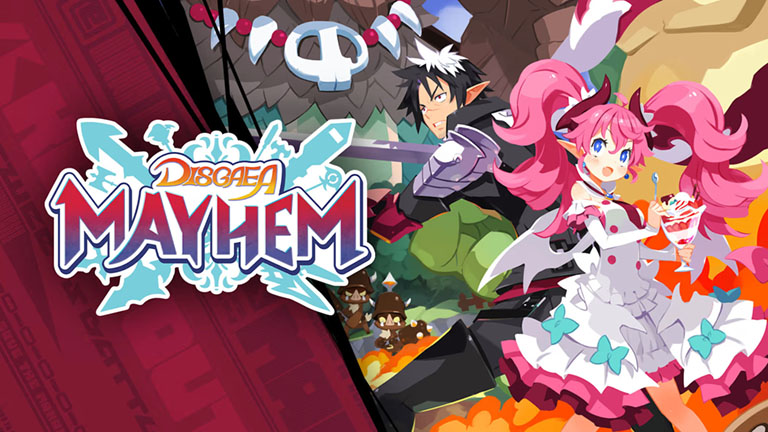
Few strategy role-playing game developers are as willing to experiment with their flagship franchise as much as Nippon Ichi Software. While most studios play it safe and stick to their formula, NIS has tried several times to broaden Disgaea’s appeal beyond role-playing fans.
Prinny: Can I Really Be the Hero? and its sequel threw the series’ mascot into a pair of brutally demanding precision platformers. Disgaea Infinite ditched combat altogether for a visual novel mystery built around time loops and slapstick comedy. Now comes Disgaea Mayhem, another attempt to lure in players who might find grid-based strategy a bit too intimidating.
We’ll Always Have Our Stats
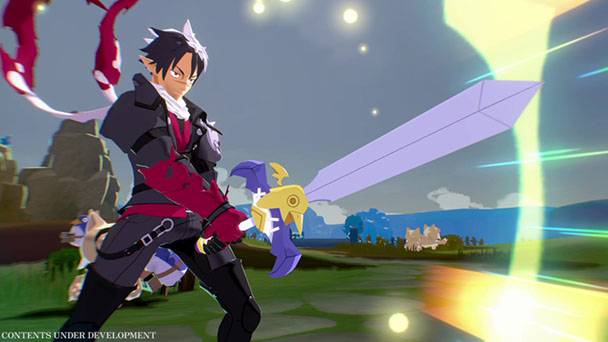
This time out, the turn-based cadence of moving units across an isometric battlefield is gone. Instead, Mayhem keeps the statistics spiraling into absurdity, but all combat is funneled through real-time, musou-lite encounters.
It’s an intriguing premise because Disgaea has never really been about tactical brilliance. The mainline series has always been built around the pursuit of ever-growing stats, plenty of character optimization, and the belief that any problem can be overcome by grinding. And occasionally, Disgaea Mayhem can adapt that formula for an action-RPG. However, elements like a lack of quality characterization, a short campaign, and a few annoyances undermine the shift.
Proof is in the Flan
Like every Disgaea adventure, the storyline is rooted in ridiculousness. You’ll assume the role of N.A., a mercenary hired by Tichelle, the newly appointed Overlord of the Super Duper Netherworld. N.A. is tasked with using her late father’s legendary flan recipes to pacify the rebelling factions after his death throws the Netherworld into chaos. Largely, it’s decent enough to push along a game that doesn’t want to spend too much time on cutscenes. Additionally, there’s a bit of warmth watching N.A. and Tichelle’s relationship grow.
But largely, that’s all the storyline has going for it. A better plot would have the cast play off N.A.’s stiff stoicism. Instead, it feels like everyone is joking around him and he never really reacts to it. Just as bad, the supporting cast doesn’t get enough screen time to make the Super Duper Netherworld more than a middling place to visit. Contrast that with the mainline games. Disgaea 1 built a spirited script around Laharl, Etna, and Flonne’s banter and something resembling found family.
Meanwhile, Disgaea 3 delivered Mao’s delusional villain-protagonist complex and Almaz’s decency, doling out some pulpy exposition between fights. Mayhem isn’t long enough for us to really become invested in the game’s cast. Sure, a few jokes land, but much of the character interaction feels too basic. At best, Disgaea‘s chapters incentivize your grind-time. But Mayhem’s pacing between battles lacks that same incentive.
Yes, Your Specials Have Disgaea-style AOE Patterns
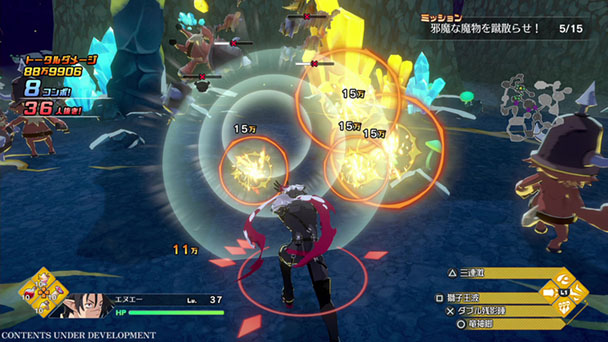
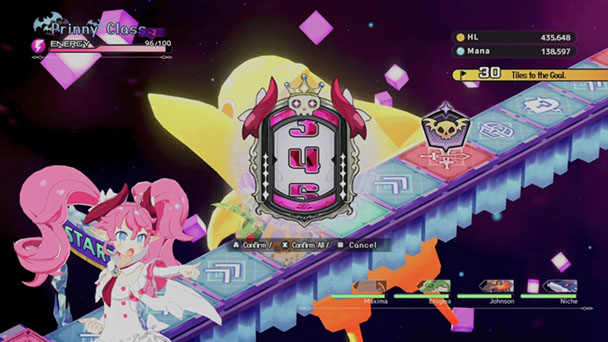
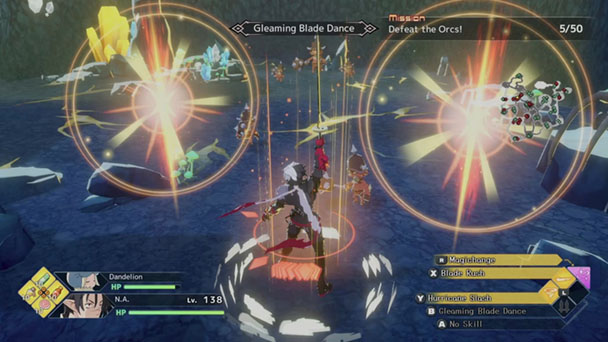
Initially, the light, heavy, and special-dispensing combat seems to prioritize reflexes. Enemies dot each map, waiting to be cleared out by your button-tapping combos. But in practice, skill only carries you so far. Like most every Disgaea title, victory is determined less by your execution and more by hard-working preparation. Character levels, weapon upgrades, and equipment quality ultimately determine success more than perfect dodging or combo timing. If an encounter feels difficult, the solution usually isn’t learning enemy attack patterns, it’s returning to a stage for some grinding.
That approach often worked because of Disgaea‘s celebration of excess. Seeing damage numbers reach six and seven digits was satisfying. But Mayhem‘s pacing means you’ll be scanning for surviving foes, looking for adjacent enemies on your map, and reading bits of text-based dialog rather than appreciating digit strings. And unless I revisited previously beaten levels, I didn’t feel like N.A. was growing stronger but struggling to match opponent stat scaling.
Then there’s the issue of frustrations introduced by the shift in genre. Enemies habitually attack you from just off-screen, potentially putting you in a string of stun states. Dynasty Warriors games have long rewarded your situational awareness, as you are forced to prioritize your battlefield’s hot spots. Here, you’ll slay 80 specific kinds of monsters before being asked to do the exact same thing again. Repeat several times and you’ll trigger a boss fight. If you’ve grinded enough, you can dodge-spam your way through many of these without breaking a sweat.
N.A.’s Arsenal is Surprisingly Deep
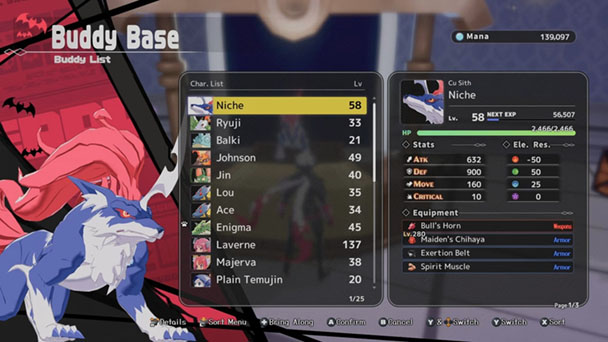
For better or worse, weapon variety attempts to inject some variety into battles. Seven weapon classes provide N.A. with different movesets. Traditional swords offer balanced melee combat, spears provide reach, axes deliver slower but devastating strikes, while bows provide a bit of range. I ended up sticking with the firearm class. Pistols and rifles transform the game into something resembling a bargain-bin version of Devil May Cry‘s Dante, allowing for some stylish backflips between volleys and dodges.
Outside of combat, Disgaea veterans will recognize several familiar components. The Item World remains largely intact, allowing players to enter procedurally generated dungeons hidden inside their equipment. Clearing floors permanently strengthens that weapon or piece of armor, turning even ordinary loot into some long-term investments. It’s still one of the franchise’s cleverest ideas, forming a bond with your gear that few franchises have.
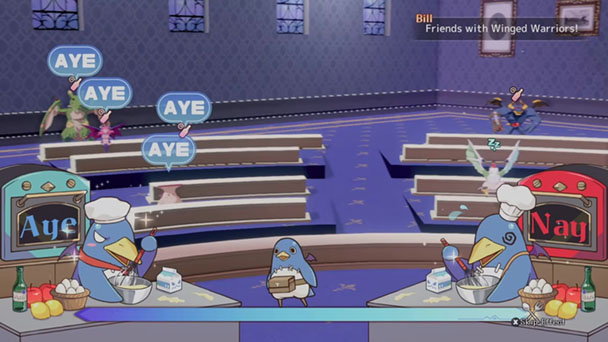
Similarly, the Dark Assembly survives the transition to an action RPG. By bribing, persuading, or beating down senators, you can pass bills that unlock additional features, activate useful bonuses, adjust progression systems, augment your hubworld navigation, or even unlock some authorized cheats. While it’s not the deepest component, I’ve always appreciated how it helped convey that Disgaea‘s rules are meant to be bent, if not outright broken.
Not the Epic Undertaking You Might be Expecting
But for everything Mayhem does right, it stumbles in another area. The main campaign can be surprisingly quick, with a length that can span less than ten hours, depending on how much stat lifting you’re interested in doing. That’s brief for a franchise whose numbered entries habitually occupy players for dozens of hours before the endgame even begins. That said, enjoyment started dwindling during my last few hours with Mayhem. Honestly, combat needs to be overhauled to suit a longer campaign.
Normally, Disgaea delivers some rewarding post-game content. Unfortunately, Mayhem‘s endgame is rooted in repeating familiar activities while chasing ever-higher numbers. Without fresh objectives, environments, or narrative payoffs, there’s a shortage of incentives here. I was hoping for new tactical possibilities but found myself repeating existing encounters while watching statistics climb.
The Grind That Runs Out of Gas
The result is an experience caught between two identities. As an action RPG, Mayhem’s combat lacks mechanical precision and encounter variety needed to compete with even average genre entries. As a Disgaea spin-off, it preserves the franchise’s engaging progression systems but strips the memorable storytelling, tactical complexity, and sprawling campaign that justify hundreds of hours of your time.
Disgaea Mayhem is more of a proof-of-concept than an enjoyable offshoot for NIS’s famed franchise. It demonstrates that the series’ stat-obsessed progression systems can work outside turn-based strategy. But once the novelty of seeing the adaptation fades, the grind becomes a chore, let down by some fundamentals that feel undercooked.
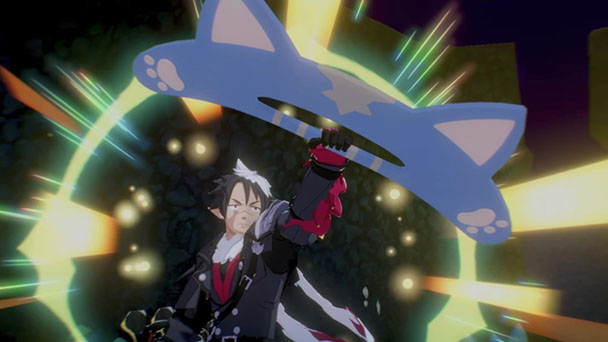
Disgaea Mayhem was played on PC with review code provided by the publisher.
Overview
GAMEPLAY - 45%
CONTROLS - 60%
CONTENT - 65%
AESTHETICS - 70%
PERFORMANCE - 70%
VALUE - 55%
61%
STALE
Disgaea Mayhem explores if the series' addictive obsession with leveling and loot can survive the jump to real-time action. The answer is a tepid sort of, with combat often feels more dependent on grinding than skill, a surprisingly brief campaign, and a forgettable cast. At least familiar components like the Item Word and Dark Assembly make the jump.




Yikes. I’ll wait for the bargin bin.
Honestly, when I saw videos, I thought this would get 50%. 61% is more than fair.