HimaNatsu: Of Churches, Sunflowers, and Long Summers review
A Warm Season, Slowly Slipping Away

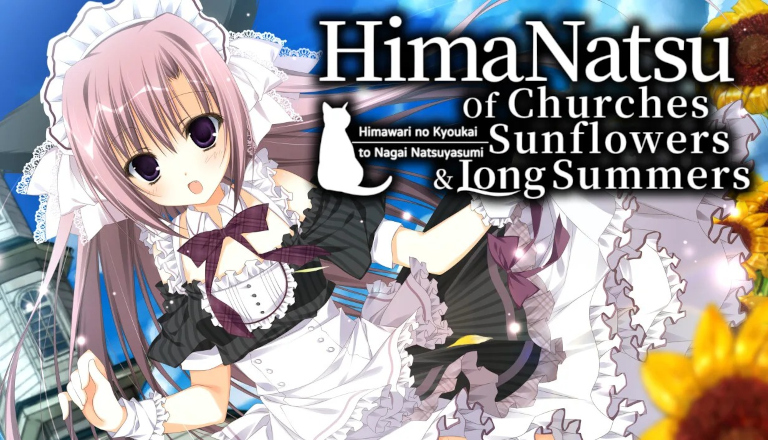
The end of summer holds a particular significance in Japanese fiction. Festivals and fireworks provide one last moment for celebration, while the din of the cicadas seem to grow a bit more melancholic. With the three-term school calendar resuming in September, late August also creates a deadline for one last romance before responsibilities return. Where spring offers the hope of graduations and new beginnings, late summer is more reflective. It’s a moment when a cherished experience hasn’t quite ended, yet many are already reflecting on the end of the season.
Expectedly, this sentiment is rooted in HimaNatsu: Of Churches, Sunflowers, and Long Summers. Originally released by Makura in Japan in 2013, the visual novel has finally received an official English-language version. Rather than just using summer as an attractive backdrop, HimaNatsu builds its entire story around the season’s approaching end. The result is a slightly uneven but still rather affecting tale about returning home and discovering the changes that time has made. Across the novel’s different branches, Makura reminds us that preserving a memory doesn’t always require preserving the place they were made.
You Can Go Home Again, Briefly
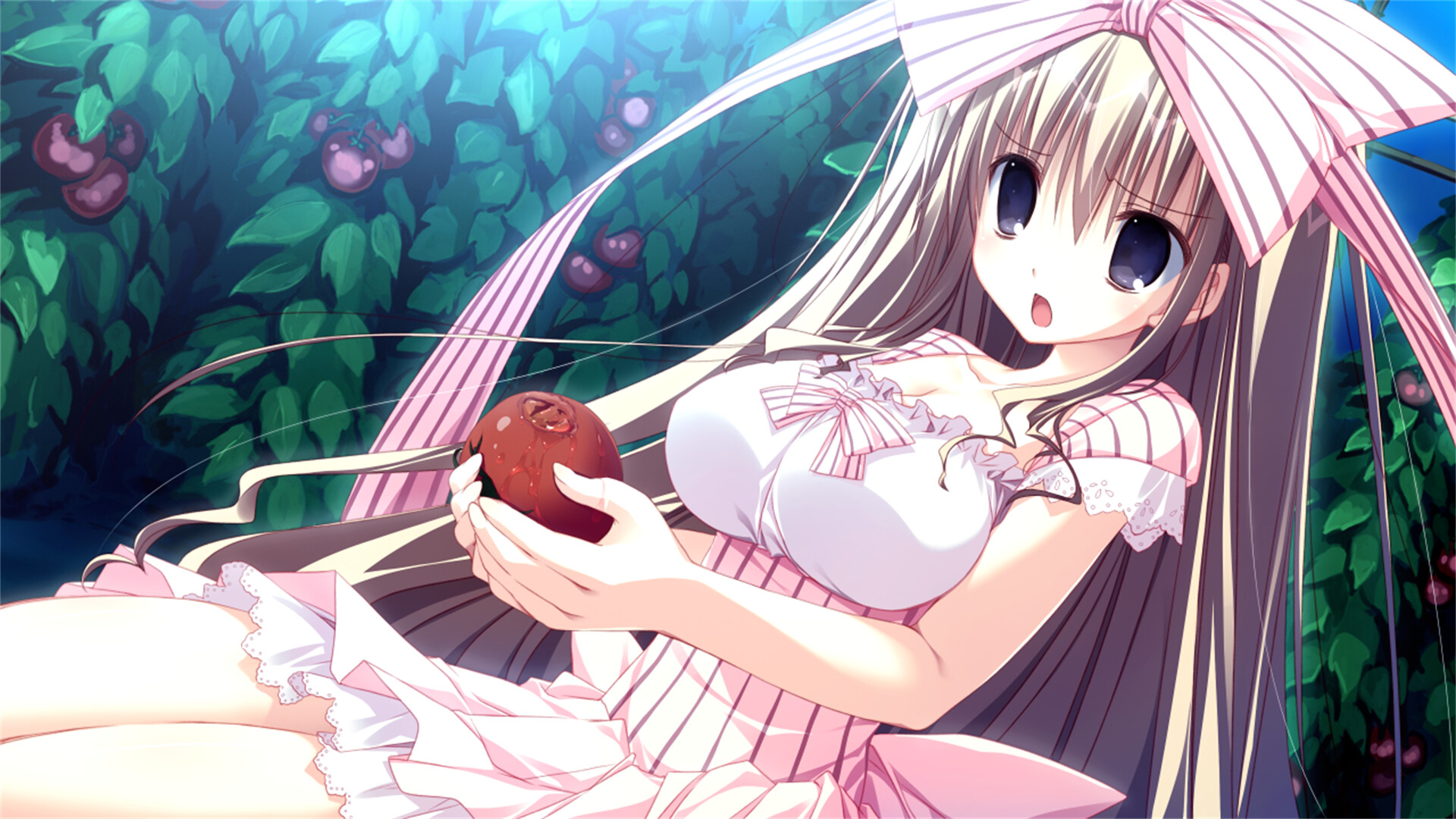
College student Yosuke Ashitaba hasn’t visited his coastal some of Oboshiro in eight years. Orphaned as a child, he was raised at the community church (despite the plural in the title, there’s a single house of worship) by the imposing but pretty warmhearted Father Tenkai Arakawa. The church gave Yosuke a faux-family with his childhood friends in the Oboshiro Choir Squad providing his early years with plenty of adventures. After receiving word that the dwindling congregation will be merged with another parish and the old church is due for demolition, Yosuke returns for one last summer, putting HimaNatsu in motion. Although the Oboshiro church is coded as Catholic, the mergers and closing are a real consequence in Buddhist communities in the States.
And while most visual novels might have relied on ‘let’s save the building’ set-up, HimaNatsu is more interested in understanding why the structure matters. As Yosuke and his friends repair their dilapidated second home, they revisit locations from their childhood, investigate local legends, and gradually confront things left dormant for nearly a decade. But the main route moves at a decidedly rural pace. Its conversations occasionally flirt with being filler, while some of the humor and gags reveal the story’s 2013 origins. However, Churches, Sunflowers, and Long Summers didn’t always make me yearn for the visual novels of old, at at least a decade and a half ago.
There’s glimpses of nuance, like how Yosuke can seem inconsistent at times, shifting from being a thoughtful teen one moment to a comedian or horndog the next. He’s at a time in life when he hasn’t truly defined himself and watching him try on different identities like clothing captures that salient moment before adulthood categorizes us. Like, Boku no Natsuyasumi, HimaNatsu’s accumulation of ordinary afternoons ultimately works. By the time the plot eventually branches, Oboshiro feels less like a fictional setting than a hazy memory of your own.

Four Heroines, Five Endings
Initially, HimaNatsu’s heroines seem to channel some familiar visual-novel archetypes. Yomi Natsusaki, Yosuke’s oldest companion, works at the pet cemetery beside the church and conveys a sense of childlike warmth. Ruka Sagitsuki is younger than Yosuke but behaves like a bossy older sister, probably masking a fear of emotional vulnerability. Daiya Oboshiro, the village leader’s granddaughter, is the classical sheltered rich girl. Beyond boundless enthusiasm, she struggles to consider consequences before jumping into things. Finally, Hinazakura “Hina” Nonohara is a spirited new member of of the church who bonds with the group through her love of cats. Her exuberance gradually exposes the pain of a child who feels she was discarded.
Uniting the cast is Father Tenkai, whose dispenses paternal wisdom when he’s not obsessed with physical training. Then there’s Tsukiko Ayugase, a cheerful local who’s fascinated by village improvement schemes and supernatural mysteries. Largely, she fits in with the ensemble so well that the all-ages console version of HimaNatsu provided her with her own route. But sadly, she’s missing from this version, which is based on the original PC title. Not even the optional patch restores her full role, which feels a bit like a missed opportunity.

Multiple Writers Create a Bit of Dissonance
Three different heroine routes are initially available and the narrative is probably best approached in the Daiya, Ruka, Yomi, and Hina order, followed by the unlocked “Long Summer Vacation” continuation. Just know that some choices are frustratingly murky, making a spoiler-free walk-through useful if you hope to see all five endings. The suggested sequence allows some of the novel’s light supernatural elements to develop a bit more smoothly.
Daiya’s route is the most conventional and arguably, the least successful. Here, the heroine struggles with an overprotective mother and a future that’s mostly been decided for her. And while the socioeconomic contrasts can be interesting, the writing bounces between serious social predicament and spirited farce. At times, her mother becomes almost comically irrational, while conflicts intensify and cool too quickly. There’s some sweetness to be found, but the route feels mostly like a set-up for what’s to come.
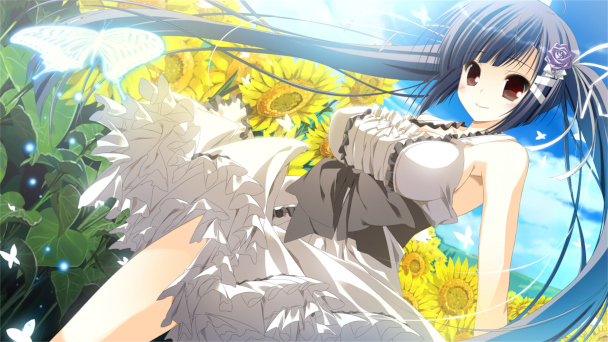
Pleasingly, Ruka’s route is more interesting. Here, a small town mystery erupts over compromising photographs. That’s a promising premise, but things get resolves a bit too quickly. What could have been simmering psychological tension feels like a romantic epilogue. Despite that issue, this has some of the most ambitious writing in the novel, with the set-up that poses an interesting questions.
Undoubtedly, Yomi’s route is the standout. Here, a pet cemetery, the village’s mythology, and Yomi’s persistence all converge, while uniting the elements in the game’s subtitle. I won’t say much, but it’s the route that lingered with me the longest. And oddly, despite her cover presence, Yomi isn’t the true heroine but she turned my opinion of the novel around.

Hina’s storyline centers around abandonment and explores the role of family. Here, Yosuke sees some of his childhood loneliness in the church’s newest ward assumes a protective role. It offers an interesting contrast to Ruka’s route and unlocks “Long Summer Vacation” chapter jumps forward and follows the adult Hinazakura. This is route that will probably divide readers, with Yosuka’s almost parental role shifting toward a romantic one. That said, I found it ran a bit too long and challenged a bit of the novel’s mythology.
A Classic, but Not the Complete Edition
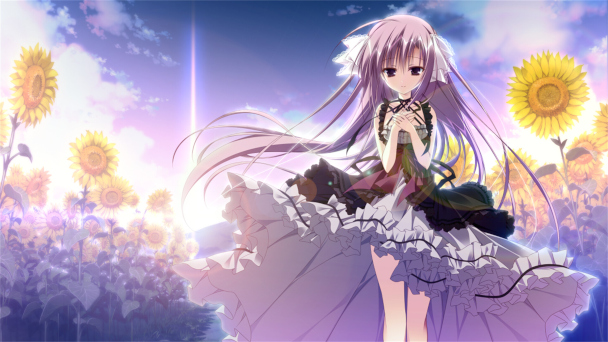
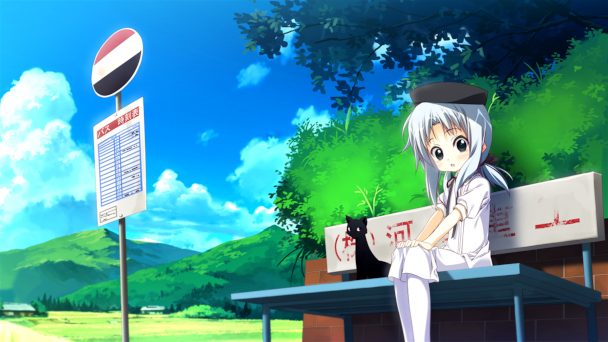
Kagami Games’ PC release adapts the original 2013 Windows version to a modern multilingual engine, with English text, Japanese voices, controller support, cloud saves, and achievements. The underlying assets remain at 720p, so this is more of an archival port more than a true remaster. The character artwork comes from several illustrators, producing noticeable style between heroines. A slightly muted coloring strives to bring a sense of unity allowing the sunflower fields to really pop. Meanwhile, piano, woodwinds, strings, and a wind-up music-box provide the soundtrack with properly reflective timbre. Best of all, each heroine gets her own ending song.
Summer Yearnings
For better or worse, the English edition is not based on the expanded all-ages PlayStation 3 and PSP adaptation, Himawari no Kyoukai to Nagai Natsuyasumi: Extra Vacation. That release added new CGs, revised material, and as mention previously, a complete Tsukiko route. The current PC edition instead returns to the original Windows scenario, leaving Tsukiko loitering with the supporting cast.
Expectedly, the Steam version all-ages edition with nothing racier than a few jokes. Readers who want the content from the original release can obtain the optional 18+ restoration patch from Kagami Games. It restores a substantial collection of explicit sequences with some mosaic censorship present. They’re all pretty conventional but do some some decent quality, even if they’re a bit unnecessary. It’s basically some sex outside of main conflicts, supernatural elements, and emotional drama with little lead-up. One moment there’s a wistful farewell and in the next they’re fucking. The one thing they do assist with is continuity. Those ‘morning after’ jumps can be disorienting.
Even the Longest Summer Ends
HimaNatsu arrives with some baggage from a different era. Its comedy can be irksome and the quality gap between Daiya’s assured conflict and Yomi’s route is pretty substantial. The missing route from the console version also prevents this English release from being definitive.
But when the score simmers just underneath yet another conversation about halcyon memories, Churches, Sunflowers, and Long Summers missteps are easier to forgive. Makura knows that the end of summer isn’t simply sad because of the return back to responsibilities. No, the season is significant because it’s the time we choose what to take with us into September and what has to be left behind.
HimaNatsu: Of Churches, Sunflowers, and Long Summers was
played on PC with review code provided by the publisher.
Overview
STORY - 80%
INTERFACE - 80%
AESTHETICS - 80%
ACCESSIBILITY - 75%
PERFORMANCE - 75%
VALUE - 70%
77%
GOOD
HimaNatsu takes its sweet time, and not every route delivers an emotional payoff. Still, its best moments capture the bittersweet ache of a summer that you know cannot last.