The Binding of Isaac: Repentance+ review
Mommy Issues, Now with Online Co-op


Repackaging the familiar is a dominant strategy in the entertainment industries. Movies get director’s cuts, albums spawn anniversary editions, and games get remakes that can eventually be remade themselves. Myst had its mysterious island rebuilt for successive generations of hardware. Honestly, I’ve lost count of how many times I’ve played The Last of Us.
Despite following its own remake with a succession of expansions that build on one another, The Binding of Isaac has done considerably more than update its packaging. Its sprawling collection of monsters, mutations, and miserable childhood memories has kept growing. When Afterbirth+ arrived on Nintendo Switch in 2017, its nightmarish trek through the basement already seemed abundant. Repentance+ brings that now much larger collection to Switch 2, adding online play and some overdue explanations of what everything actually does. The question is how much another trip downstairs offers players familiar with the basic floor plan.
Yes, the Switch 2 edition combines Rebirth with Afterbirth, Afterbirth+, Repentance, and Repentance+. Sure, the difference between the last two titles is only a single symbol, but the distinction matters. Repentance delivered a substantial expansion of routes, characters, enemies, and endings. Repentance+ focuses on online multiplayer, additional balancing, and quality-of-life conveniences introduced through subsequent updates. And while the complete package not flaunts more than 700 items and 34 playable characters, including their Tainted variants, the stronger selling point is just how differently rooms feel once the pickups all start interacting.
Mommy Issues, Major Content
For anyone who has avoided Isaac’s take on family dysfunction, the premise remains wonderfully uncomfortable, making me wish more games tackled difficult subjects. A frightened child flees into the basement after his mother believes a divine voice has told her to sacrifice her son. Armed with tears, he ventures through a labyrinth of rooms populated by creatures that embody everything from religious dogma to an upset digestive system.
Look past the fanaticism and fecal jokes, and Isaac has quite a bit to say about guilt, faith, and parental relationships. Just don’t expect traditional storytelling. Repentance brings the story closer to closure, although its final ending still leaves room for interpretation. There are 22 endings to view, with most serving as puzzle pieces rather than an unambiguous payoff.
Plenty of Reasons to Cry
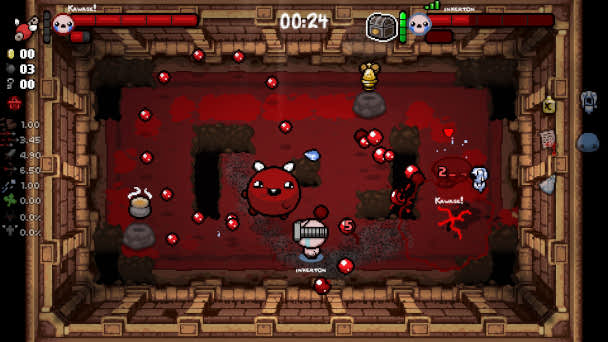
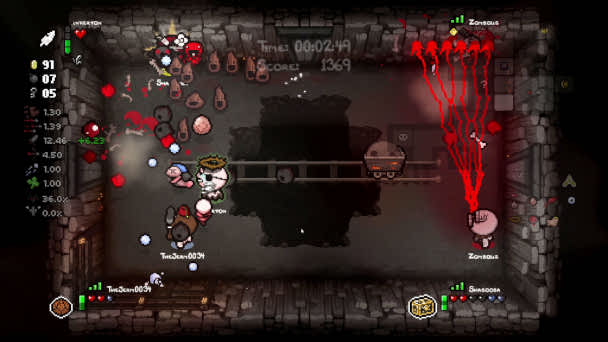
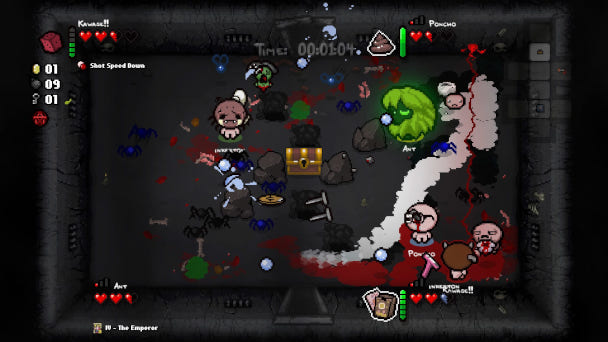
Fortunately, the action is far less nebulous, offering four-directional shooting as you avoid incoming attacks and clear rooms on your trek to the next boss. That part is straightforward. What isn’t as clear are the decisions you make getting there. Bombs can uncover secret rooms or free items trapped behind rocks. They can even serve as a last resort when you’re surrounded by foes and low on health. Pickups modify your offensive output: Brimstone replaces ordinary tears with a charged blood beam, while Spoon Bender gives shots homing properties. Best of all, when these effects accumulate, combat often shifts from cautious potshots to spectacular displays of raw destructive power. Learning when a seemingly coveted pickup might disrupt your current approach is just as important as knowing an enemy’s attack patterns.
If you’re coming from Afterbirth+, the largest surprises will be found in Repentance’s alternate route. The flooded Downpour, hazardous Mines, and occult Mausoleum deliver much more than different room walls. Reflections can reveal otherwise invisible enemies in aquatic rooms, while minecarts introduce hazards that demand fresh attention. Hornfel, for example, rides the rails while hurling bombs. Decisions become more consequential, since entering the alternate floors requires payment, and hunting down their secrets involves additional preparation. This often results in rewarding discoveries, although repeating some of the more complicated requirements can turn an exciting expedition into a routine errand.
Taint it A Kick in the Head
Thankfully, the expanded roster feels just as substantial. Bethany converts Soul Hearts into stored charges and uses her Book of Virtues to generate orbiting wisps, whose effects can change with the active item she uses. Jacob and Esau task you with managing two bodies simultaneously. Once an obstacle separates them, keeping track of two hitboxes becomes a hectic responsibility. The Tainted characters push things even further. Tainted Isaac ordinarily limits you to eight passive items while offering additional choices, pushing you away from indiscriminate collecting. There’s enough variation to encourage repeat play, especially if you lean toward the masochistic.
Repentance’s balancing also makes some helpful changes. Some notorious combinations have been nerfed, while weaker items have been retooled to make them more attractive; Repentance+ continues that effort with further buffs and adjustments. Assembling an outrageously powerful build is still possible, but relying on an old favorite to carry you through is less dependable. The obvious goal is more experimentation, which seems fitting for a game about discovering synergies. But there’s still plenty of room for frustration. Unhelpful rewards, dense enemy arrangements, and thorny character rules can combine into something more exhausting than enjoyable.
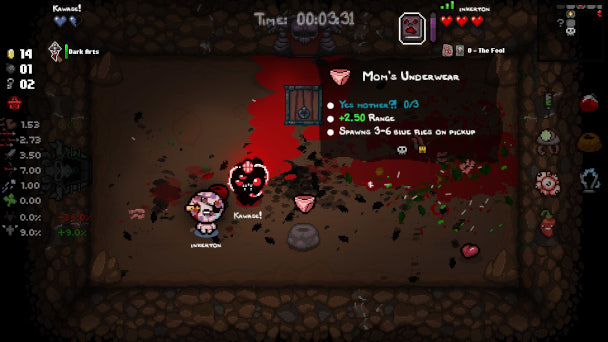
One of Repentance+’s most useful improvements makes remembering what everything does much easier. After you beat Mom once, you can enable built-in item descriptions, with each object’s description becoming available after you collect it for the first time. Additional information is available through the menus. This preserves the initial surprise while helping you make better decisions the next time something appears. With hundreds of objects competing for your memory, it’s a welcome addition, especially if you play Isaac in spurts.
A Little Help From Your Fiends
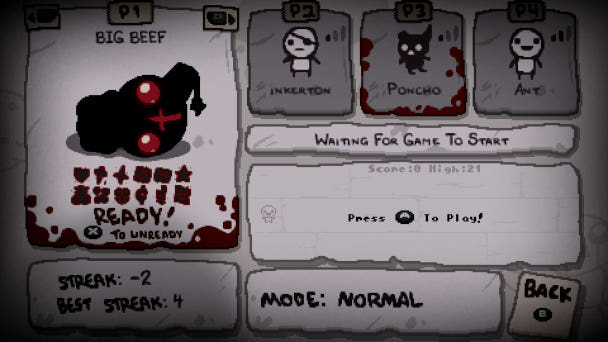
Online co-op provides one of the main reasons to pick up this edition. Up to four players can tackle runs together through friend lobbies, public matches, or quick matchmaking. Everyone controls a full character, building on the expanded local co-op introduced in Repentance. Deciding who gets to grab a valuable pickup adds an interesting quandary. Improving an already powerful teammate might help the group’s chances, but helping your weakest friend survive could be the wiser long-term investment. Lobby filters can help you find a suitable group, while an emote wheel offers some basic communication. Challenges, daily runs, and online leaderboards extend co-op even further.
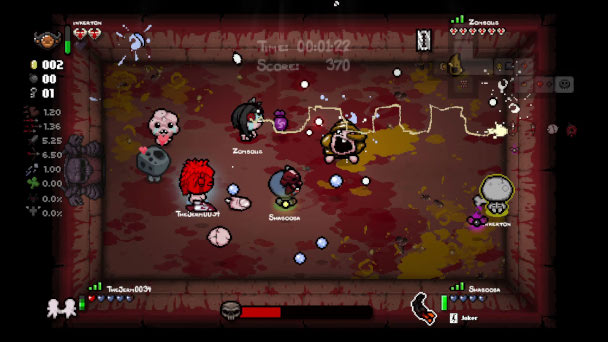
Expectedly, multiplying the number of Isaac players also increases the chaos. When several players are dispensing powered-up attacks in a small room, things can become harder to read. Online play can suffer from lag, particularly when players are far apart, so connection quality remains worth considering. How consistently it holds up after launch remains to be seen. The good news is that the game transitions well between a large television screen and handheld play. Isaac’s small rooms and accessible controls are well suited to portable sessions, with docked mode ideal when a couple of builds fill the screen with projectiles. Cross-save transfers between Steam and consoles have been announced for launch, while cross-platform multiplayer is on the publisher’s post-launch roadmap, targeting Q1 2027.
Even with the improved explanations, Isaac can be an intimidating game to play in 2026. Its secrets are deliberately arcane, unlock conditions can be vague, and completing routes with different characters demands patience. Greed and Greedier provide some additional goals and rewards, although their wave-based structure won’t be everyone’s preferred way to spend more time in the basement. Repentance+ is at its best when you’re shaping a promising build on a productive run. Chasing completion marks can make that same abundance feel like checklist work.
Paying for Your Sins
Undoubtedly, the game’s price complicates the recommendation. The Switch 2 package has a $69.99 price, while Nicalis has announced a $9.99 upgrade from the original Switch version of Repentance. The smaller upgrade fee makes for an easy decision for existing owners who want the new features. For newcomers, there’s enough substance to justify the investment, but know that you’re heading into a deliberately abrasive game. Anyone already satisfied with Repentance should weigh the online play and conveniences first, since the most engaging content is already in that edition.
The Binding of Isaac: Repentance+ was played on Switch 2 with review code provided by the publisher.
Overview
GAMEPLAY - 90%
CONTROLS - 90%
CONTENT - 100%
AESTHETICS - 80%
PERFORMANCE - 80%
VALUE - 80%
87%
VERY GOOD
The Binding of Isaac: Repentance+ still makes another trip into the basement hard to resist, thanks to its twisted humor, inventive item combinations, and plenty of replay value. Online co-op and clearer item information are welcome additions, but newcomers face a steep price and demanding learning curve, while existing Repentance owners are mainly paying for those refinements.