Food Devils preview
Where The Devil Gets Extra Turns and Humans Grow Hungrier


The most interesting choice in Food Devils starts before anyone moves: you’ll contemplate how to fuel your powerhouse. The devil’s strongest attacks use calories, and a master rule determines how the human adventurers generate them. Those actions also add to a hunger stat, so a turn that powers up your devil can make the next expedition even riskier. Studio Daimon builds the rest of the loop around that exchange: cook dishes from monster ingredients to attract recruits, then send a devil and up to four humans out to collect supplies and face encounters.
The Steam Early Access build launched on November 24 with three playable devils, four areas across two different biomes, and 250+ skills. Studio Daimon estimates 15–20 hours of story content, with replayable expeditions adding more, and expects Early Access to last about a year. I’ve spent about fifteen hours with the build so far. The tactical systems already have some solid foundations, and this good be a meal once some interface snags are fixed and additional content is added.
A Tight Grid and a Lot to Keep Track Of
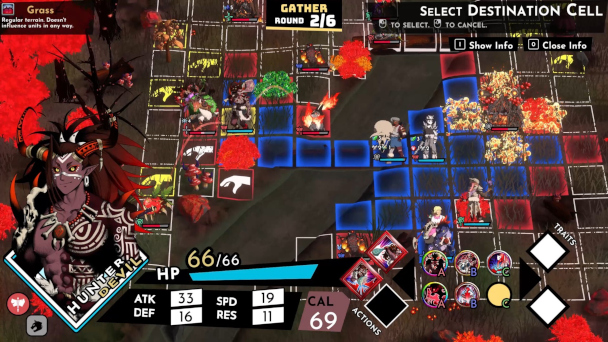
Most encounters are compact, with maps that are small enough to punish slipshod movement. Attack range, terrain, and positioning all matter, while each expedition branches through battles, ingredient-gathering, and escape objectives. Skill packs can alter what your squad is good at as a run unfolds. A unit that seemed like a simple support choice can become a source of status effects or a real threat. I found myself checking how the whole team fit together before committing to a move.
The combat uses four flavors to shape matchups. Sweet, spicy, and sour form a damage triangle, while umami is neutral. Checking an enemy’s flavor before attacking can turn a punishing encounter in your favor, and clearing dangerous foes quickly is often the safest plan. Largely, the system is a shorthand that fits with food theme without adding another system to memorize.
The Bonfire to Predator to Extra Turn Pipeline
Devil contracts can change an adventurer’s skills and mobility, which means the same class can play differently depending on the expedition. Hunter devil’s jägermeister passive might be the best example: if hunter is within two spaces of a bonfire before combat, it gains three predator points. At the end of a turn, nine predator points grants hunter another turn, once per encounter. Set that up in a crowded fight and hunter can take out several enemies before handing control over to the opposition.
Of course, the resource trade comes with a cost. Generating calories raises the humans’ hunger, and adventurers who reach 100 hunger can die permanently on the default setting. Ingredients brought home from expeditions become meals that help keep the roster alive between outings. So a successful run leaves you with more than rewards to spend: you also have to decide who gets fed before the next trip.

The Dining Room Is the War Room
Between expeditions, I mostly choose what to cook, adjust menus and decorations to attract the kinds of recruits I want, and select the next team. Those decisions help support roster planning, though the restaurant feels more like preparation for battle than a detailed simulation of running a kitchen. The recurring cast and their relationships add some storyline, giving the game’s characters a chance to react between fights. I didn’t like
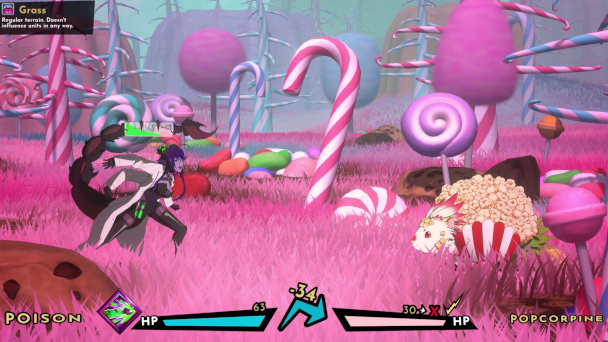
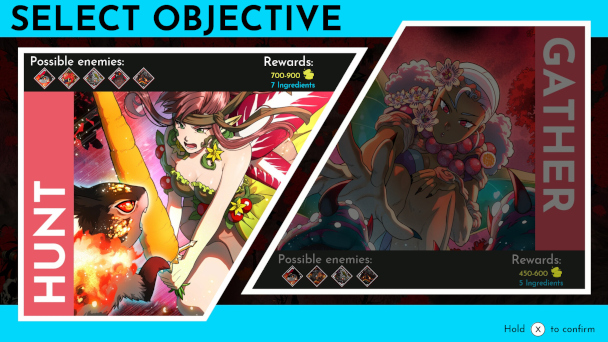
The animated 2D portraits are charming enough and have character, with movement that feels smoother than the optional battle animations. Those combat animations can be a bit choppy, and the cursor sometimes disappears when it passes over environmental objects such as rocks. In a grid-based game, losing track of the selected tile is an especially irritating little hiccup. The mission-objective screens are a visual highlight.
The tactical side of Food Devils is what has me interested: flavor matchups, Devil Contracts, and skill packs can turn a familiar fight into a cool, grid-based puzzle. I’m less interested with the restaurant chores, and the cursor issue needs attention. Still, after about fifteen hours, I’m interested in seeing how the planned content could add some seasoning to the tasty systems already in place.





That dark elf looking sexy.