Springs, Eternal review
You Can’t Soak All Your Troubles Away


Stillwater Springs seems like a perfect place for some reflection. You arrive at the secluded mountain retreat after dark, burdened by a once-promising relationship that has come apart. Here, you’ll spend the night wandering among the hot springs and saunas, and talking with other visitors. Yes, some might use the pejorative term “walking sim” to describe Eternal’s blend of exploration and exposition. But the quiet, secluded setup works well if you don’t mind the absence of action. The approach allows you to ruminate on conversations and flashbacks as you find your way around.
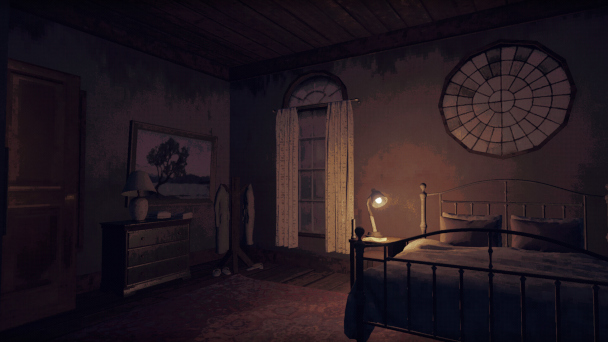
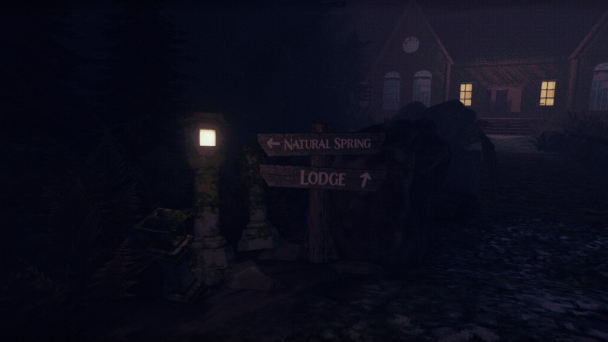
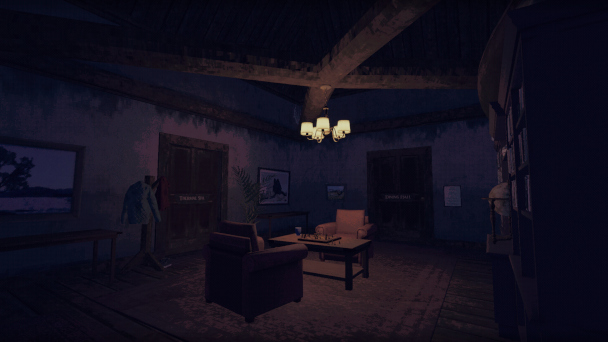
Here, cabins are hidden among the trees while a multi-level lodge glows in the distance, and pools invite contemplation. Moving between locations with only a flashlight is slightly unnerving at first, and the resort feels like a place you’re not meant to explore, especially at night. The chunky, pixelated visuals have a PlayStation-era haze. The first half hour is especially evocative: Stillwater’s footpaths, tunnels, and hanging lanterns provide a strong sense of location.
Love, Loss, and Uneven Ground
The hot springs gradually unlock memories of your life with Twyla. Those recollections reveal moments in the relationship’s rocky history, while conversations with other guests elicit their own worries, questions, and troubles. The other guests add a bit of eccentricity, keeping the growing dysfunction from becoming too overpoweing. It’s a simple structure, and the rhythm of walking, meeting someone, and returning allows for more reflection than a visual novel might provide.
The concept of revisiting a failed relationship is worth exploring, and the early memories hint at enough tenderness to make its ending matter. The couple’s early banter references Truffaut and Godard, which felt pretty close to me own dinner conversations. But as more arguments emerge, selfishness and hurt overshadow that tenderness. Yet, the game never makes clear whether it wants us to mourn the relationship or recognize how unhealthy it has become. I ended up as frustrated with the story as I was with the couple.
Of Shrines and Misspent Symbolism
Stillwater’s Buddhist and Shinto imagery gives the resort a distinct style, but the spiritual references often feel cosmetic. Shrines, statues, and the language of meditation all work together to create a contemplative mood, but they don’t connect much with the game’s ideas about grief or acceptance. A snarky Jizo statue is a memorable exception, giving the spiritual imagery a little more personality. The swaying lanterns are beautiful, while the torii gate suggests a transition from the ordinary to the sacred. Still, these details don’t add much spiritual meaning, which feels like a missed opportunity.
Exploration centers on walking, examining objects, and speaking with visitors. The map tracks cleared areas and points you toward undiscovered items, while books and conversations can unlock new dialogue elsewhere. Your responses may change the immediate exchange, but they have little effect on the larger story. The people you meet at Stillwater are often memorable, yet those limited consequences can make it feel as if your interaction with them isn’t changing anything.
When Waters Cool
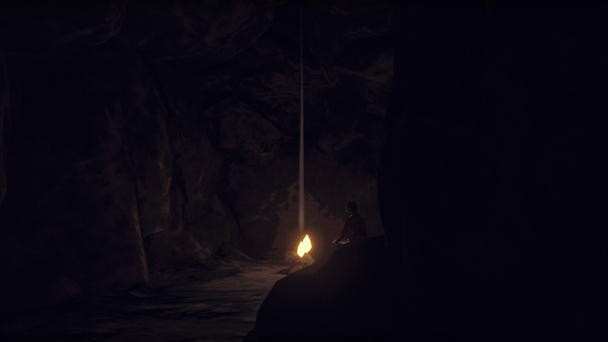
Wind chimes, waterfalls, and rustling trees give Stillwater a calm soundscape, while odd sights and eerie moments keep it from becoming completely cozy. That tension helps the opening stretch feel mysterious, though the game’s eerie touches take a back seat to the reflective tone. The flashlight flickers, and some flashbacks warp into nightmarish corridors, but these jolts never grow into anything that’s truly scary. At roughly two to three hours, it’s a compact stay, but some of its most interesting characters and ideas feel ready for more time than they receive.
Springs, Eternal has the ingredients for a wonderfully contemplative experience: a late-night retreat, a relationship remembered in fragments, and strangers offering their own imperfect advice. Its atmosphere makes the visit worthwhile, but the story loses clarity as the romance deteriorates.
Springs, Eternal was played on PC with review code provided by the publisher
Overview
GAMEPLAY - 70%
STORYTELLING - 65%
CONTENT - 65%
AESTHETICS - 70%
PERFORMANCE - 75%
VALUE - 75%
70%
OK
Springs, Eternal starts with a mountain sauna retreat and a broken romance that seems to signal an intimate, thoughtful story. While the PS1-era atmosphere conveys charm, the unraveling feels more dispiriting than illuminating.