Splatchinko review
A Love Story With Massive Damage and Multipliers

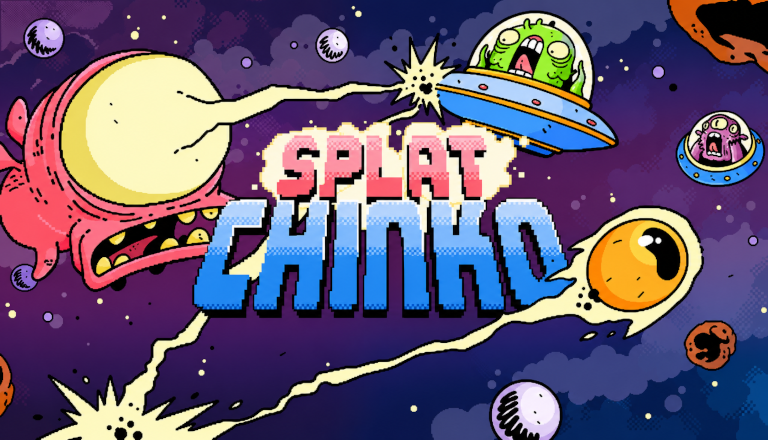
Splatchinko is a love story told with exploding eyeballs and a fondness for pachinko. You play an ancient, world-devouring entity who has given up destructive habits to settle down with the love of their life. Then a giant mouth-monster kidnaps your beloved, and you’re hurled right back into the business of galactic annihilation.
That means popping out your eyes, flinging them into hostile planets, and blowing up anything between you and your sweetheart. The game is largely the work of Milan-based solo developer Fabio Taurisano, who develops under the name, Stupidi Pixel. He understands that being the villain can make for a playful premise, especially when your crimes of love are committed with flying eyeballs.
Pachinko With a Personal Vendetta
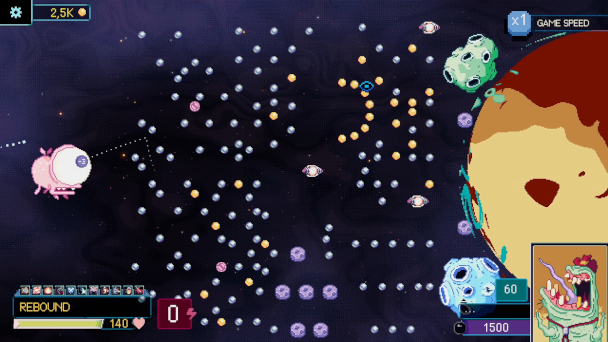
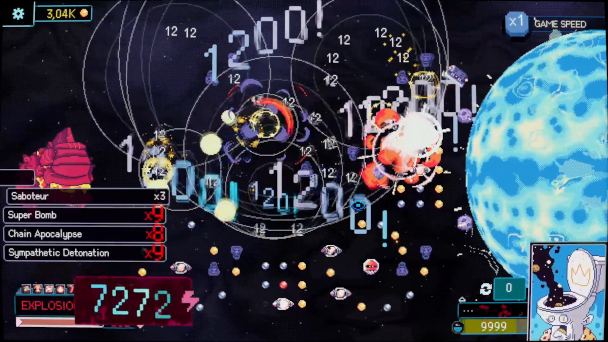
But the main attraction is turn-based pachinko, rather than moral examination. On each turn, you choose an eye from your collection and fire it across a board of pegs, targets, and hazards toward the enemy planet. Peg hits add to the attack, while multipliers and eye abilities can send the damage soaring into four figures before the shot detonates on impact.
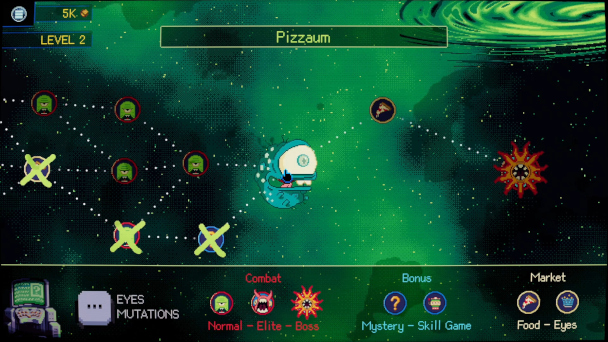
The planet attacks between your turns, and some enemy moves add hazards to the board. A fight ends when one health bar is depleted. Between battles, a branching map lets you choose ordinary fights, tougher elites, shops, healing at a food truck, mystery events, and bosses. Victories earn Globes, the game’s currency, and any overkill damage converts into extra Globes, making a lucky shot feel doubly rewarding. Health does not automatically refill between fights, so healing opportunities are essential.
Eye Spy a Proper Eye Inventory
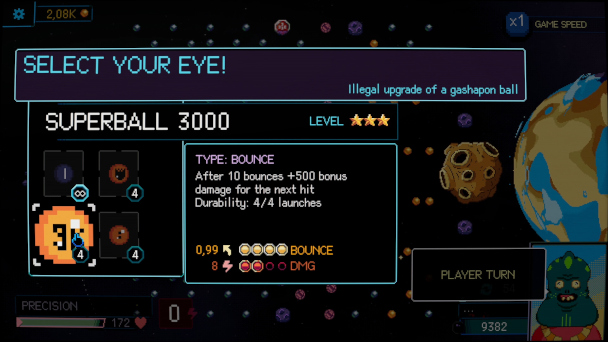
The starting characters represent Bounce, Chaos, and Precision styles, each with a passive trait and a signature eye that can be used without limit. Other eyes usually have a set number of launches, so choosing when to spend a powerful shot becomes part of the strategy. A healing eye can rescue a low-health run, while a bomb-focused eye can make an entire board erupt.
One of the game’s smartest choices is its sideways playfield. Instead of dropping a ball from the top like Peggle and Peglin do, you launch an eye from the left and send it through a long horizontal field toward the planet on the right. That gives each shot room to chain together hits and makes good use of a landscape-sized display. It feels like an adaptation for a monitor, rather than a reproduction of a pachinko cabinet.
Peg values are simple enough to keep in mind even when the damage math grows complictated: standard pegs deal one damage, special pegs deal ten, and bomb pegs explode fo a hundred before other effects and multipliers. That gives each shot a small risk-and-reward puzzle. Do you sweep up a lot of low-value pegs, or aim for a high-value target and hope the eye gets there?
Mutate and Dominate
Mutations are passive upgrades that last for the current run. You can earn them from bosses and events, gamble Globes for one, or try for one in a bonus round. The game tauts more than 70, and they can change how your eyes behave: some split a shot into more eyes, set off nearby pegs, add health, or boost damage through multipliers. A good combination can turn a modest launch into a pretty spectacular chain reaction.
But that power curve can be lopsided. A strong run can flatten several planets with health to spare, but later enemies can outpace your build, especially if you have spent your best damage-dealing eyes. When that happens, careful resource management won’t always rescue a run that dealt you a weak hand. The challenge can be exciting, but it can also feel like the game is asking you to win a damage race with a limited number of random tools.
The tutorial could do more to explain how multipliers stack, which makes it hard to tell whether a disappointing attack came from a poor decision or unpredictable physics. Unlocking new content can also feel like a grind, and I would welcome more playfield layouts. The Planetarium’s Konami cheat-style secret code system adds a pleasing old-school touch, with correct sequences unlocking special eyes and mutations.
One More Shot of Dopamine
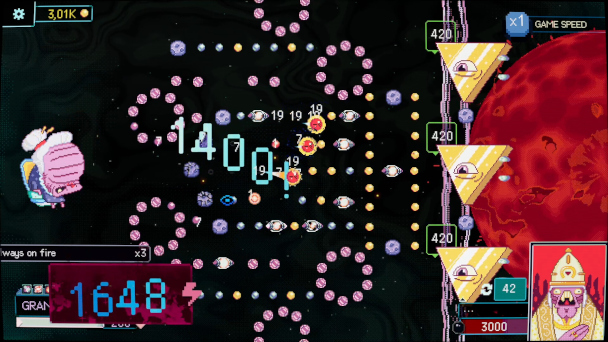
Between its music, chunky pixel art, and stray voice clips, Splatchinko feels engineered to deliver a feel-good dopamine drip. The spacey chiptune soundtrack bounces along as the screen simmers with bright effects and quips on your performance. It is not deep, but it is alluring; a short break can easily turn into a much longer session.
Splatchinko is silly and satisfying, especially when a lucky shot sends the numbers spiraling and a planet explodes in response. Its difficulty can feel unfair when your strongest eyes are spent, but the on-screen spectacle makes it tempting to fire one more.
Splatchinko was played on PC with review code provided by the publisher.
Overview
GAMEPLAY - 75%
CONTROLS - 70%
CONTENT - 75%
AESTHETICS - 75%
PERFORMANCE - 75%
VALUE - 80%
75%
GOOD
Splatchinko is a satisfying pachinko roguelike that can turn a lucky shot into a screen full of planetary destruction. Runs can feel punishing when your best eye-balls are all used up, but the spectacle of it all makes it easy to start another round.