IndieGo #41: Colorbound and Nova Storm
Watercolors and a Widescreen STG

Although Colorbound and Nova Swarm occupy different ends of the indie spectrum, both approach familiar genres with a clever change in perspective. Colorbound takes the softer approach, transforming color into a limited resource that alters the weight, visibility, and position of environmental objects. Nova Swarm stretches the traditional shoot ’em up across a widescreen battlefield, while adding a multitude of ships, and run-altering tactical drafts. Whether you’re painting a path across the Andes or steering through enemy formations, both indies deliver approachable experiences built around remarkable ideas.
Color Bound, Panpipe Studio
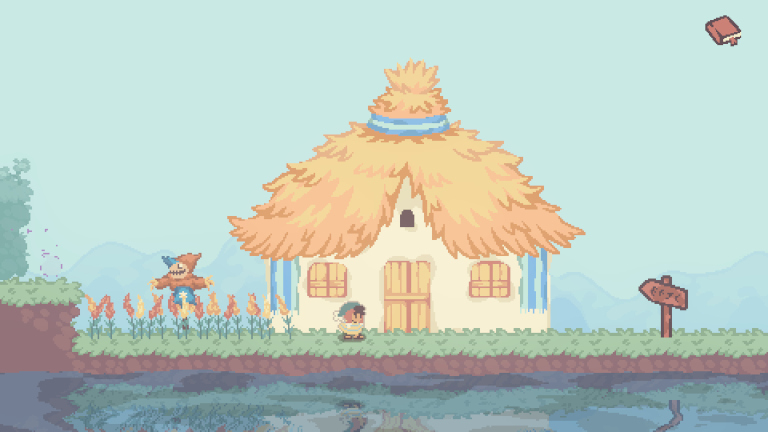
Most puzzle games deliver little more than a clever gimmick and a succession of increasingly complex head-scratchers. But Colorbound is a bit more ambitious. You play as Anku, a young Aymara boy whose grieving the death of his grandfather. After his passing, his former bandmates have drifting apart, presumably feeling the pass sense of loss as you. Hoping to give you grandfather a fitting farewell, Anku sets out to find the scattered musicians and persuade them to perform together one last time. It’s a surprisingly poignant premise for a puzzler, drawing on developer Panpipe Studio’s Chilean heritage. Between the watercolor-hued scenery and the inclusion of zampoña melodies, Colorbound is easy to appreciate.
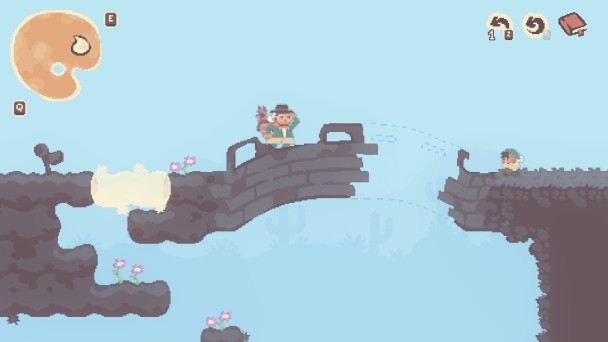
Most of Anku’s adventure is spent navigating compact side-scrolling stages where platforming plays a small and mostly nonthreatening role. Anku can run and jump, but you won’t need to execute precision leaps or have the reflexes of a speedrunner. Instead, you’ll collect small quantities of color scattered around each area. Every bit of paint is a single-use glob. As such, you’ll have to determine when and where each color should be applied. Expectedly, Panpipe Studio eases you into things before giving your brain a healthy workout.
Painting is accomplished with the right stick moving a cursor around the screen, letting you select a nearby block, platform, or other object and change its color. The game highlights potential targets, so you generally know what can be altered even when the stages grow increasingly complicated. Colors also can affect how objects behave. Some make platforms rise, while others add weight and send them downward. Objects that match each other can effectively merge, while painting something the same color as the backdrop makes it disappear from the usable play space. And since the background color can be changed, walls and platforms can become passible.
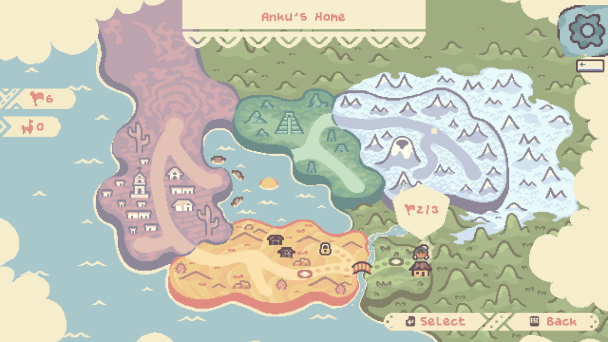
Naturally, it doesn’t take long for those rules to start overlapping. Early puzzles ask you to remove a barrier or lower a platform into place. Later stages expect you to manipulate several objects in the correct order, conserve particular colors, reveal concealed routes, and account for platforms that float away or gradually dissolve. Changing the backdrop can affect several objects at once, making one problems feel like painting by numbers and more like changing the entire room. Smartly, Colorbound highlights available moves, while an undo button lets you retract actions without restarting the stage.
Best of all, Panpipe Studio takes the straightforward idea of matching an object to the background and makes the concept gradually disappear as logic reasoning becomes the focal point. The game also keeps adding complication with burying you beneath a complex set of instructions. Sure, a few later puzzles will take longer than expected but there’s a save of satisfaction that washes over you as you reach the solution. I like how Anku’s journey has more purpose than just heading to the next end-of-stage flag. Beneath the pastel color and panflute melodies is a puzzler about saying goodbye, making Colorbound a journey you shouldn’t overlook.
Nova Swarm, Tiny Foundry
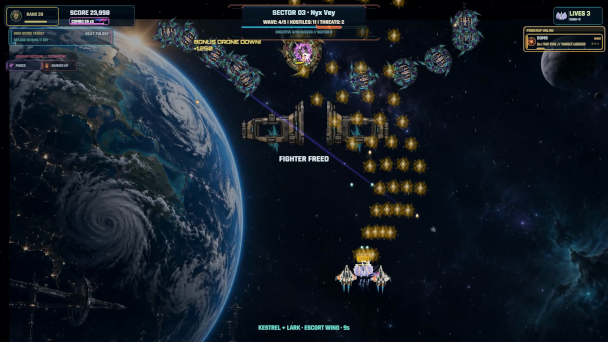
Most vertically firing shoot ’em ups pack the action into a tall narrow battlefield. Nova Swarm reframes its firefights, while delivering a different sense of scale. Here, developer Tiny Foundry scatters its miniature spacecraft across a 16:9 arena, giving every enemy formation plenty of room to fly around. As such, you spacecraft doesn’t seem the hero of most arcade-style shooters. They’re more like a speck trying to survive a battle that stretches far out into space.
Sure, Nova Swarm’s setup is familiar. You can move freely, hold the fire button to emit an endless procession of projectiles. After clearing several waves of enemies, you’ll confront a boss. Focus Drift slows your craft for some precision weaving, while Phase Burst provides a brief window of invulnerability.
Yet the wide arena changes how these basic actions feel. In a traditional shooter, survival often means working your way through a dense curtain of bullets. Here, you spend more time reading trajectories across the entire display. Adversaries enter from opposing sides, escorts protect priority targets, and some foes hold captures allies who can be added to your formation. Thankfully, Nova Swarm is always readable, with bright projectiles that mostly move at a measured pace.
Defeating a boss also gives you tactical draft (in many of the game’s numerous play modes), where you select one of three augments for the rest of your run. The 32 available perks are divided across offense, mobility, defense, and utility, providing everything from increased firing rates, penetrating shots, to additional drones that flank your craft. These benefits can stack, evolve, or combine into fusion protocols, letting you turn an unassuming starter craft into a force of destruction that can take down a wave or boss in seconds. And that’s one of Nova Swarm’s few faults; you feel too strong. This makes runs feel relaxed and far removed from the quarter-gulping coin-ops that inspired Swarm.
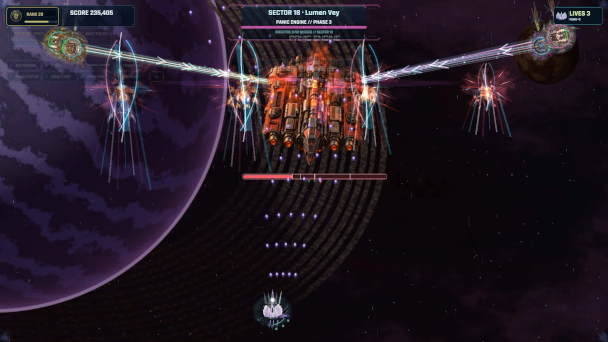
Variety is rooted in the game’s unlockable ships, which aren’t just cosmetic variants. Spread-fire vessels, precision attackers, drone specialists, and nimble interceptors all have their own weapons, handling traits, and tactical compromises. Just as plentiful are the game’s modes.
Arcade Tactical serves as the main ranked variation, while Arcade Pure strips out the drafts for a more traditional score attack. Daily Challenge gives everyone the same ship and route, Scout Run eases the pressure while you learn enemy patterns, and Sector Run lets you practice from unlocked checkpoints. Reaching Sector 30 even opens Overrun, an escalating challenge with both Tactical and Pure variants. Overall, Nova Swarm gives you can incredible amount of variety and some engaging, accessible action well worth its modest five-dollar price point.