Culdcept The First review
Can the Original Card-Board Hybrid Still Cast a Spell?

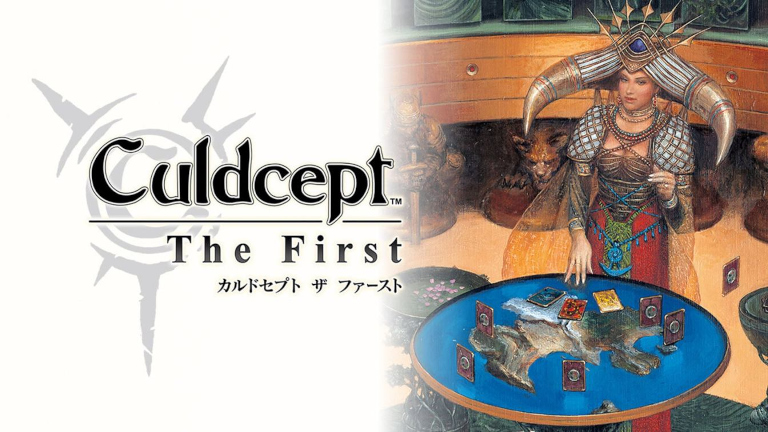
Long before deckbuilders and digital board games flooded Steam, Culdcept carved out a niche by doing something different. Released for the Sega Saturn in 1997, Omiya Soft’s strategy title asked a simple question: what if Monopoly was merged with Magic: The Gathering? The answer was a delightfully quirky blend of property management, collectible card battles, and deck tinkering. While later entries like Culdcept Revolt and Culdcept Begins would refine the formula, the original game never officially reached Western audiences.
Nearly three decades on, Culdcept The First finally gives stateside players the chance to experience where it all began. Rather than rebuilding the game from the ground up, City Connection’s release is a preservation-driven remaster that adds a handful of modern conveniences onto the original Sega Saturn release. Unsurprisingly, it’s an unmistakable product of the late ’90s, with a deliciously offbeat vibe, 4:3 output, and occasionally glacial pacing. But it also feels like City Connection could have put a bit more love into the re-release.
Still Dealing the Same Hands
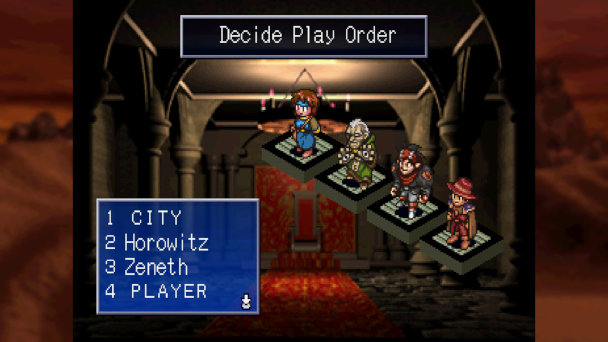
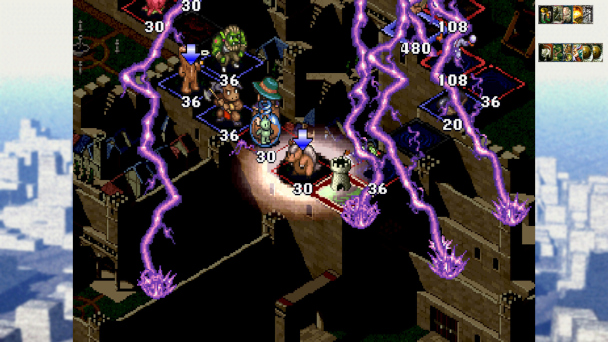
Despite Culdcept‘s early reputation for being too complex, the game’s objective is rather straightforward. Each match takes place on a board game-style playfield where players roll dice, circle the board, and attempt to amass enough Magic (the series’ in-game currency, referred to as “G”)) before returning to the castle. Along the way, you’ll take over empty territories by summoning creatures from a custom 50-card deck. Those monsters then function like hotels in Monopoly with a twist. Although you can pay a toll, there’s also the possibility of beating the defending monster and seizing the property. Years on, it’s still a clever system where you’ll weigh saving your money against attempting to control the board by leveling up your creatures.
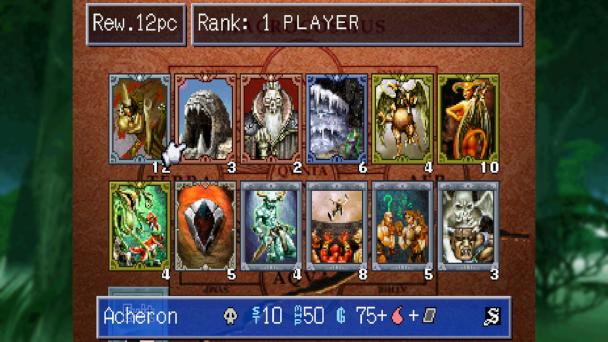
Of course, territorial power is only half of the equation. Every creature has an elemental affinity, different types of land can provide a boost to certain monsters, and your deck also contains equipment, spells, movement cards, and tricks that are capable of reversing the momentum of a match. Unlike some deckbuilders, success rarely comes by just having the most power cards. Instead, you’ll need to formulate a cohesive strategy, know when to spend valuable resources, and be flexible enough to change tactics after facing a string of misfortunes.
Hotels But With Hit Points
And these kinds of decisions are why the series has earned a small but loyal legion of fans over the years. Powerful cards can be helpful in Culdcept. But savvy players know they’re no match for predicting the actions of your opponents, and know that it can be smarter to avoid confrontation sometimes. That said, seizing a succession of properties can be an enticing undertaking, especially against local opponents. Sadly, there’s no netcode for matches against online ones.
But that’s not the only issue you might face. Culdcept The First explains the fundamentals, but much of the learning is on you. Over 300 cards introduce dozens of in-game terms, abilities, elemental interactions, and exceptions that might be off-putting to newcomers. And that’s just figuring out how they work; mastering these elements is a whole other challenge. As such, early defeats can feel unexpected, at least until you’ve wrapped your head around Culdcept‘s nuances. And while randomness can make matches memorable, you’ll also have to face the fact that unlucky dice rolls and card draws can tank your aspirations.
Fortune Favors Those Who Save (Often)
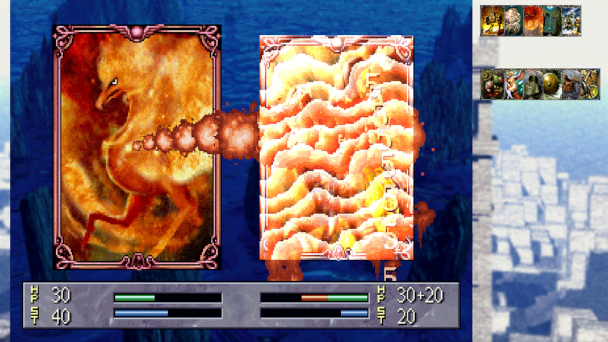
But here’s the thing that truly hurts Culdcept The First. Individual matches can last more than an hour, especially on larger maps or against multiple CPU opponents. Every creature battle has lengthy animations and dramatic pauses that were probably cool in 1997, but will feel slow to many modern gamers. Occasionally, the game can crash, and while Quick Saves can offset some of this frustration, players shouldn’t have to prep for instability. Similarly, the lack of mouse or widescreen monitor support is disappointing. While there’s the option for Japanese or English text, you’ll have no control over the hard-coded kana.
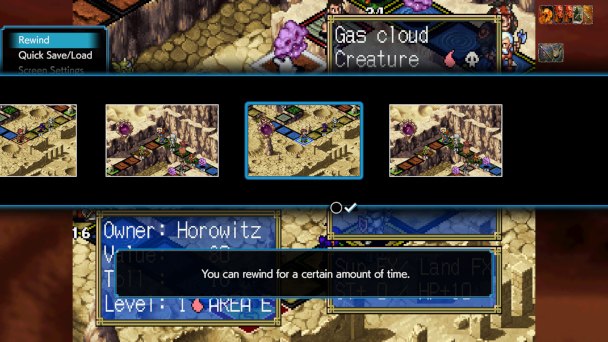
That said, there are a few upsides, with the ability to rewind one of the best additions. Now, you can jump back to any point where a player crossed a Fort or returned to the Castle. Considering how lengthy matches can be, it’s a welcome safety net. Likewise, being able to suspend a two-hour match with Quick Save and Quick Load functionality removes one of the biggest obstacles of the original release. The Reveal Hands option can continuously display you and your opponents’ cards, removing the need to memorize fleeting pieces of information. It’s also helpful for learning, helping you discover ways to counter your adversaries.
Less Grinding, If You Desire
Similarly, the Bonus Pack option increases the number of reward cards earned after victories, reducing the grind of expanding your collection. It can be toggled off, of course, allowing for well over 100 hours of playtime if you’re the kind of player who enjoys collecting everything. If you’d rather race through things, Culdcept The First‘s campaign can probably be completed in about 20 hours with the new conveniences and some decent deckbuilding tactics.
Retro visuals can be a contentious topic, but as long as you keep your expectations measured, Culdcept The First has some charms. Character portraits, creature artwork, and even the game’s interface have all aged surprisingly gracefully. Without doubt, the game’s hand-drawn cards remain the visual highlight. Its mythical creatures and monsters convey the allure of a Dungeons & Dragons monster manual. One more thing I’d like to see is an alternative font. Sure, the old Saturn one is readable, but a more modern one would be a nice addition.
The First, But Not the Finest
That said, Culdcept The First isn’t attempting to compete with contemporary strategy games. Like its fonts indicate, this is an attempt at preserving the game and bringing it to a new audience. Sure, later entries streamline mechanics, improve presentation, and introduce new systems. But this is suited for collectors hoping to own as much of Omiya Soft’s series as they can.
As it stands, instability is factored into the review score. But if City Connection can eliminate the crashes and improve the game’s stability, you can adjust the game’s final score by an additional ten percent or so. For all its rough edges, Culdcept The First remains a fascinating blend of board game strategy and collectible card battles that still feels original. It may not be the definitive way to experience the series (start with Culdcept Begins), but it’s an important piece of strategy game history that’s finally available to its core audience.
Culdcept The First was played on PC with review code provided by the publisher.
Overview
GAMEPLAY - 80%
CONTROLS - 70%
CONTENT - 80%
AESTHETICS - 75%
PERFORMANCE - 50%
VALUE - 60%
69%
OK
Culdcept The First lets you revisit the series' origins, showcasing the clever blend of board game strategy and collectible card battles that made Omiya Soft's title a cult classic. While the slow pacing and occasional crashes keep it from being the best place to start (that's still Culdcept Begins), it's an important piece of strategy game history that's finally available in English.





Does it work on Steam Deck?
Wish there was a package price for First and Begins.
Yeah, kept crashing on me. Got a refund through Steam.
Excellent post! I learned something new and I’ll definitely be sharing this. The practical angle you took really sets this apart from similar posts. We run mouadal.com, an academic-calculator site, so we’re always hunting quality reads to recommend.