Angeline Era review
Tets, the Headfirst Hero


Angeline Era arrives at a time when dodge-rolls, timed parries, and stamina-driven duels are essential ingredients in the action-roleplaying recipe. But instead of conforming to modern trends, developers Melos Han-Tani and Marina Kittaka revisit a play mechanic that’s closer to the signature ‘bump combat’ system found in Ys I & II.
While careening into enemies is a welcome nod to Falcom’s beloved franchise, Angeline Era doesn’t just chasing nostalgia. Pleasingly, the game rethinks how bump-based, button-free combat can work in a world where Dark Souls-style precision is the prevailing standard.

Running Headfirst into Trouble
In Era, whenever protagonist Tets Kinoshta walks, he leads with a trusty dagger, injuring vulnerable opponents. But when he’s not moving, Tets is prone and a collision with a foe confiscates a portion of his health gauge. But you’re not able to just wallop through the game’s world. Some opponents sprout spikes when you draw close while others are only susceptible in certain areas of their body.
Similarly, bosses have a range that requires you to harness Tets double-jump ability. Yes, Angeline Era will test the precision of your timing, but dodge rolls, guard meters, parry timings, and i-frames aren’t part of the formula. You’ll survive because you’ve learned to observe enemy pathing, exploit openings, and predict collision behaviors not because you’re quick with the guard button.
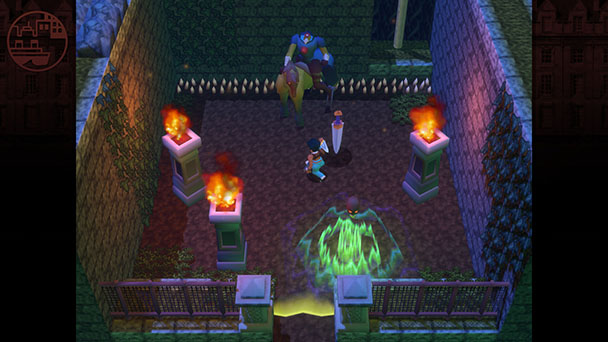
This design philosophy gives every encounter a puzzle-like undertone. Enemies often come in mixed groups, from fast rushers paired with hulky blockers, ranged pests hiding behind swarms, or hazards that force you into inopportune angles. Combat often focuses on controlling space where you herd foes into favorable areas and pick off the most disruptive threats first. When an enemy has a weak point, reaching it can be a spatial challenge as much as an offensive one.
Shooting is a Process Not a Predator
Another clever wrinkle is how Angeline Era handles Tets’ gun, a tool that’s less about raw damage and more about spatial control. The firearm doesn’t function as a traditional weapon. A constraint of only firing upward and limited ammo makes it a supplementary option. Additionally, some enemies shrug off shots unless they are struck at specific moments or angles.
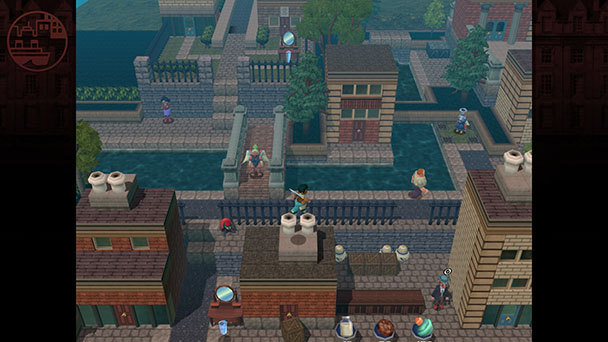
Largely, your gun is great for softening enemies, triggering reactions, or forcing foes out of comfortable positions rather than pruning their health bars. And without spoiling anything, know that you’ll receive several different weapons across Era’s 20-hour length. While Era has the overworld and dungeon approach of older Legend of Zelda titles, you won’t have to switch to a certain tool to proceed.
Search, Scour, and Scratch That Head
Nicely, nearly every corner of the game’s expansive environment can be searched, prodded, or revisited. A button press instigates an investigation on the ground below, often revealing a useful item or a route for exploration. That means poking into side paths that look peculiar and experimenting with everything you come across. For better or worse, the game rarely tells you where to go or what’s mandatory. Instead, Era piques curiosity through subtle environmental cues, hidden rewards, and the quiet confidence that wandering off the beaten path is usually worthwhile.
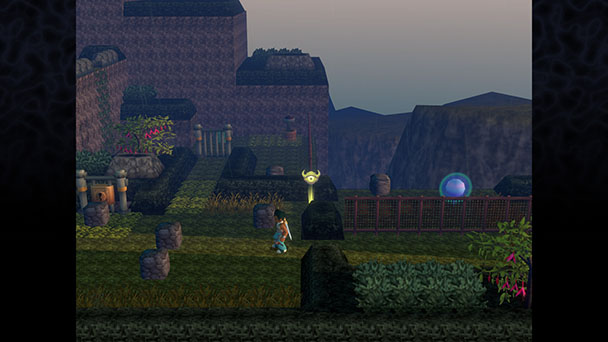
That openness, however, comes with consequences. Because Angeline Era is happy to let you explore almost anywhere, it’s entirely possible to stumble into areas where a critical upgrade that makes progress far more manageable. Like an autonomous-leaning Metroidvania, when you’re feeling overwhelmed, that often means the game is telling you to backtrack and look for another route.
Ys-ing into that Retro Look
Visually and tonally, Angeline Era reinforces its mechanical throwback with a retro-rooted presentation that favors atmosphere over graphical spectacle. Environments feel deliberately sparse which helps separate environmental hazards from enemy behavior. That said, architecture can be sporadically ambiguous. Tets can easily clear waterways but can’t always hop on slightly elevated elements.
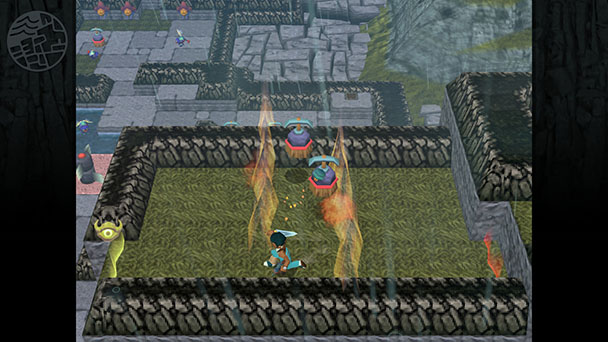
Era’s soundtrack also favors restraint with understated melodies and ambient cues. The result is audio that builds tension during exploration and highlights the intensity of boss encounters without stealing the spotlight. Although Angeline Era might not impress with sheer technical flash, it’s PS2-style presentation recalls when gameplay often eclipsed graphics.
Bump This Up the Wishlist
Angeline Era is a refreshing reinterpretation of a nearly forgotten design philosophy. Its bump combat, open-ended exploration, and emphasis on hidden secrets fuse into an experience that’s all too rare these days. While it might appeal to staunchly modern players, those willing to meet Angeline Era halfway will find an action-RPG that proves old ideas can still feel fresh when they’re handled with care and conviction.
Angeline Era was played on PC with review code provided by the publisher.
Overview
GAMEPLAY - 80%
CONTROLS - 80%
CONTENT - 85%
AESTHETICS - 75%
PERFORMANCE - 75%
VALUE - 85%
80%
GOOD!
Angeline Era trades dodge rolls and parries for deliberate movement, turning every collision into a calculated risk. It’s a confident, old-school action RPG where exploration, controlling space, and target prioritization are just as important as reflexes.





They managed to evoke that washed out PS2 look that I love.