Be Missed and Remembered: The Letter from Mayoiga review
A Haunting Tale That Slowly Loses Its Way

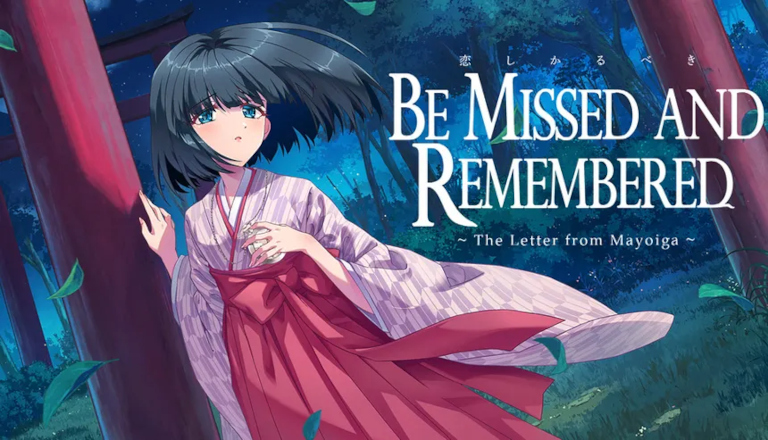
Visual novels often have a soft spot for memory and regret. Undoubtedly, Be Missed and Remembered: The Letter from Mayoiga has a deep-rooted appreciation for these concepts. Blending folklore, a coming-of-age story, and a slow-burning mystery, the novel excels at combining several different things, at least until it decides to stretch its timeline unexpectedly far.
This is NekoNeko Soft’s first release in fourteen years, since 2012’s Sorairo Portable, but the team certainly still has the foundational skills. Rather than delivering shocking twists or melodrama, the novel lets you listen to private conversations, loiter on the nostalgic scenery, and fret a fair amount at the emotional uncertainty. At its best, the writing delivers some truly moving moments. But an uneven latter half and a rough localization keep undercutting the good stuff.
Following the Trail to Mayoiga
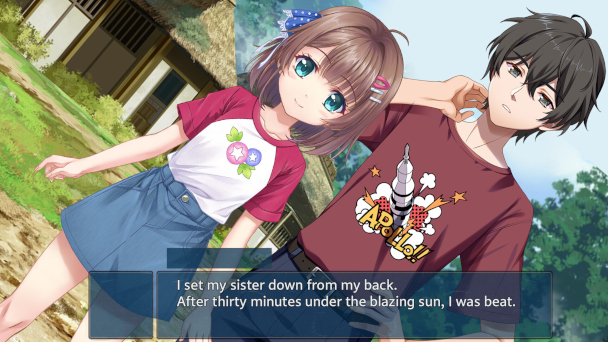
The story opens with Naofuyu, a high schooler traveling with his younger sister Risa to their grandparents’ home in the Japanese countryside. It’s near a mountain lake that occasionally reveals something underneath it: a Mayoiga, the term for a hidden dwelling said to appear only when the summer heat drops the water level low enough.
No one who’s found it has ever really explained what’s inside but there are plenty of rumors, keeping people away. When Naofuyu goes looking despite these warnings, the novel starts introducing narrative threads that can stretch back generations. As such, the shrine’s gradual fade from local memory raises a interesting question: what’s the cost for a place or person when they are forgotten?
There’s Something in the Water
Letter from Mayoiga’s early chapters are genuinely evocative, with the din of cicadas, overgrown mountain paths, and a house running on an aging generator. It’s the kind of rural-Japan-in-summer atmosphere that makes conversations feel private. This is a pre-mobile phone society, and there’s something quite endearing about witnessing Naofuyu and Risa’s evolving connection, largely removed from the rest of the world.
Remarkably, Naofuyu injects some contrast into the context. He’s respectful of his grandparents’ world, but still visibly a kid of his own era (His Apollo rocket shirt does some of the work, establishing where his head is at). That tension between old superstition and modern forward-thinking is more interesting, honestly, than the actual ghost story. At least that’s where my head is at.
Growing Up Right in Front of Us
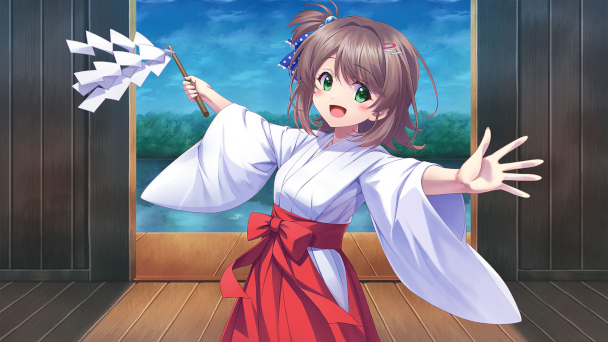
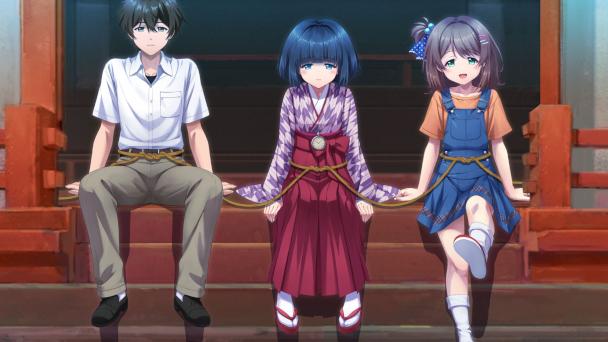
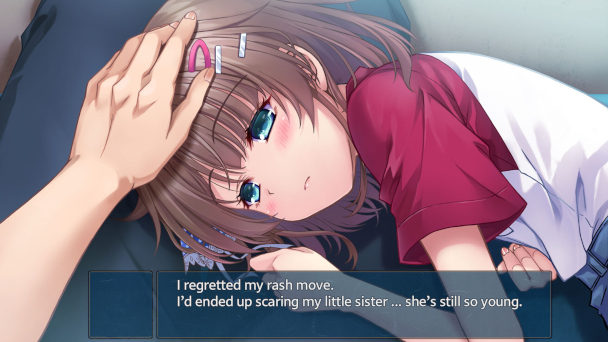
But it’s Risa that ends up being the novel’s emotional core. She starts out just tagging along on Naofuyu’s investigation. But the deeper it goes, the more she’s forced to confront her own assumptions. As such, she grows from someone who reacts to things into someone who makes hard calls on her own. It’s the kind of character arc that visual novels don’t give often enough. She’s mentally leveling up and that’s changing the relationship with her sibling.
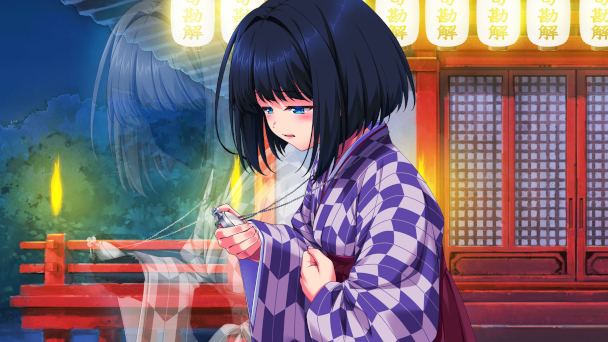
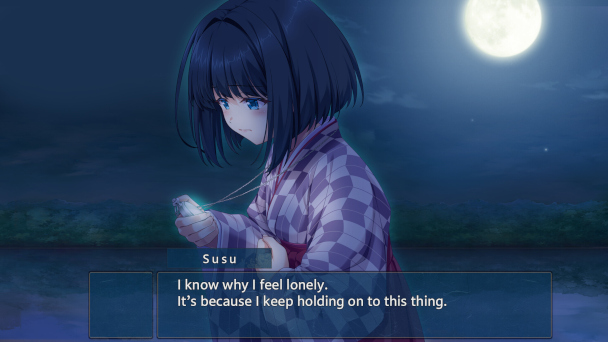
Susu is the other standout. Without spoiling anything, she exists in a kind of in-between state, so she’s not quite remembered and not quite gone. Her scenes inject a bit of melancholy without succumbing to manipulation. She’s also the clearest expression of the novel’s thesis: what happens to someone who slips out of memory the moment they’re out of sight.
Tarnishing Some Salient Memories
The first half of Letter from Mayoiga works because it doesn’t rush things. Long stretches of mountain walks, home-cooked meals (with sausages cut into a little octopus), and idle summer conversations make this cast feel like people more than any plotting does. But some will find the pace slow. I’d argue that it’s something that a lot of visual novels overlook. There’s the sense that the countryside itself is a character; one that’s been collecting history the whole time. That just can’t be hurried.
However, the second half is where things start to come apart. Instead of tightening up its mystery, the novel’s story splinters into separate strands. There are flashbacks, folklore detours, and supernatural reveals that don’t always connect with each other. Individually, most of these sequences are worth telling. But when strung together the transitions can be jarring, causing some of the emotional beats to not land. By the end, there’s plenty to think about. But there’s also a nagging sense that all those threads got tied off instead of being actually resolved.
Writing That’s Distracting When It Should Be Devastating
The spotty English localization doesn’t help things. There are stretches where the dialogue is genuinely elegant, capturing a feeling or a personal moment. But then it’s undercut by awkward phrasing, inconsistent honorifics, as well as interactions that shift between natural and being stiff. Sadly, parts of the script read like they went through a machine translation rather than a editor tasked with cohesion.
Undoubtedly, Be Missed and Remembered: The Letter from Mayoiga is at its strongest when it lingers in the more personal moments. Its charmingly realized countryside setting and believable relationships make the opening hours absorbing, turning modest conversations and summer routine into something that’s affecting. Risa’s growth and Susu’s bittersweet predicament give the story some real emotional power, making it easy to overlook the deliberate pacing.
Will This Letter Be Remembered?
Unfortunately, the novel’s second half doesn’t maintain that same focus. As the narrative splinters across multiple timelines and threads, its emotional impact becomes diluted, while an inconsistent English localization further distances you from the drama. But there’s just enough heart in Mayoiga‘s forgotten paths and fading memories to make this journey worth taking, even if the destination itself isn’t always memorable.
Be Missed and Remembered: The Letter from Mayoiga
was played on PC with review code provided by the publisher.
Overview
STORY - 70%
INTERFACE - 75%
AESTHETICS - 80%
ACCESSIBILITY - 75%
PERFORMANCE - 75%
VALUE - 75%
75%
GOOD
Be Missed and Remembered: The Letter from Mayoiga shines brightest during its opening hours with its rural setting, heartfelt characters, and an intriguing sense of mystery. While its fragmented second half and uneven localization keep it from reaching its full potential, there's still plenty here for fans of thoughtful, emotionally-driven visual novels.




Second half definitely not as good as the first half.
Loved the first half. But the second was a total letdown. Review score seems too high.