Akiba Lost review
Full Emotion Video


Full-motion video games have spent decades trying to shake off the reputation they earned during the early days of CD-ROM gaming. Back then, grainy footage, second-rate acting, and conspicuous pauses were commonplace. Fortunately, Akiba Lost arrives with better technology and considerably more self-assurance.
Developed and published by IzanagiGames in collaboration with Nippon TV and AX-ON, the title combines the structure of a multi-perspective visual novel with the polish of a television drama. Thankfully, the result is closer to 428: Shibuya Scramble than anything like Night Trap. But instead of sending players across Shibuya, Akiba Lost uses Akihabara as the backdrop for a solid mixture of mystery and drama.
The Answer to a Sophomore Slump?
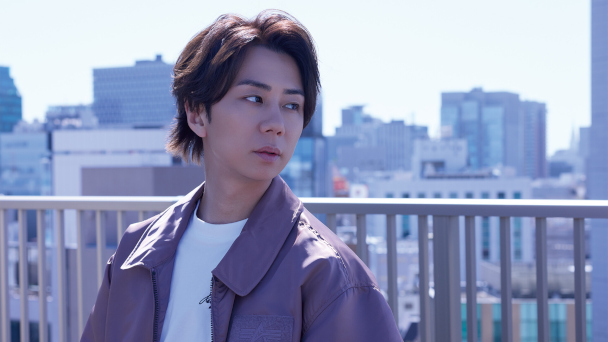
At the center of it all is Daiki Shinjo, a game creator whose debut, White Crash, was a major hit. None of his subsequent projects achieved the same success. Thirteen years earlier, his younger sister Ruri was one of six girls who disappeared in the unsolved case known as the ‘Akiba Vanishing’. With his career stagnating, Shinjo announces a new game based on the incident.
Yes, it is an ethically dubious plan for a comeback, especially since his estranged sister Aoi remains troubled by the event. The intrigue steadily increases as fiction and reality begin to blur. Although the plot sporadically strains credibility, there is plenty of human emotion in the script. From Shinjo’s damaged relationship with Aoi to his deep bond with Masahiko Takazawa, his college friend and the president and co-founder of Shirosawa Games, Akiba Lost contains unexpected moments of poignancy (and I dare not reveal any others). I’s not a grim experience, either. Despite the melancholic elements, several eccentric personalities inject some humor into the proceedings.

Akihabara, Assemble
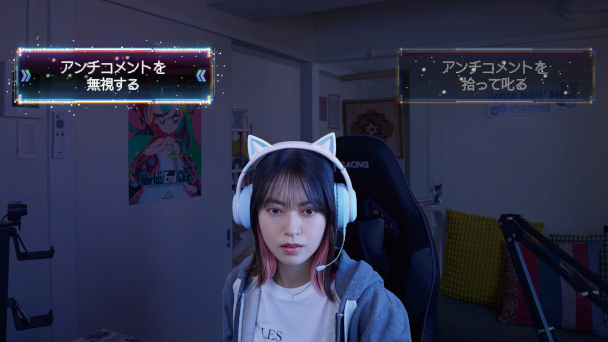
At first glance, the rest of the cast might make Akiba Lost resemble a spirited harem story. Beyond his sister, Shinjo shares the spotlight with five other women. Together, the six represent different facets of Akihabara: a maid-café manager, game streamer, food writer, underground idol, shrine maiden, and cosplayer. Smartly, the solid script and capable performances ensure that this isn’t the usual gathering of archetypes.
Each woman exhibits enough personality to give her role distinction, while Hiromitsu Kitayama’s portrayal of Shinjo carries a persistent shadow of guilt. Sayuri Matsumura adds a layer of weariness to Aoi, while Yasushi Fuchikami helps sell the almost fraternal bond between Shinjo and Takazawa. Yes, some of the performances may seem theatrical if you are not accustomed to international television drama. But that heightened delivery suits a storyline built around an unsolved mystery and plenty of strange coincidences.
Electric Town with a Dark Current
As expected, Akiba Lost makes good use of its setting, showing considerably more than the electronics shops and maid cafés. Kanda Myojin Shrine, live houses, restaurants, and side streets all become pieces of its mystery. Some might fault the early hours for their lack of subtlety, but I lapped up the pulpy slabs of exposition even when the momentum built gradually. Once the initially linear introduction splinters and you begin switching among the characters’ viewpoints, the pacing quickens considerably.
Progress regularly depends on switching between characters. The seven-day story is divided into AM and PM blocks, with each period containing multiple parallel routes. A choice made in one person’s story can alter what happens elsewhere. When a path freezes, the necessary activation point is usually hidden in another character’s timeline. Later puzzles may also require changing a decision so that someone appears at the right place and time. It is a clever way to turn an ensemble story into an interactive experience. Instead of merely watching seven separate stories, you gradually discover how each person’s actions affect everyone else.

Full Motion Occasionally Hits Pause
Of course, there are limits to the game’s sense of agency. Some wrong answers produce a bad ending right after they are selected, effectively forcing you to choose the other path. But you won’t always feel that you’re shaping the plot. Instead, you’ll probably feel like you are identifying the response that the writers consider correct. Although you can skip through previously seen material, revisiting scenes still still be tedious. The occasional 360-degree investigation provides a first-person panoramic view, but these static scenes feel more like the kind of environmental searches you’d find in an adventure game than free exploration. Still, they add some welcome variety without slowing the pacing too much.
Despite Steam’s FMV tag, much of Akiba Lost is told through still photography, text, and brief bursts of movement. Many of the larger dramatic beats receive fully filmed scenes, elevated by confident direction and solid cinematography. Better still, the game doesn’t rely entirely on close-ups of its cast, occasionally becoming rather creative with its compositions. Meanwhile, the in-game TIPS archive offers almost 300 entries explaining industry terminology, in-game concepts, and Akihabara culture, while pixel-art caricatures provide another visual flourish. These are so cute and you can dress them up, but you’ll probably wish they did more with them. They definitely deserve their own retro-style mini-game. Altogether, there’s enough variety to sustain the roughly 20-hour journey to the true ending.

A Footprint as Large as Yodobashi Camera
Expectedly, the PC build is undemanding, putting out fluid video playback even on modest portable PCs. Both mouse and controller navigation are functional, but the soundtrack deserves a decent pair of headphones. The 22 tracks carried over from the television drama were composed by fox capture plan, while Tsukasa Masuko contributed nine original pieces for the game. Together, they cultivate tension even when the video gives way to static imagery. That said, a few typos and rare instances of cut-off text mar an otherwise engaging English presentation. Just prepare yourself for a substantial download and large install size. The review build took up roughly 45 GB despite Steam listing a requirement of only 8 GB
Akiba Lost doesn’t completely meld television and games. Sometimes it resembles a photo novel waiting for its next dramatic cutscene, and its branching is more restrictive than you might expect. That said, the character-switching system creates an interesting puzzle centered on cause and effect, while the cast makes the winding story easy to follow. If you liked 428: Shibuya Scramble, I have no reservations about recommending Akiba Lost. Here’ss another affectionate tribute to that marvelous otaku wonderland.

Akiba Lost was played on PC with review code provided by the publisher.
Overview
STORY - 80%
INTERFACE - 80%
AESTHETICS - 85%
ACCESSIBILITY - 80%
PERFORMANCE - 75%
VALUE - 80%
80%
VERY GOOD
Akiba Lost turns an unsolved disappearance into a sprawling live-action mystery with a likable cast and perspective switching puzzles. Its restrictive choices and repeated scenes sometimes expose the rails beneath the drama. Still, fans of 428: Shibuya Scramble should enjoy getting lost in this affectionate tribute to Electric Town.





There’s a bunch of DLC for the Switch version, including a movie. Is that also for the Steam version?
Looks a bit cheesy. Hope the girls are cute at least.