Trails in the Sky 2nd Chapter review
A Remake With Its Heart in the Right Place

Note: this review mentions elements of Trails in the Sky 1st Chapter’s conclusion, but avoids any major spoilers for 2nd Chapter.
A remake can preserve a game’s heart so well that it also retains some of its issues. Nihon Falcom’s reconstruction of 2006’s The Legend of Heroes: Trails in the Sky SC rebuilds the original, adding expressive full-scale 3D models, cinematic camera work, re-orchestrated music, extensive (but not comprehensive) English and Japanese voice work, and the hybrid combat system introduced in 2025’s Trails in the Sky 1st Chapter. It is faster and more approachable than the original, without sacrificing any sense of sincerity.
It is also still a very long, rather loquacious RPG that revisits familiar roads, repeats errands, and occasionally over-explains, seeming for dramatic impact. Largely, that tension defines the remake. Falcom has modernized 2nd Chapter’s journey, improving its combat, visuals, and pacing. But underneath it all, this is still a staunchly traditional, dialogue-driven sequel that delivers many of the resolutions set up by the first game. And that restraint, is why 2nd Chapter works.
Previously, in the Kingdom of Liberl
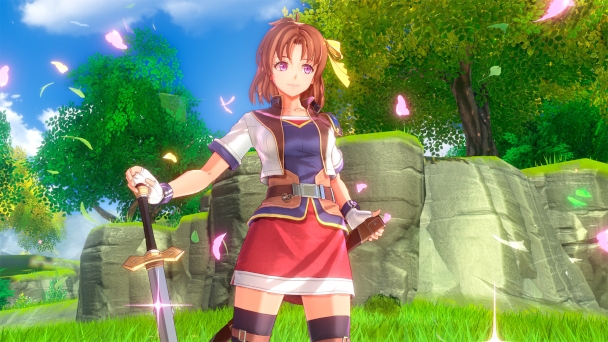
2nd Chapter opens directly after its predecessor’s cliffhanger, with newly promoted senior bracer Estelle Bright trying to understand why Joshua vanished. The sequel soon discusses some elements that 1st Chapter mulled over for dozens of hours. Even the official site recommends finishing the previous story first. So, let me restate: this is not a good starting point. It’s not that you won’t be able to catch up, but it’s like hearing the punch line before you’re heard the joke’s elaborate set-up.
More important, familiarity is rooted into the sequel’s plotline. Townspeople remember what Estelle did for them. Supporting characters continue stories that once sounds like ramblings. But with added exposition, this helps mold their personalities. As such, reunions can be emotional without having to state why. The game assumes that cities aren’t just names on a map but places that evoke specific memories.
One of Gaming’s Best and Most Detailed Contexts
This feeling of continuity just might be Falcom’s best world-building trick. Returning to a town after a major event often reveals new conversations and small personal developments among its residents. The kingdom doesn’t feel alive just because it is large. No, it feels alive because those minor stories keep changing even when Estelle is not their focus.
But with continuity comes the cost of repetition. The early hours lean heavily on familiar routes and routines. If you begin right after a playthrough of 1st Chapter, the structure can come uncomfortably close to following the same trajectory. A lot of highways, caves, and town layouts are nearly the same, too.
That repetition loosens as the story expands its geographic and dramatic scale. Until then, 2nd Chapter recycles and remixes circumstances across reused geography. Often that’s enough. But sometimes it isn’t, making the the game’s early hours a bit dull.
Estelle’s Strength Takes the Lead
Joshua’s disappearance propels the plot into action, while Ouroboros, the secret society that manipulated events in the first game, kicks off a plan that threatens Liberl. Conspiracies, political tension, experimental technology, and some over-the-top Enforcers gradually increase the scope. Of course, little of this is exactly novel. A covert organization pursuing an ancient power is pretty common in JRPGs, and its agents have a habit of explaining their motives like an opera.
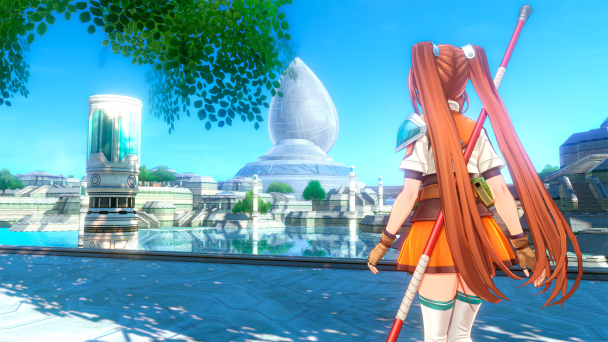
But there’s a more interesting story simmering in the backdrop, as Estella is coping without Joshua beside her. She starts Chapter 2 as a senior bracer, so this isn’t about her climbing the ranks and earning a title. It’s really about understanding the responsibilities that comes with that role. Yes, Estelle is impulsive, perpetually cheerful, and occasionally oblivious. But those qualities aren’t just signifiers of inexperience. Her optimism becomes a perspective, such as when she listens to others who have lost hope. Estelle rejects the idea that cynicism is an inevitable part of maturity. And man, when she endures during rough times, its hard to not be moved.
Individual x Collective Goals
Expectedly, the search for Joshua complicates things. Personal interests push her in one direction, while the mounting danger to Liberl pulls her in another. Best of all, Chapter 2 gives this conflict time to really developer instead of wrapping things up with a corny motivational speech. The chaptered approach allows progress to be incremental. And we see that in how she talks to scared citizens, hew interactions with experienced allies, and poignantly, how she handles grief.
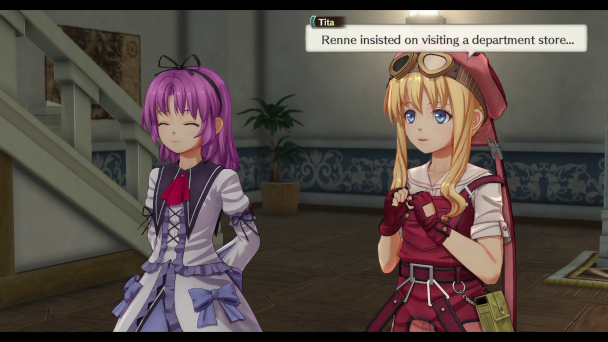
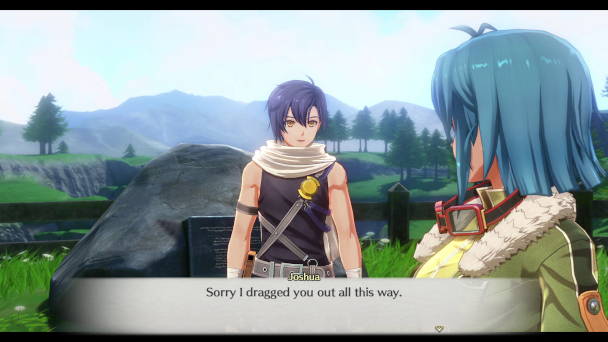
Pleasingly, the supporting cast gets some of the same treatment. Scherazard’s affection is masked behind some playful teasing. Agate and Tita get some rather affecting material, while Kloe, Olivier, Zin, and the newcomers show motivations outside of their combat roles. The returning companions also change the emotional texture of the journey. Although Estelle is separated from Joshua, she is rarely forced to face the next crisis alone. Those friendships give her search a collective dimension without weakening its personal stakes.
Expectedly, not every character is written as well, and Ouroboros can be a bit too theatrical at times. When the villains histories are at odd with the main cast, the drama often works. But when the action stops for a declaration, Chapter 2 can flirt with cartoonishness. That said, there are some strong exchanges that outshine the clunky explanations of ideology.
A Familiar Journey With Some Uneven Momentum
These moments of exposition are both Trails in the Sky’s signature and a possible impediment. Some scenes can run for a long time, and even small quests can include multiple explanations and reactions. That said, patient players are rewarded with one of game’s richest contexts. But if you’re seeking some brisk storytelling, prepare for Trails in the Sky to sporadically slow the pacing down.
Worse, optional work can be uneven. The best requests provide a residents with some story or deliver a callback to previous events. Weaker assignments amount to carrying an item across town or winning another routine fight for Bracer Points, money, or quartz. At first, I treated every quest as essential, but found this dragged things down. When I skipped some, I was met with FOMO and worried that I missed something that contributed to making Liberl so detailed and fascinating. Yes, 2nd Chapter’s best and worst habits are hard to separate.
Two Ways to Swing Your Staff
Compared with the 2006 original, combat has been given a dramatic overhaul. But compared with 2025’s 1st Chapter, it’s more of a refinement.
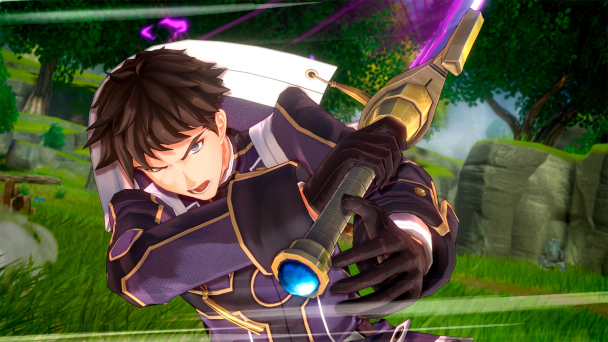
While exploring, Estelle and her companions can attack, jump, dodge, and use character-specific techniques in real-time Quick Battles. Weak creatures can be killed without leaving the field, and tougher enemies can be stunned before switching to a turn-based Command Battle. Quick Battles are responsive and pretty lively, but their limited strings rhythms can feel shallow.
But their purpose is to soften the staccato pacing of travel, soften up enemies, and let you choose how much attention to give to an enemy. Command battles serve your tactical needs, with superiors and bosses requiring you to carefully move, thing about attack areas, status effects, casting times, and the battle timeline.
Find Your Place on the Battlefield and Turn Order
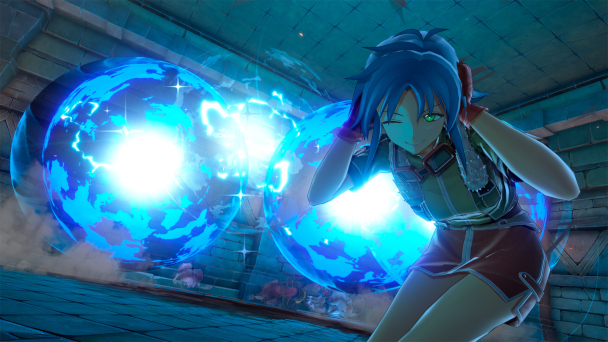
Now, positioning is easier, which character moving within range as part of their action, rather than sacrificing a turn. Arts still require EP and casting time but Crafts activate immediately in exchange for CP. Meanwhile, S-Crafts can cut into the turn order when a character has enough CP, making resource management nearly as important as damage output. Turn bonuses provide opportunities to seize a critical hit or deny an enemy. On higher difficulties, speed, shields, buffs, and debuffs are no longer optional.
Enjoyably, the system is accessible without being shallow. Attack ranges are communicated clearly, and the timeline is easy to follow. Largely, expect fewer rough edges in moment-to-moment combat.
A Brave New World
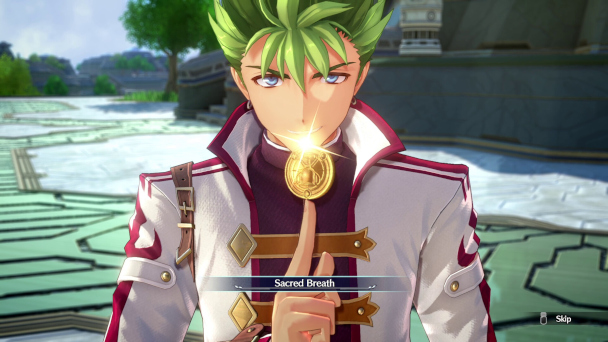
The remake’s most notable new attack is Brave Rush. Spending two points of your Brave Gauge during a Quick Battle lets an active character pair with a companion for a high-damage strike. It is a useful against clustered enemies and makes a cool showcase of party chemistry. As a real-time combination attack, it also recalls the cooperative appeal of the original SC’s Chain Crafts, although the two systems can’t really be considered equivalents.
Expectedly, Orbments are the main source of strategy. Installing quartz improves statistics and determines which Arts a character can use, while the upgraded model expands each orbment from six slots to seven. Enhancing individual slots permits stronger quartz and more powerful Arts. The menus explain the relationships better than the original release did, but the system still encourages you to consider elemental values and party composition instead of just choosing equipment based on the biggest number.
Liberl Takes Flight
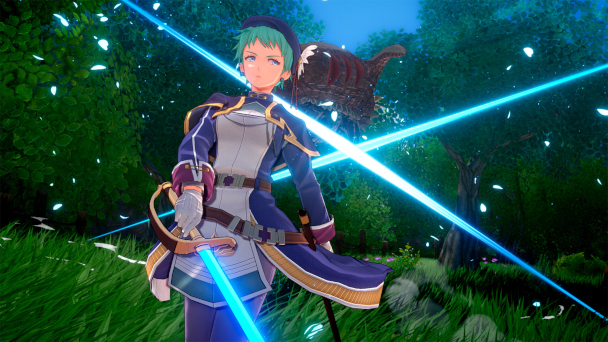
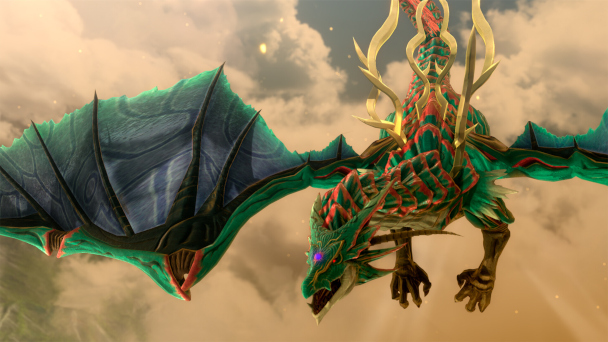
Visually, 2nd Chapter offers a large improvement from the original and a more modest step above 1st Chapter. Liberl’s towns still flaunt their recognizable layouts and architectural style, but they’re now rendered for a controllable camera, with brighter colors, and improved character animations. This works best in major story scenes. Now, facial expressions, body language, and camera movement help communicate feelings better than the old portraits, sprites, and fades to black.
That said, a bit of charm was lost in translation. Repeated NPC models and compact environments expose the remake’s modest production scale. But solid art direction matters more than technical spectacle, and it is usually enough to make Liberl inviting. The bilingual voice options are welcome and add immediacy to major scenes. The soundtrack is similarly effective: its arrangements know when to swell and when to let a melody rest in the background.
An Old Journey Worth Taking Again
Trails in the Sky 2nd Chapter understands that modernization and transformation don’t mean the same thing. Upgrades like a 3D presentation, hybrid combat system, and expanded voice work reinvigorate 2nd Chapter without tampering with the things that made the original well regarded by players and critical. Yes, nearly all the game’s best attributes are either improved or untouched. The gradual development of relationship, the role of minor characters, and most of all Estelle’s refusal to let warmth turn into weakness. Few RPGs are willing to spend time on ordinary people, and that makes Trails in the Sky feel intimate.
But the remake isn’t beyond criticism. Too often, 2nd revisits things from the first game, particularly unchanged routes and familiar quest structures. Side quests vary widely in quality. But these limitations are baked into the design process. Falcom didn’t want to turn this into a different kind of game, but one that cultivates those feelings of sitting in front of CRT and being amazing at a new form of digital storytelling. Liberl might look a bit different, but 2nd Chapter reminds us that new things are as heartwarming as a homecoming.
Trails in the Sky 2nd Chapter was played on PC with review code provided by the publisher.
Overall
GAMEPLAY - 85%
STORYTELLING - 90%
CONTENT - 100%
AESTHETICS - 80%
PERFORMANCE - 85%
VALUE - 85%
88%
GREAT!
Trails in the Sky 2nd Chapter modernizes the 2006 sequel with 3D models, a hybrid combat system, re-orchestrated music, and bilingual voice work, all without diluting the sincerity that made the original endure. The early hours lean too much on recycled elements and routine side quests, and the exposition still runs long enough to test impatient players. Stick with it, though, and you'll find an unusually intimate RPG rooted in Estelle's refusal to let optimism descend into cynicism.