Yooka-Replaylee review
A Better Game, But Not a Great One

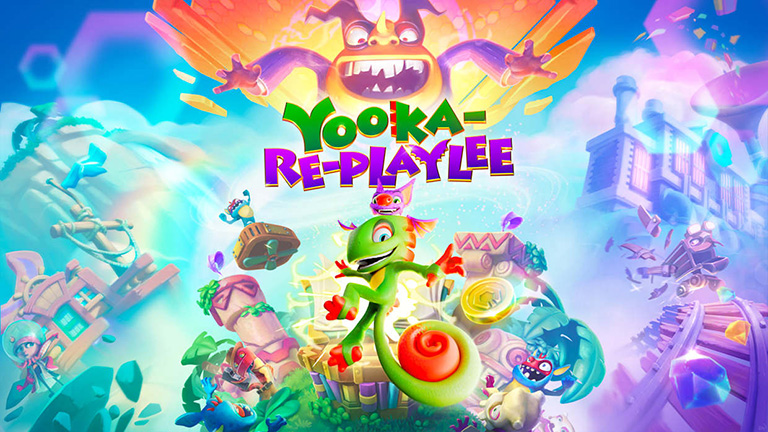
2017’s Yooka-Laylee was the game we all wanted to adore. On paper, it promised a return to the golden era of 3D platforming with vibrant colored-worlds, cheeky humor, and a likable duo who bantered like Banjo and Kazooie. Yet, what arrived from a group of former Rare employees neglected to live up to those ambitions. Instead of a celebratory revival, we got a collection-heavy platformer bogged down by clunky mechanics and uneven pacing. It wasn’t until the 2D follow-up that Playtonic proved it understood what players were really looking for.
With the release of Yooka-Replaylee, the developer gets the rare opportunity to revise the disappointment and earn redemption. Undoubtedly, the studios behind No Man’s Sky and Cyberpunk 2077 must have relished witnessing sentiments shift with each new update. But there’s always the possibility of falling twice. Sadly, that’s nearly the case with Replaylee. The redux improves several core elements, but neglects some of the more fundamental issues.
Bat Fur and Chameleon Skin Luster
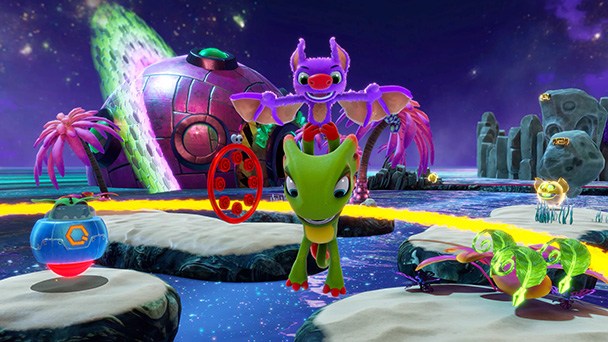
Yooka-Replaylee opens with a visibly more polished presentation. Largely, textures are sharper, the lighting looks richer, and the character animations are a bit smoother. The game’s cumbersome camera feels less erratic, allowing for more responsive navigation through the title’s whimsical worlds even if it occasionally follows the action too closely.
Playtonic has also streamlined certain progression roadblocks, trimming down excessive collect-a-thon obligations so players can access new areas without the same tedious grind. This rebalancing increases the momentum of exploration and makes its platforming challenges feel a bit less like a checklist of chores. But unlocking the moveset near the beginning of the game diminishes the sense of progression. The original required you to make a mental note of collectibles and return when you acquired the proper skill. Now, you can chase down everything is one swoop, which lessens the elation of grabbing that last evasive item. While Replaylee strives to increase accessibility, the burden of tying abilities to the same stingy stamina meter is an odd decision.
Pagies Don’t Patch Up the Pacing
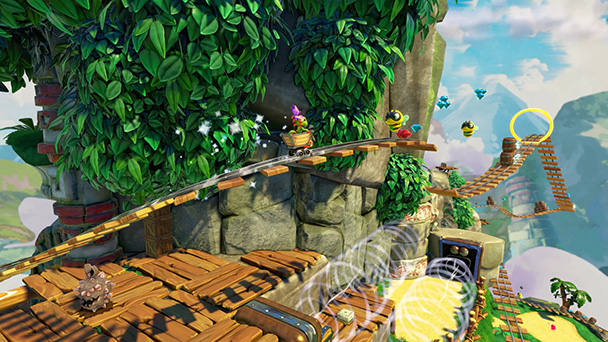
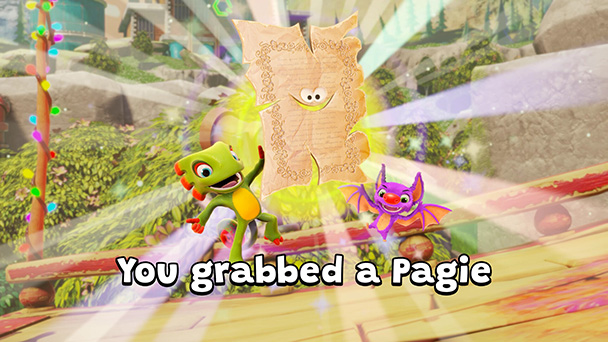
Habitually, the refinements only go so far. While Replaylee improves the game’s sense of flow, it doesn’t fully address the core issues of level design. Sure, doubling the number of Pagies lessens the feeling of emptiness that occasionally plagued the original. But it doesn’t fix the issue of Yooka-Laylee’s areas feeling like colorful, but conceptually dull sandboxes. While some areas are good-looking, they still suffer from scant interactions or filler objectives that dilute their charm. Largely, Replaylee is a reminder that visual upgrades can’t compensate for a gameplay loop that still lacks a satisfying rhythm.
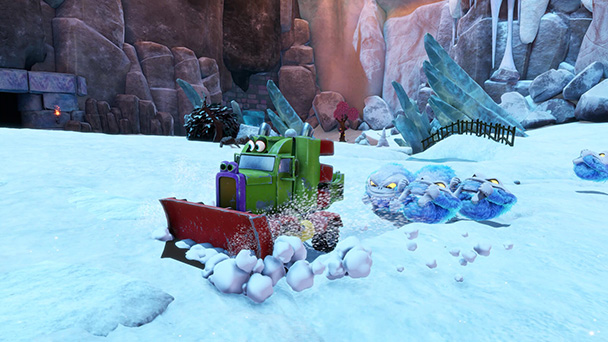
Unfortunately, combat remains one of Replaylee’s weakest components. Encounters are still rudimentary. Most enemies fall after a few tail whips or sonar blasts and rarely pose any real threat or require much tactical thought. Encounters should underscore exploration or progression. But mostly, they still feel like filler that presents only slows you down. Some players might even avoid confrontation, which feels like a relic of design decisions that never quite evolved alongside the rest of the package.
The Jokes Land, But Not Always Elegantly
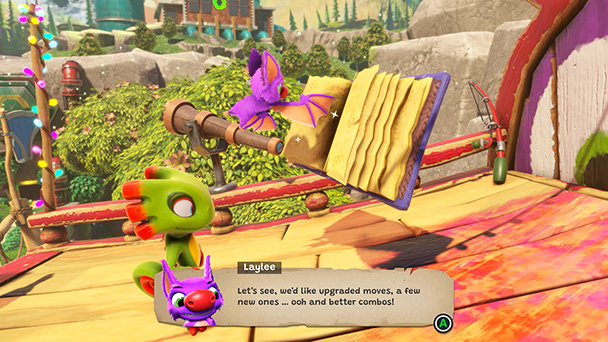
At least Replaylee’s humor lands better this time thanks to a proper character introduction, snappier writing, and tighter pacing in conversations. The dialogue still leans on self-referential gags and fourth-wall jokes, but they feel less forced this time. Characters like Trowzer and Dr. Puzz benefit from trimmed exchanges that highlight their eccentricity without overstaying their welcome. Even Laylee’s sass feels reined in, transforming the bat from antagonistic chatterbox to a mischievous. But there are still long sections where dialogue didn’t summon a smirk and I felt like skipping the banter.
Jumping Precision Meets Performance Problems
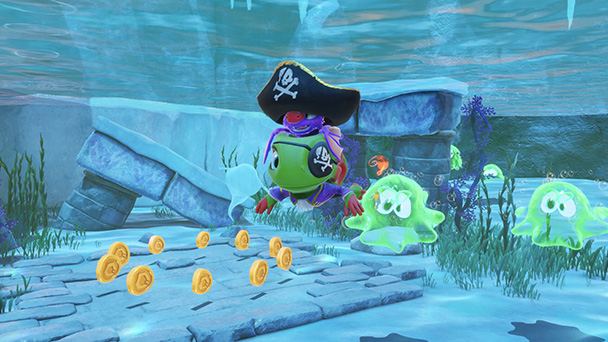
When it comes to technical polish, Replaylee is decidedly uneven experience, that doesn’t quite feel ready for release. The original game delivered a solid sixty frames-per-second on Steam Deck. But even with graphical settings set to Deck mode, drops to the low 40’s are commonplace. Initial load times are long, and the sporadic crash can kill momentum.
But pleasingly, the game’s responsiveness finally matches the genre’s demands. Now, jumps land more predictably, and midair adjustments no longer feel strenuous. For those who experienced the original’s floaty physics, this newfound precision transforms the simple act of movement into something that almost feels good. Sure, Replaylee can’t match 3D Mario, but the redux makes platforming more precise.
Melodies Help to Mask the Monotony
Musically, the remastered soundtrack rekindles the spirit of Rare’s golden years, while offering a welcome modernization that increases the layering of key tracks. Here, Grant Kirkhope’s compositions were given a thorough retooling that brings ancillary instrumentation forward. Of course, it remains an ideal companion for exploration, helping to distract from the occasional emptiness of each area.
Yooka-Replaylee is a better version of a marred game. It eliminates some of the original game’s rougher edges and enhances flow, but some of the improvements create their own issues. Playtonic’s effort might be interesting to returning fans making Replaylee worth revisiting just to see how much the studio has grown. Yet for all its attempted fixes, the game can’t quite offer redemption. You’ll find charm and a bit of heart, but the magic that you might be expected remains missing.
Yooka-Replaylee was played on PC with review code provided by the publisher.
Overview
GAMEPLAY - 65%
CONTROLS - 70%
CONTENT - 75%
AESTHETICS - 75%
ACCESSIBILITY - 70%
VALUE - 60%
69%
OKAYEE
Yooka-Replaylee smooths over some of roughest edges of its 2017 predecessor, tightening controls, streamlining progression, and generally polishing its visuals. But despite the improvements, shallow level design and lackluster combat remind you that no amount of remaster polish can fix a platformer whose core still feels stuck in the past.


Definitely one of the lower review scores I’ve seen.