Wreckreation review
Freedom Meets Frustration in This Spiritual Successor to Burnout

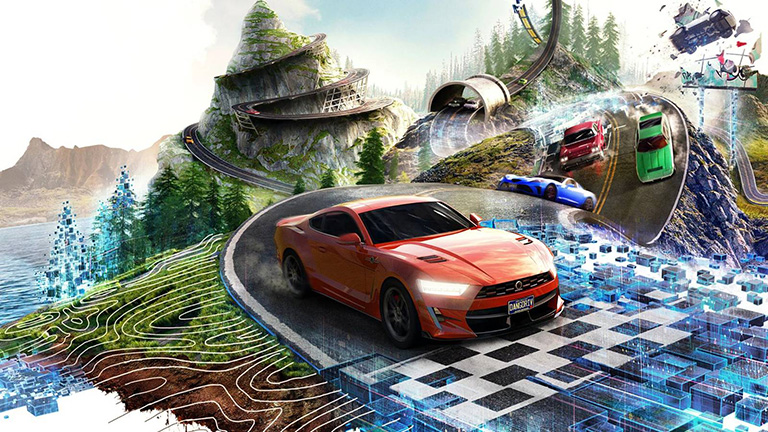
Criterion’s Burnout series would have been my favorite franchise of the sixth console generation, if it wasn’t for strategy role-playing games with appealing casts. Looking back, I have no regrets about the hours spent chasing takedowns that sent rivals careening over guardrails or orchestrating spectacular multi-car pileups in the old Crash Junction mode.
When Burnout Paradise shifted to open-world racing and closed out the series’ legacy of high-speed carnage, I thought that chapter of arcade mayhem had ended for good. There are moments when Wreckreation, developed by ex-Criterion talent at Three Fields Entertainment, feels like the continuation of that lineage. While there’s destruction, freedom, and an outlet for creativity, there are also the kind of crashes that you’re probably not hoping for.
Speed, Style, and the Sporadic Spark
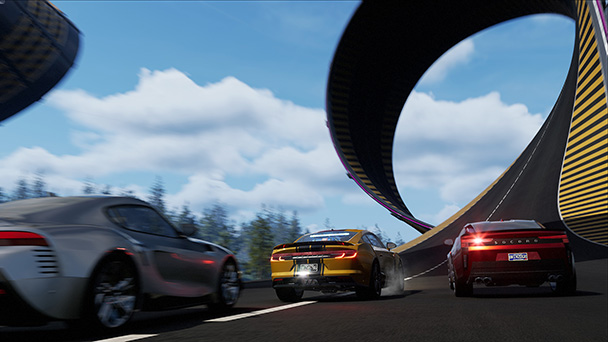
The first thing that stands out about Wreckreation is how the responsive the handling is. Physics and environment are tuned so that vehicles hug corners and trace S-shaped curves with a minimum of braking. And that’s good for a game where speed and aggression are essential for beating duplicitous opponents.
Meanwhile, every scrape against another racer or concrete divider gives a spark of feedback that reminds you that this is the spiritual successor to a series that worshipped fast and loud chaos. There’s some of that, especially when you’re able to mow down and scatter dozens of plastic lane poles. Three Fields still understands how vandalism can feel cathartic.
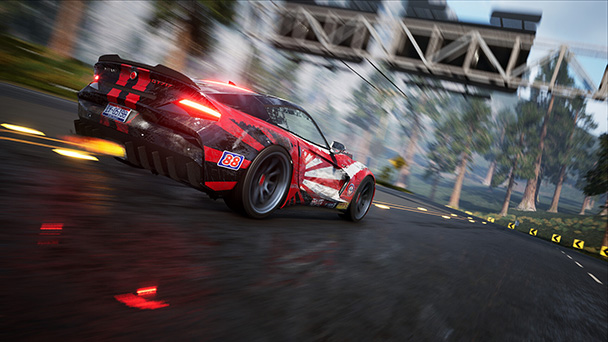
Unsurprisingly, Wreckreation’s events are spread across a sprawling map that recall Burnout Paradise’s open-world, albeit with fewer iconic landmarks. So instead of stubbornly structured races, you’ll select from a buffet of challenges that can be initiated by holding down both controller triggers at designated spots on the map, just like we did in 2008.
Races of Rage and Repetition
Largely, sprint races, stunt runs, and road rage events return, but their quality varies. Point-to-point introduce literal checkpoints, where the barriers are the word “checkpoint” that crumbles into pieces when the first racer smashes into it. The concept pure visual spectacle and it works until you realize the gimmick blocks your view of the road ahead. Rage events task you with taking down a quartet of rivals, but once you do they respawn, diminishing the sense of progress. But I truly miss crash junctions, those puzzle-adjacent stages where you’d try to create the biggest pile-up across a secession of crossroads. Perhaps billboard crashing is supposed to be a replacement, but there’s little thinking when ramps are placed directly in front of the free-floating adverts.
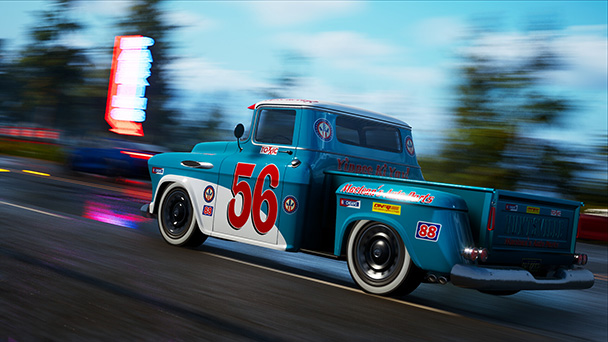
At best, some events embrace breakneck speed, as you ride the razor-thin line of maintaining control. But others can feel like filler that relies too heavily on recycled layouts. The AI doesn’t help either. Sure, it keeps races tense, but it also means that rival cars can unrealistically slingshot in front of you to cross the finish line. Unlike the original Burnout games, I had a difficult time navigating around civilian cars and that balance meant a late-race crush meant a do-over, as I chased points for license tiers.
Progression in Wreckreation feels caught between freedom and frustration. The game’s loose structure puts you in control of progress, but autonomy doesn’t provide the delight associated with a static drip-feed of incentives. Unlocking new zones and course-map items aren’t tied to completing events on a progression ladder. Instead, they’re scattered across the map, leading to fluctuating pacing and arbitrary rewards. The result is a game that often feels like it’s giving you things out of order and asking you to make your own fun with the unlockables.
Beware: Performance Pileups Ahead
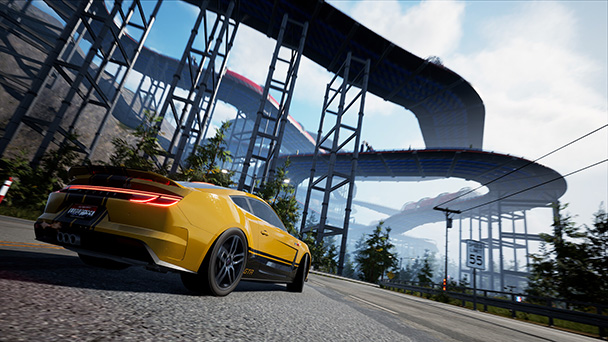
Performance adds another layer of complication. On even robust PC rigs, steady frame rates are a rarity, especially when multiple AI cars collide amid explosions and particle effects ignite. Meanwhile, the game’s sense of speed is undermined by sporadic stutters in heavy traffic, confiscating control when you need it most. There are also intermittent loading pauses between events that pull you out of the flow. But unquestionably, the biggest problem is instability. While reviewing Wreckreation I was able to consistently trigger enough crashed to wonder if Three Fields used a QA team.
Build-a-Track Workshop
Course design embodies the contrast between ambition and solid execution. Yes, player-generated track editor is an impressive technical feature that adds longevity to the titles. But expect your handiwork to feel disjointed and awkward to race on. While I toyed with making my own playground of loops, ramps, and hazards, I often felt like I was fighting with the interface. The results were unintentionally chaotic, providing only short-term enjoyment and laughs, rather than true thrills.
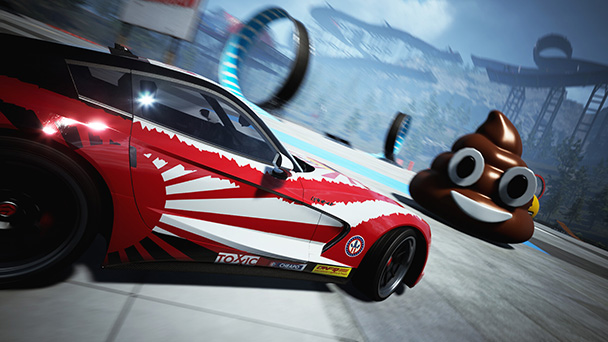
As an attempt to revive the debauched thrill of Burnout, Wreckreation is a decidedly uneven experience. Although the handling clicks and the asphalt hums beneath your tire, there are only glimpses of Burnout’s high-octane euphoria. For every exhilarating curve, there are technical hiccups, tedious events, or a design decision that shouldn’t be in a final build. All too often, Wreckreation functions more like an experimental prototype than a well-engineering racing and crashing machine.
Wrecknation was played on PC with review code provided by the publisher.
Overview
GAMEPLAY - 65%
CONTROLS - 70%
CONTENT - 70%
AESTHETICS - 75%
PERFORMANCE - 50%
VALUE - 50%
63%
WEAK
Wreckreation captures flashes of Burnout’s celebrated, high-speed chaos, but too often crumbles under the weight of its own ambition. Its playground of racing and destruction can be stimulating in short bursts. But underneath the hood, technical hiccups, uneven design, and the lack of crash junctions restrain any high-octane potential.


Lots of negative reviews on Steam and 68 average on Metacritic. I do feel like the sites giving this an 85 are getting paid off.