Town of Zoz review
A Few Rough Edges Beneath an Ample Amount of Charm

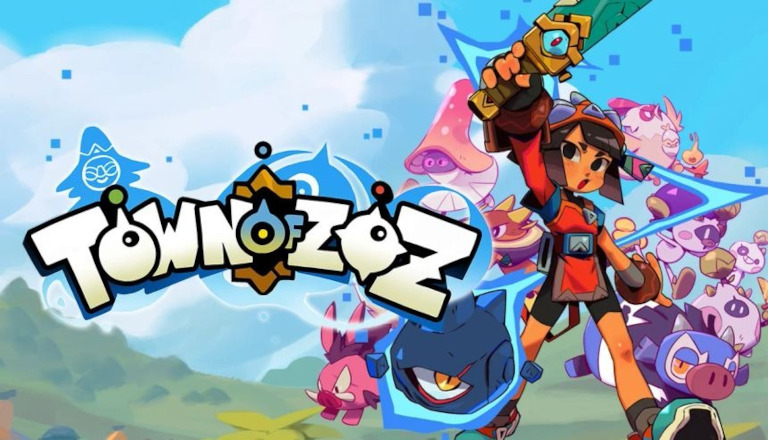
Studio Pixanoh’s Town of Zoz is one of those wildly ambitious efforts, that strives to blend several different genres together. The game’s first few minutes reveal a solid action-role playing foundation, as the game’s protagonist, Ito and his companion spirit Zee, strike and dodge at groups of enemies, making their way through Zelda-esque dungeons. Interestingly, your cyan-colored familiar isn’t passive. Instead they freely attack foes in range, can be steering around, possess objects, and when his health is low, confined to the safety of your backpack.
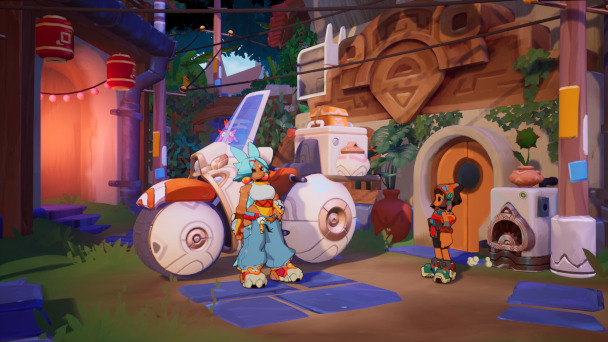
The game’s plot finds the shaman chef returning home to help his family. But instead of world-building by forcing you to speak with NPCs, there’s a bit of resentment around, with some of the few people who do acknowledge you referring to you as the ‘runaway’ or ‘three soul’. Expectedly, what begins as a rather personal journey quickly turn into something larger, threatening to affect the titular town. Zoz’ spacious expanses is a delight, with bogedas bathed is sunny, afternoon light, paunchy chimineas emitting smoke, while the local cantina is buzzing with activity. When Ito first returns, his language skills are rusty, with some words deliberately rendered in another font. Without giving anything away, its a salient concept, especially if your own ancestors spoke a different language.
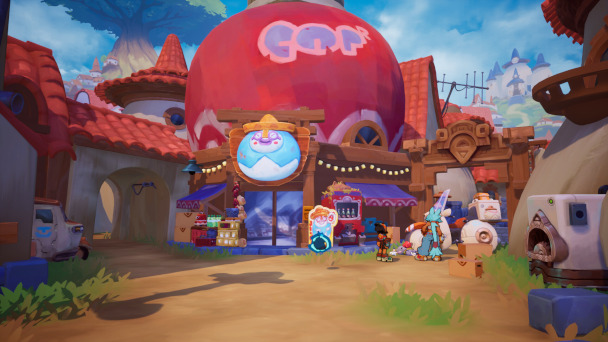
A Bittersweet Homecoming
But Zoz’s ambitions of connection, comradery, and collectivism are sporadically betrayed by the game’s execution. Pleasingly, the game incorporates animated Flash-style cut-scenes. But between the lack of proper voiced dialogue, their abrupt integration, and occasional non-sequential ordering, they can be hard to follow. And while Pixanoh probably wanted to drive the point home that you’ve lost some of your identity when you departed, having to learn the layout of Zoz’s meandering streets and forking pathways can be a chore across the game’s early hours. Early on, you’ll be directed to head north of a forest, and I really wished there was some kind of way-point marker.
One of the game’s most distinctive elements is how food and cooking serves as a catalyst for the community. Much like Cuisineer, defeated enemies provide ingredients, while preparing meals is directly tied to progression, relationships, and even combat readiness. The cooking system itself is more involved than it might initially appear. The final stage of any meal preparation requires infusing the dish with your soul’s intention, essentially choosing the ability the food will grant, whether that’s adding speed, defense, or buffing your magic. But know that this isn’t Stardew Valley or Harvest Moon, with QTEs more in line with the hectic procedures of Overcooked. Largely, the process is engaging, even if the game doesn’t always give you enough clarity on where to find ingredients, especially during the early game.
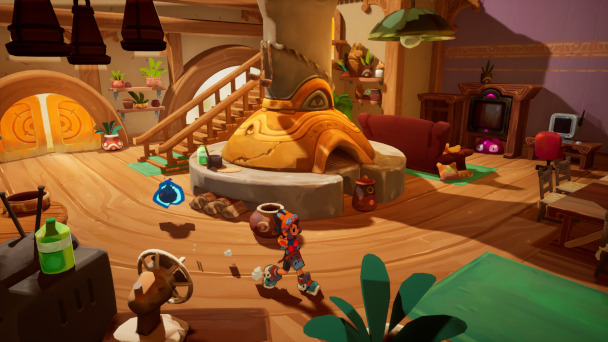
A Rather Garden-Variety Component
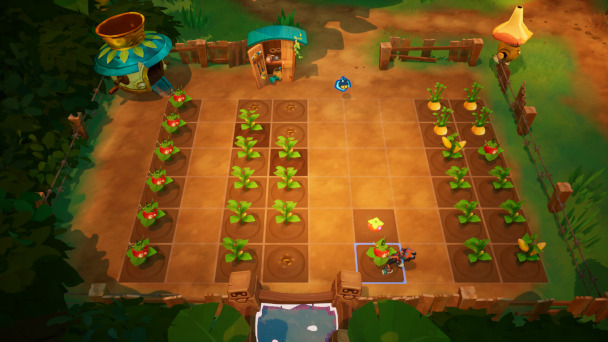
While farming can be done a few plot of land around your family’s house, gardening isn’t as robust as cooking, feeling more like a supplemental system than a fully realized component. Sure, your crops grow quickly and require minimal upkeep. And that keeps the pacing brisk, but you’ll likely spend far more time foraging and fighting for ingredients than cultivating them yourself, reinforcing the game’s stronger emphasis on adventure over simulation. While it’s not a deal-breaker, inventory management to reach your gardening tools could be simplified.
Meanwhile, combat is where Town of Zoz reveals its action-RPG inspirations, though it’s not without its shortcomings. Encounters are fast and readable, with a satisfying rhythm of light attacks, dodges, and Zee’s autonomous assistance helping to manage crowds. Boss battles, in particular, stand out as highlights, often introducing unique mechanics or phases that require you to remain elusive and adapt rather than simply mash attacks. That said, combat can grow a bit repetitive over time, with a limited move set and enemy variety that doesn’t quite do enough to help vary the core loop.
Mind the Gap (and the Landing)
To break up the action, the game occasionally tasks Ito with some platforming sequences, where you’ll navigate environmental hazards, gaps, and vertical spaces. These moments offer a welcome change of pace and help give Zoz a greater sense of physicality. However, the platforming lacks precision, with floaty movement and inconsistent collision detection sometimes leading to frustration rather than satisfaction. It’s a nice idea in theory, but one that doesn’t always feel as polished as the systems surrounding it. Undoubtedly, a bit of guard-railing around bridges and water would reduce some of these annoyances.
But these aren’t the only issues. The trade interface is clunky and unintuitive, making simple transactions more cumbersome than they should be. And for those playing with a controller, the absence of proper button glyphs can be a constant source of conflict, forcing players to guess inputs or mentally translate commands. Collectively, these problems aren’t game-breaking, but they do add up, chipping away at what is otherwise a heartfelt and creatively rich adventure. I can’t help but feel that some dedicated patching could make the adventure more memorable.
Town of Zoz was played on PC with review code provided by the publisher
OVERVIEW
GAMEPLAY - 75%
CONTROLS - 65%
CONTENT - 80%
AESTHETICS - 80%
ACCESSIBILITY - 65%
VALUE - 75%
73%
GOOD
Town of Zoz swings big with its mix of combat, cooking, and community, and while not all of its ideas come together smoothly, there’s a lot to admire in its ambition and personality. It’s a slightly rough but endearing adventure that feels as much about reconnecting with culture as it does saving the day.





Interesting. It has a Mesoamerican vibe, right?