Schrödinger’s Call review
Please pick Up. Someone is waiting.

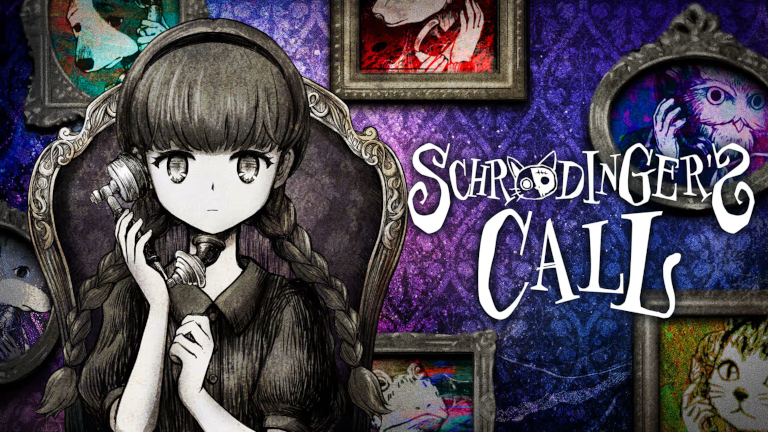
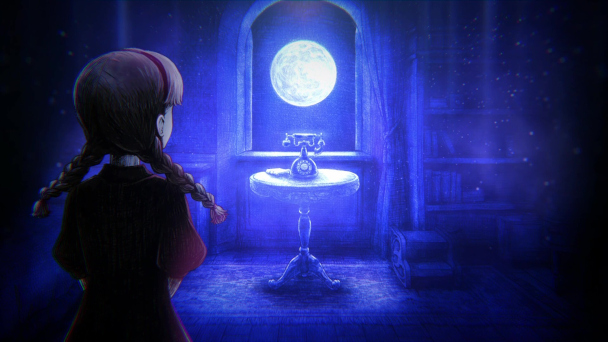
There is a phone on the table. It will ring. And when it does, you must answer it. Because no one else can, and no one else ever will again.
That’s the rather provocative premise that’s at the heart of Schrödinger’s Call, the debut visual novel from three-person Japanese indie studio Acrobatic Chirimenjako. It is a game about the end of everything, yet it feels less like a catastrophe and more like a phone conversation with a forgotten friend who has called because they have no one else to talk to. While 2026 isn’t even halfway over, Schrödinger is shaping up to be one of the more emotionally resonant games of the year. It’s also almost universally relatable.
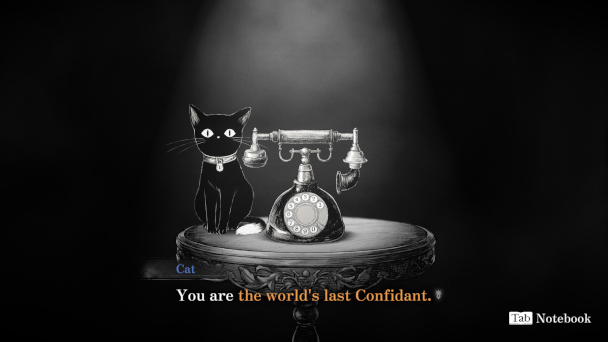
The Last Call You’ll Ever Take
Schrödinger’s Call puts you into the role of Mary, a girl who awakens in a strange room with no memory of who she is or even how she got there. Guided by a mysterious cat who calls himself Hamlet, Mary becomes the world’s final listener, answering calls from strangers caught between life and death through an old telephone.
Intriguingly, the game takes place during the final 21 nanoseconds before a moon crashes into Earth and ends all life. But time isn’t some kind of a split-second countdown. Instead, Schrödinger’s Call imagines the moment as a refuge, offering those facing imminent death one last chance to be heard. In some ways, the game reminded me of the Wind Phone in Ōtsuchi, Japan, a place where the grief-stricken can send a message to the departed.
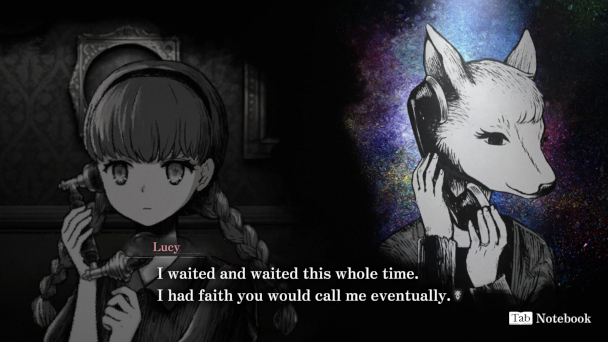
Please Hold for the End of the World
Mary’s role is simple, yet profound. Her job is to take phone calls from a wide variety of people who have one thing in common. Each has one final grievance to resolve before their souls can move on. But Schrödinger’s Call is too smart to deliver a succession of straightforward stories. Instead, the game’s exposition is intentionally fragmented, forcing you to put pieces of each of person’s dialog together.
Fortunately, the game offers an in-game notebook that assists with this task. But sporadically, you won’t know if there’s a person on the other end of the phone line or just Mary imagining things, all in a desperate effort to make sense of everything. But it’s that kind of ambiguousness that makes Schrödinger’s Call stand out from most visual novels. What I like best about the protagonist is that Mary is far removed from most stereotypical leads. She’s not a hero and doesn’t carry no weapon. Instead, her only tools are her voice and an empathetic ear. The script acts as a reminder of how powerful that arsenal can be.
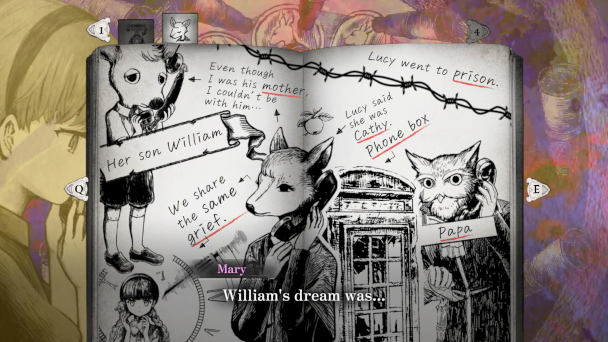
The Power of “Hello”
And it’s difficult to not appreciate that premise. In a medium that’s habitually obsessed with weapons, loot, stats, and environmental navigation, Schrödinger’s Call asks you to do something that most games rarely require. Listening is a powerful action and until Mary picks up the phone and says, “hello”, the voices on the other end of the line are trapped in a form of purgatory. Schrödinger is a reminder that acknowledging someone is a small but essential act.
The people who call Mary come from every walk of life, providing Schrödinger’s Call with a rich social and emotional range. You’ll speak to lonely children, exhausted office workers, estranged family members, elderly people battling with regret, and individuals whose lives ended in sudden or tragic circumstances. Some callers are angry or frightened, others confused or bitter, and some have made peace with their fate. While they are antropomorphic, their stories span ages, backgrounds, and personal struggles. If there’s one thing that unites Schrödinger’s callers, its a universal longing to be understood before its too late. And that’s quite a hook, since at the end of it all, I think most of us might have a few regrets.
“Regrets? I Have a Few…”
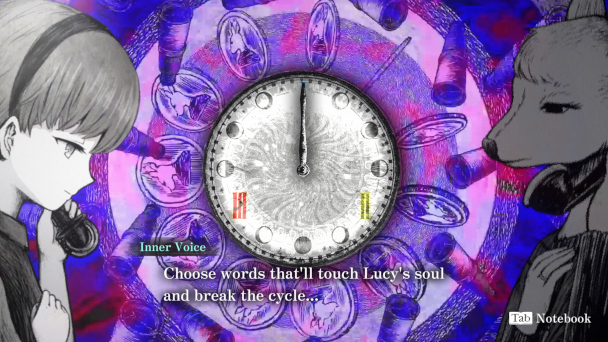
If you’re played a visual novel with a branching storyline, then you’ll probably feel some trepidation about Mary’s dialogue choices. Fortunately, Schrödinger isn’t interested in punishing players for selecting the ‘wrong’ response. The game understands that real conversations are messy, and people in pain rarely arrive with a clear route toward healing. Rather than treating dialogue as a puzzle to be solved, the game frames exchanges as an act of empathy.
Your choices matter, but not in the traditional sense of unlocking good or bad endings. Instead, they shape just how much of a caller’s story is revealed and how deeply Mary is able to connect with them. It’s a slight distinction, but an important one, encouraging you to listen, try to understand, and respond appropriately. Games are often developed around routes and outcomes but Schrödinger understands that real conversations don’t always have easy answers.
The Things Left Unsaid
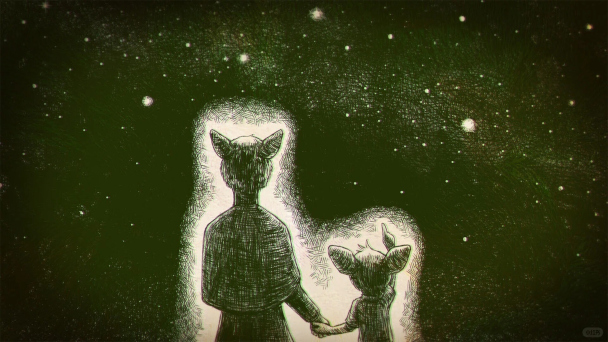
Equally impressive is the game’s distinctive visual presentation. Rendered in a pen-on-paper style that resembles sketches pulled from the pages of an old notebook, the artwork matches the game’s personal tone. Character portrait are drawn with expressive lines and tiny imperfections that lend the game an almost handmade quality, as though each caller’s story has been illustrated by someone determined to capture their likeness and personality.
After the credits rolls, Schrödinger’s Call left me sitting quietly, thinking about its cast. And that’s which is perhaps the highest compliment I can pay it. It doesn’t ask you to save the world or defeat a boss with a massive pool of health. It just asks you to pick up the phone and listen.
Some Calls Stay With You
In an industry where games grow bigger, flashier, and more expensive, Acrobatic Chirimenjako has made something intimate. Schrödinger’s Call is a small game about the importance of being heard. Whether you’re a veteran visual novel fan or someone who’s never connected with the genre, Schrödinger is worth your time and your patience. It has a way of holding up a mirror at the moment you least expect it, and that’s a habit I wish more games attempted.
Schrödinger’s Call was played on PC with review code provided by the publisher.
Overview
STORYTELLING - 90%
INTERFACE - 90%
CONTENT - 85%
AESTHETICS - 90%
ACCESSIBILITY - 85%
VALUE - 100%
90%
VERY GOOD
Schrödinger's Call turns a simple phone conversation into one of the year's most affecting gaming experiences. Through its cast of lost souls and its emphasis on compassion over confrontation, it serves as a powerful reminder that sometimes the most important thing we can do is listen.





Sound interesting. I’m going to keep my eye on this team.
Wasn’t expecting a 90!