Romeo is a Dead Man review
A Stylish Descent into SUDA51's Darkest Vision

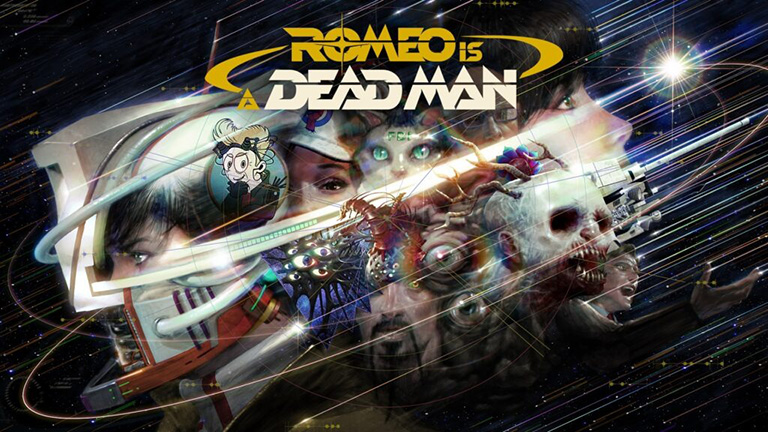
In the pantheon of gaming auteurs, few directors have garnered the devotion that Goichi Suda (better known as SUDA51) has accumulated over his decades-long career. From the punk rock absurdity of No More Heroes to the grindhouse thrills of Killer7, Suda’s work has dependably operated in the margins. Prioritizing patchy aesthetics, mindfuck narratives, and often skewering game design within his games, the founder of Grasshopper Manufacture seemingly has little interest in mainstream appeal. And given the pervasive cookie cookie cash-grab mentality, the industry needs more folks like him.
Romeo is a Dead Man represents one of Suda’s most ambitious efforts: a twisted reworking of Shakespeare’s tragedy filtered through a lens of ultraviolence, existential dread, and his signature gonzo sensibilities. For better or worse, it’s a game that flaunts its director’s fingerprints, demanding players either surrender to its eccentric rhythms or piss off into a Call of Duty match.
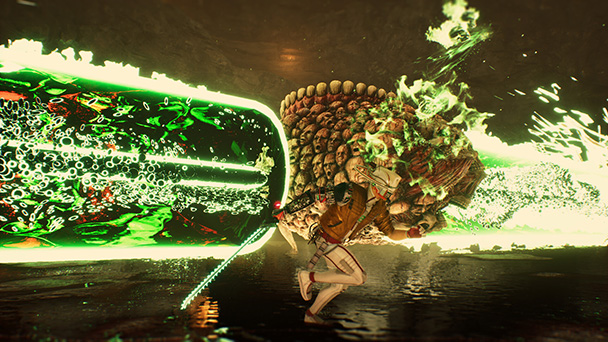
Shakespeare with a Steely Arsenal
The game starts with what should be its ending. Romeo Stargrazer, the game’s law-enforcing protagonist, is attacked by a while devil, leaving his face and body severed. But this isn’t a love story that has gone wrong but a revenge tale that never began. Romeo’s grandfather makes the ultimate sacrifice, jamming life-saving technology into the protagonist’s eye socket to give him one last chance at redemption. But resurrection comes with a price. Romeo awakens as less than human, a revenant driven by a singular obsession to reach Juliet, who may hold the key to his salvation. Or damnation, I’m not going to spoil anything.
Given the event happens in the first few minutes, I’m not giving anything away by disclosing the grandfather doesn’t survive. During engaging opening sequence, his body is mangled, leaving him as a sentient patch on Romeo’s jacket. From this state, the old scientist becomes a constant companion, offering up cryptic guidance, philosophical musings, and the sporadic bit of sarcasm that keeps the journey from feeling too lonely. His voice acting is notable, walking a fine line between genuine emotion and ironic detachment, like some kind of cynical Doc Brown from Back to the Future.
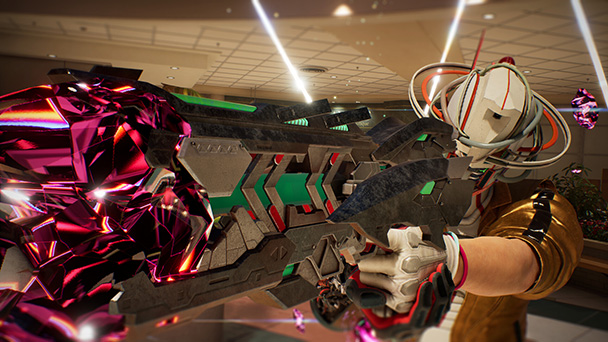
Star Crossed Killers
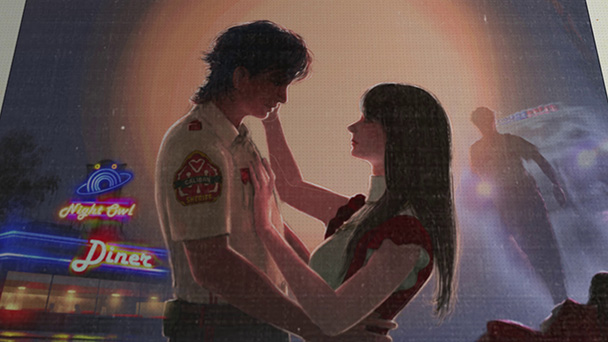
The use of Romeo and Juliet as the central relationship might suggest some kind of grand romance; a love strong enough to transcend death. Yet Romeo is a Dead Man stumbles with this expectation. The bond between Romeo and Juliet never feels emotionally resonant. We’re told they matter to each other, witness some abstract flashbacks of their time together, but the connection feels kind of hollow, more narrative justification than a poignant plot point. I think many of us are still waiting for the moment when Suda genuinely tugs at our heartstrings with the same skill he makes up question our lucidity.
Thus With a Mistimed Dodge, I Die
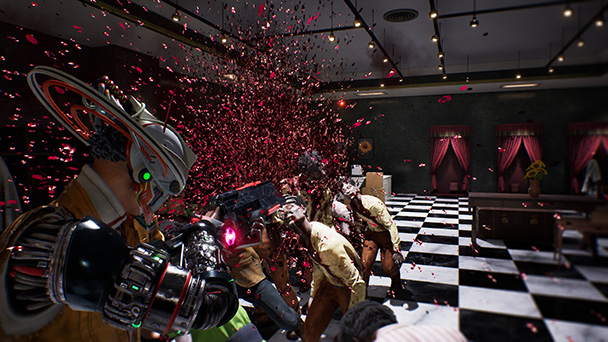
That said, Romeo finds some redemption in its combat systems, which offers some freedom in how you dish out the old ultraviolence. You can use pure hack-and-slash brutality, chaining basic melee combos with bladed weapons. Alternatively, you can use a more conservative shooting approach, providing an arsenal of firearms that lack the flashiness of melee but lets you target weak points. The “bastard wrangler” playstyle, which involves spawning your own aggressive enemies, is also intriguing. The beauty of the system lies in its fluidity. You’re rarely locked into one approach, and the most satisfying encounters come from improvising and switching between styles.
Unfortunately, this mechanical freedom can’t fully compensate for combat that can feel more competent than exceptional. Encounters lack the rhythmic precision of the best character action games, and while the variety of approaches prevents monotony, none feel refined enough to truly carry the fighting. The dodge mechanic is particularly frustrating, offering a brief window of invincibility that feels more like a liability than a defensive tool.
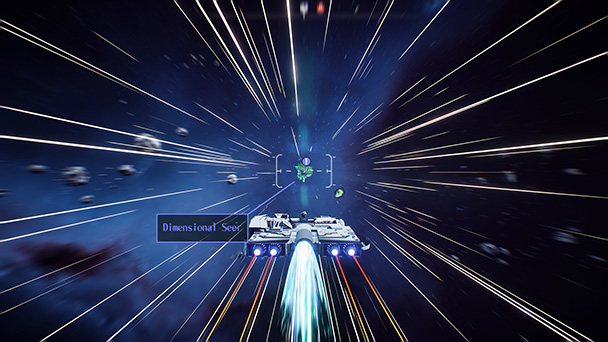
Boss battles, occasionally a highlight of SUDA51’s games, are the most baffling misstep. Each encounter presents a visually striking antagonist, but the actual fights feel undercooked and repetitive. Pattern recognition is reduced to its most basic form, with telegraph windows that feel either too generous or non-existent. These encounters drag on for too long, padding out simple mechanics across multiple health bars and phases that add duration without much variation.
A Gallery of Various Aesthetics
Visually, Romeo is a Dead Man is a mixture of competing aesthetics that somehow fuse into a coherent whole, like a well curated gallery. The game shifts between grimy realism, cell-shaded comic book panels, abstract expressionist, and sequences that seem to be rotoscoped over live-action footage. This constant visual variety prevents the eye from settling, matching the game’s capricious tone. It’s hard not to appreciate a game that incessantly foreshadows every plot beat.
Given Suda’s approach, Romeo is a Dead Man can wither be a flawed masterpiece or a beautiful failure, depending on your lenience for ambitions that can exceed execution. If you can appreciate a game that frustrates as often as it fascinates and offers an experience that’s genuinely unconventional, Romeo might be getting swept up by.
Romeo is a Dead Man was played on PC with review code provided by the publisher.
Overview
GAMEPLAY - 75%
CONTROLS - 70%
CONTENT - 75%
AESTHETICS - 80%
PERFORMANCE - 70%
VALUE - 75%
74%
GOOD
Yes, the combat could have used more development time, the central relationship needed more substance, and the boss battles could use some play testing. Yet, for all its stumbles, Romeo is a Dead Man is worth experiencing, especially if you appreciate a game that takes risks.



Where’s the steam tag at the bottom?
There are probably some people that like Suda51’s games, but I’m not one of them. They seem weird for weird’s sake.