Stupid Never Dies review
Undead and Slightly Underwhelming

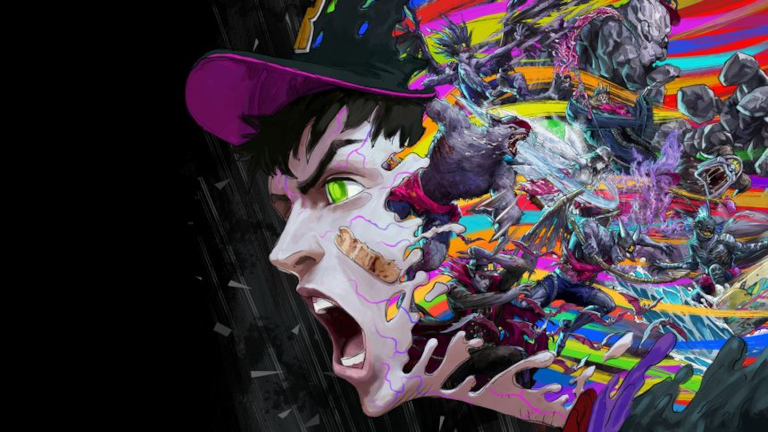
As a former Capcom producer who’s worked on Devil May Cry, Resident Evil 4, and Sengoku Basara, Hiroyuki Kobayashi now heads GPTRACK50. The Osaka-based studio’s debut, Stupid Never Dies, feels like a greatest hits album assembled from dubious remixes of his body of work. There are monsters, transformations, and a lot of stylish action. But the fusion of these different elements doesn’t automatically form another classic. Yes, the script is spirited and wonderfully eccentric, but the gameplay struggles to match that inventiveness. It’s the kind of game that makes checking a menu entertaining but the draw of dungeon battling can feel like an obligation.
Following a war that has left humanity nearly extinct, teen zombie Davy discovers a girl named Julia frozen inside a freezer and promptly falls in love. After eating a mysterious phoenix egg, he acquires abilities that might just help him thaw her out, with scientist Dr. Frank Steiner leading him toward the monstrous KOM and its sophisticated, sinister technologies.
“He’s Just a Boy, and I’m Just a Frozen Girl…”
And yes, the setup feels unusually close to Romeo Is a Dead Man’s star-crossed undead romance, although Davy’s infatuation is decidedly one-sided. And yes, I’m sure critics will assail the lack of consent in the early storyline. But stick with it, and Stupid will screw with your expectations. In short, Davy might think he’s the hero of the story, but he’s just another character with a tragic misunderstanding of who Julia really is. Secondaries like the Doctor bring in the kind of irreverence that makes a script enjoyable.
Best of all, the storyline ensures there’s plenty of lunacy to lift up the proceedings. You teleport into the dungeon through a modified mall toilet, which helps to establish the game’s teen-punk tone. Elsewhere, a chihuahua man handles technological upgrades, while a forgetful gargoyle (stone isn’t great brain matter) offers support from a shopping cart. And you get to ride a Roomba, which is great because Davy can be the slowest video-game zombie in human history.
Everything from rapid-fire visual transitions, scribbled decorations, and scraps of tape and cardboard keep the presentation lively. Meanwhile, the hoodie-and-baseball-cap attire delivers plenty of early 2000s nostalgia. And there’s a bit of earnestness beneath all the adhesive and marker highlighting. The Hot Topic era wasn’t exactly a moment of high fashion. But Stupid Never Dies dishes it all out with enough enthusiasm to almost make you want to revisit Avril Lavigne’s discography and see if all the hate was really justified.
All Style, No Lock-On
However, once the fighting starts Stupid Never Dies starts acting like a normie. Light and heavy attacks are the foundation for Davy’s moveset, with cooldown regulated special abilities adding some occasional flourishes. Body Hack lets you attach Overtechnology equipment to Davy’s head, arms, and legs, building an undead action figure out of body parts. Undoubtedly, there’s enjoyment in assembling a more capable monster, but the fighting doesn’t have as such room for useful tinkering as the customization system might suggest. Attacks can feel floaty, and the absence of a lock-on makes airborne opponents like Harpies frustrating. Too often, the challenge comes from getting a blow to connect rather than deciding which blow to deliver.
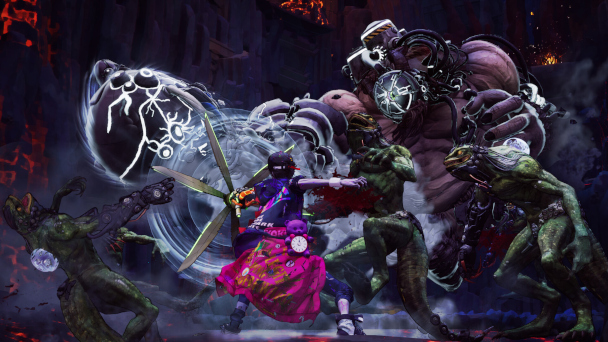
Parries now feels like a obligatory requirement for any modern melee-action game. And here, the Stupid Parry lives up to its adjective. When used, Davy rushes forward, sacrificing health even if he doesn’t connect. Intercept an incoming attack and you reduce the punishment while turning damage into a recoverable portion of the health bar.
Bite Me, You’ll Feel Better
Successfully dispensing with a gold-flashing Heat Attack triggers Stupid Impact, stunning the attacker and exposing their core. Biting these cores can restores health and also encourages an aggressive style of play where you charge, counter, and feed. That cycle gives combat a rhythm and identity, but unreliable positioning and long animations can turn a ass-kicking into an awkward scramble.
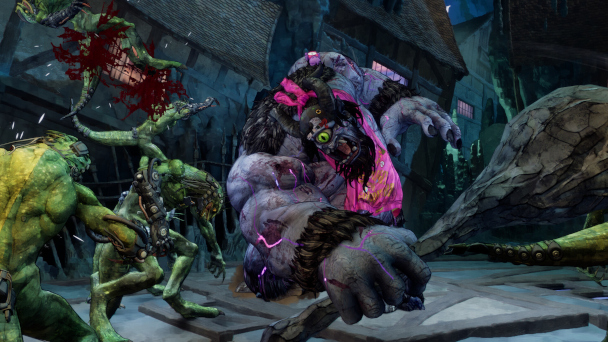
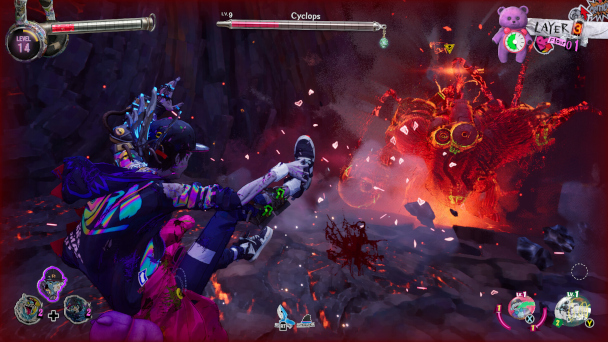
Your bites also power Style Eat, which lets Davy steal enemy abilities, Kirby-style. Ordinary foes can yield disposable Instant Skills, while elite monsters give up transformations that come with their own attacks and special abilities. Each acquired monster Style comes with a randomly selected skill from its own pool. These can expire after descending down a certain number of floor, encouraging you to replace and try new ones. Conceptually, it’s hard not to appreciate the push toward experimentation, with some Styles changing how Davy fights or traverses the dungeon.
You Are What You Beat Down
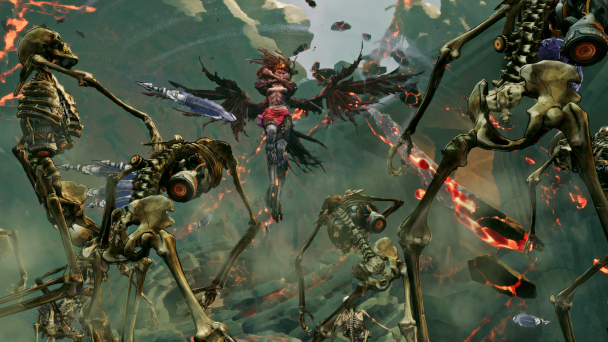
Unfortunately, only about five of those eleven movesets are fun enough to repeatedly seek out. The werewolf’s rapid claw attacks and quick movement suit the game’s forward momentum, while the lich’s skeleton helpers offer a welcome alternative to have to punch everything yourself. The harpy’s aerial attacks give encounters a welcome change of perspective, and the cyclops carries a massive club well-suited for crowds. And the vampire’s bats add another interesting variation.
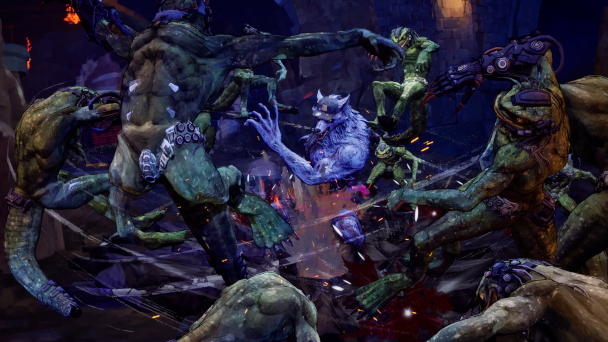
But the other forms struggle to justify their complications. Merfolk’s underground approach sounds clever (and rather Splatoon-ish), but its short swimming window and refill time break up the pace. Likewise, the snow fairy’s freezing setup can feel laborious when a simpler form could already have cleared the room. Variety doesn’t matter much if you keep returning to your old favorites.
Of Monster Bashing and Button Mashing
The game’s roguelike elements support a cycle of dungeon delves and mall visits. Davy starts each run at level one, choosing from randomized upgrades as he levels, and works against a time limit that penalizes inefficient fighting. All the while, defeated enemies increase Davy’s lasting Growth Rate, accelerating your experience gains on subsequent attempts.
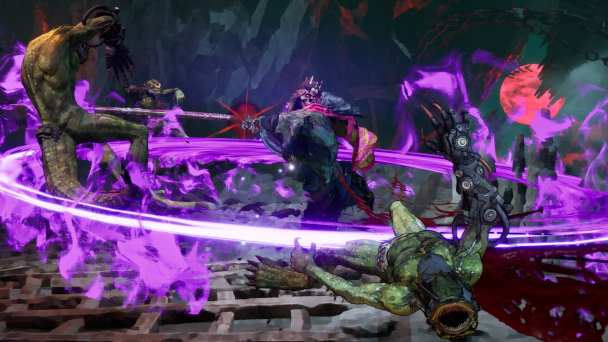
Equipment and permanent upgrades provide a few additional reasons to return, so a failed run doesn’t feel like a total time-waste. Certainly, Watching Davy level up in quick succession is satisfying, but it also exposes the grind beneath the dopamine drip. Progress can depend more on repeating familiar encounters until the numbers outstrip learning to handle those encounters better.
Stupid Doesn’t Try (Often Enough)
That design quirk ultimately keeps Stupid Never Dies from turning its spirited personality into an equally engaging action game. Sure, there are gratifying moments when a useful transformation, a well-timed counter, or a silly gag come together. The cast and soundtrack also provide reasons to tolerate another trip downstairs. But repeated dives downward reveal the issues with movesets, imprecise targeting, and combat that only has a modest amount of depth. GPTRACK50 has created a world with plenty of interesting characters. But the fighting rarely feels as fresh as its presentation. As a remix of familiar ideas, Stupid has some catchy tracks but also too much filler.
Stupid Never Dies was played on PC with review code provided by the publisher.
Overview
GAMEPLAY - 70%
CONTROL - 60%
CONTENT - 70%
AESTHETICS - 80%
PERFORMANCE - 70%
VALUE - 65%
69%
OK
Stupid Never Dies delivers an eccentric cast and some punk style but its combat is for the normies. Yes, the transformations add some variety, but clumsy targeting and repetitive dungeon runs make this one a campy pleasure more than any kind of graveyard smash.