Hero Seekers review
Gacha-adjacent Party Building Elevates an Otherwise Middling Effort

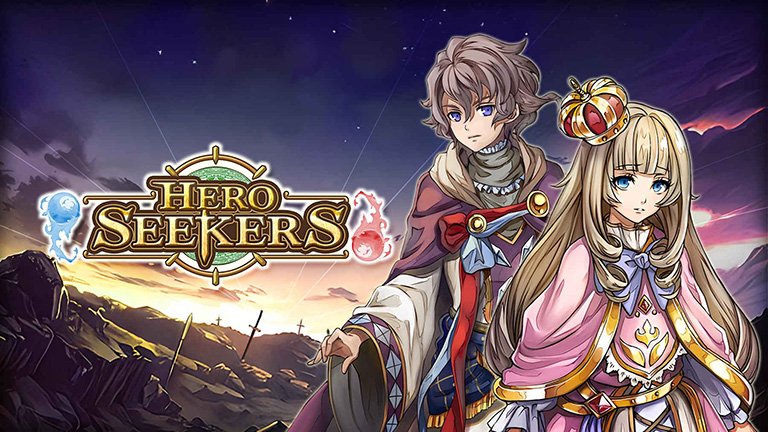
Hiroshima-based KEMCO has built a reputation as one of the most prolific publishers of Japanese role-playing games, with a catalog that spans decades and includes dozens of RPG releases across mobile devices, consoles, and PCs. Rather than operating as a single in-house development studio, KEMCO functions primarily as a publisher, collaborating with smaller external teams like EXE-Create, Hit-Point, and Rideon to maintain a rapid release schedule.
This production model has resulted in a recognizable style where traditional turn-based combat and modest production values provide consistency. That said, there’s often a lack of innovation across their output and visuals that resemble an RPG Maker-coded effort.
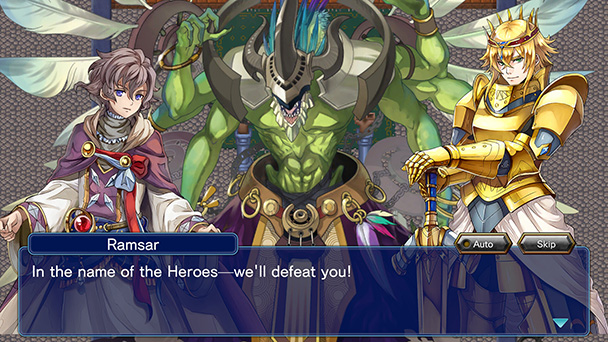
While Vanguard’s Hero Seekers largely conforms to KEMCO’s conventions, the title strives to shirk complacency with the inclusion of a unique party building system. When coupled with a storyline that’s a bit darker than most of publisher’s previous works, Seekers stands as one of the publisher’s stronger efforts, even if it’s not quite as good as Novel Rogue.
Locating the Forgotten Ones
The game’s premise imagines a world whose history has been rewritten after the defeat of the Demon King by a trio of leads, erasing the existence of legendary heroes. Lunette, the game’s crown-wearing protagonist, is the only person to retain a knowledge of the original timeline. As such, she’s tasked with recovering the souls of forgotten heroes and saving humanity from demonic oppression.
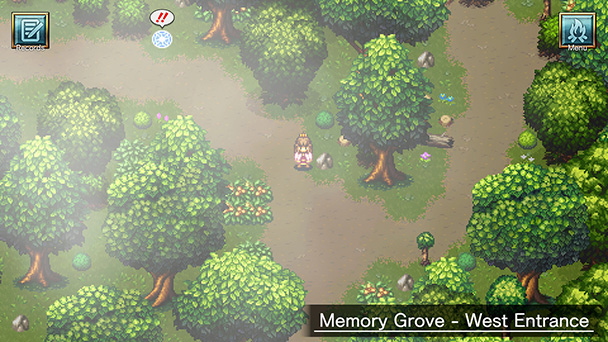
While the concepts of reclaiming a lost history and restoring hope in a deprived populace are noble, Seekers’ exposition lacks complexity. Dialogue is serviceable although rarely memorable, and character development takes a backseat to the cliched undertaking of restoring the world. While the plot is largely linear, the concept of delving into hero nightmare isn’t clearly signaled, potentially causing a bit of confusion across the first few instances.
Traditional Turn-based Combat Might Not Impress…
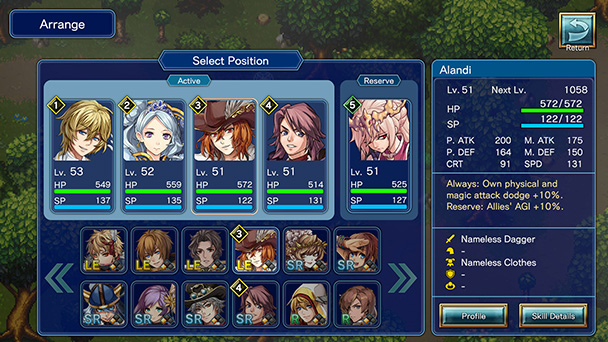
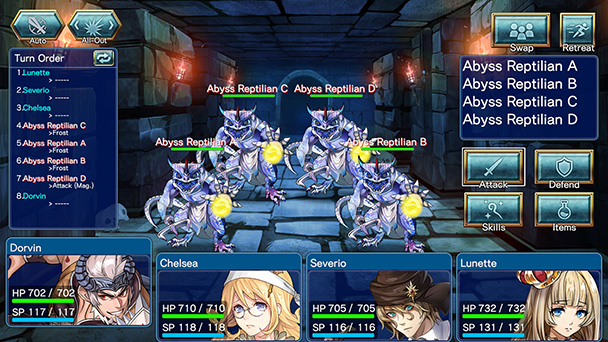
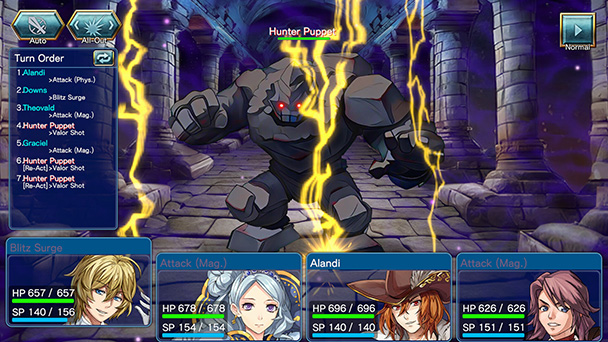
Gameplay centers on a turn-based combat system that stresses party composition and resource management. Players assemble a team of up to five summoned heroes, each offering distinct abilities and stat profiles, encouraging some experimentation and light strategic planning. Battles are straightforward but can sporadically require your attention, especially when enemy teams grow more varied and status effects play a larger role. For lower-risk encounters, you can have the CPU automatically fight foes.
…But the Variability of Party Composition Might Interest
The act of hero summoning provides Hero Seekers with some much-needed distinction. Rather than recruiting party members across story arcs or in towns, heroes are acquired by restoring their souls and calling them up from a gacha-esque summoning system. Expectedly, each hero falls into clear archetypes, from damage dealers, tanks, to support units. But subtle variations in skills and passive traits allow you to tailor your party. Mercifully, the game is generous enough with summoning resources that experimentation is encouraged rather than deterred.
That said, summoning is not without its limitations. While the thrill of unlocking a powerful new hero might shake up your strategy, the lack of deeper personalization or branching growth paths means many heroes ultimately blur together over time. Stronger units tend to outright replace weaker ones instead of synergizing with them, which undermines attachment to your hero roster.
Some Welcome Conveniences
Beyond the ability to have the CPU manage your battles, Seekers provides a handful of welcome quality-of-life inclusions. Options such as accelerated battle speed, streamlined dungeon traversal, and helpful escape mechanics help to reduce repetition. Of course, these inclusions don’t fundamentally alter KEMCO’s RPG formula, but they do demonstrate an adaptation to modern expectations, particularly on PC.
Ultimately, Hero Seekers is a competent role-playing game that fulfills its budget role-playing purpose. It’s accessible and rarely frustrating, providing a barebones adventure rooted in light exploration and party management. While Vanguard’s storytelling isn’t going to bring home any awards, those familiar with KEMCO’s style should expect another solid, if unremarkable adventure.
Overview
GAMEPLAY - 65%
CONTROLS - 70%
CONTENT - 70%
AESTHETICS - 70%
PERFORMANCE - 70%
VALUE - 60%
68%
OK
Hero Seekers sticks closely to KEMCO’s budget-minded RPG formula, delivering serviceable storytelling and traditional turn-based combat that rarely surprises but is approachable. A gacha-style hero summoning and flexible party-building system add just enough variety to elevate it above the publisher’s more forgettable efforts, even if the RPG Maker-looking presentation keep it from truly standing out.





I see Kemco and I keep looking. Cookie cutter rpgs.