FEED IT review
A Serving of Dread Seasoned with a Bit of Psychedelia


FEED IT understands there’s something scary about hunger. Trapped inside a decaying, strange house with a demanding monster, I quickly found myself torn between two competing needs. Yes, the creature with a meteoric metabolism expects to be fed. Ignoring his demands has consequence. But I’m also hungry and food keeps me functioning so I can search for a way out. This quandary is at the core of FEED IT and there’s a dreadful sense that no easy solution exists.
Most games reward you for finding food, from the turkey leg in Castlevania’s stairwell to Pac-Man’s escalating bonus for chomping on cherries, strawberries, and well, Galaxians. So there’s something off-putting about finding a plate of food and realizing that picking it up hasn’t solved anything. Your actions have only created another decision.
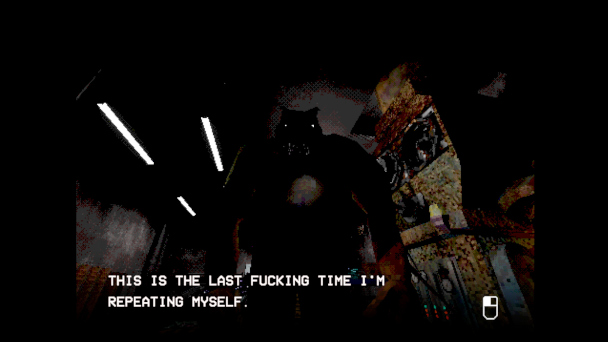
Sure, feeding the monster might keep it satisfied and buy me some peace. But eating the food myself feels almost like an act of rebellion. The longer I played, the less this choice felt like resource management and the more it resembled being in an abusive relationship. Here, taking care of myself carried a sense of danger. But it also was an act of defiance for being placed in a situation where I feel like I can’t win. And here’s the interesting thing: FEED IT doesn’t need to send its monster chasing me down darkened hallways to feel threatened. I feel a sense of peril everything he knows I stole the food for myself.
Pixel Impressionism
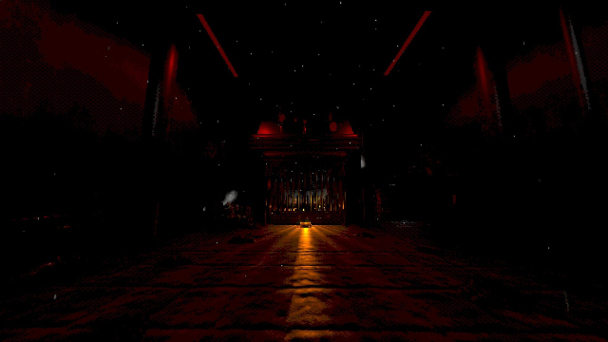
This kind of oppressive feeling is elevated by FEED IT’s PlayStation-inspired visuals. The low-resolution textures, murky rooms, and shifting geometry make the house feel menacing, much like Silent Hill’s ominous low-fi graphics. Here, objects seem just recognizable enough to make out, but are ugly and indistinct. And everything is coated with a thick layer of uncertainty like some kind of half-remembered dream.
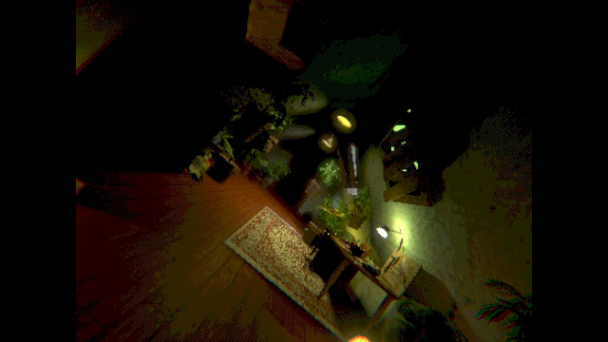
Then the house stops playing by the rules. Hallways change. Rooms no longer seem to connect in the way that I remember. Spaces stretch out, or contradict the layout I just witnessed just a minute earlier. At some points, FEED IT becomes genuinely psychedelic, as the environment folds in on itself as hunger, exhaustion and fear take hold. Walking through the house starts to feel like navigating somebody else’s fading memory.
Remarkably, the disorientation is more effective that just putting some monsters on-screen. I entered room convinced that I know where the doorway would lead, occasionally hesitating because something felt off. And FEED IT exploits this hook pretty brilliantly. Once the game teaches me that the architecture can change on the fly, I stop trusting things. It almost feels like when you realize when a novel has an unreliable narrator.
Multiple Courses
It’s also importation to point out that FEED IT is not really built around completing one single playthrough. A run is relatively short, but finishing it feels more like completing one branch of a visual novel rather than seeing the ‘true’ end. Here, choice alter what happens, different routes reveal different information, and the presence of multiple endings encourage you to experiment. On subsequent playthroughs, behaving differently around the monster or prioritizing my own needs can expose elements that I haven’t seen before. As such, each run becomes a piece of a larger puzzle.
Normally, replaying a horror game makes it less frightening because you know where the jump scare are. But here, repetition creates a different kind of uneasiness. I know the house, expect I don’t. I know the rules, but they may changes. I think I know the monster, but maybe Feed It will expose my overconfidence. And learning about your own weaknesses is always scary.
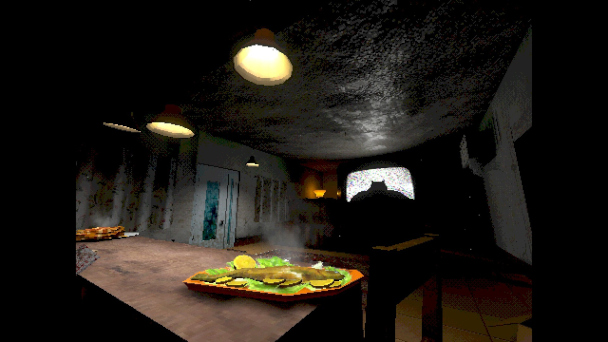
FEED IT was played on PC with review code provided by the publisher.
Overview
GAMEPLAY - 70%
CONTROLS - 70%
CONTENT - 65%
AESTHETICS - 70%
PERFORMANCE - 75%
VALUE - 85%
73%
GOOD
FEED IT turns a simple hunger mechanic into a surprisingly unsettling battle between self-preservation and keeping a demanding monster satisfied, all inside a shifting, grimy house that never quite feels trustworthy. With its lo-fi horror visuals, disorienting architecture, and branching endings, every run feels like a piece of a larger puzzle, offering a reason to coming back for seconds.