BRIGANDINE ABYSS review
A Slightly Deeper Kind of Conquest

For almost three decades, Brigandine has occupied a curious part of the strategy-RPG genre map. The original PlayStation game merged the territorial contests of a grand-strategy game, hex-based tactical titles, and a roster of fantastical monsters, which turned out to be a winning blend.
Following a protracted, 22 year-long absence, 2020’s Brigandine: The Legend of Runersia resurrected that formula, delivering few fundamental changes. But BRIGANDINE ABYSS adopts a different approach. This time, developer Adglobe (Ender Lilies: Quietus of the Knights, Ender Magnolia) isn’t interested in just preserving the strategy series. They’re trying to deepen it.
Six Nations, Plenty of Problems
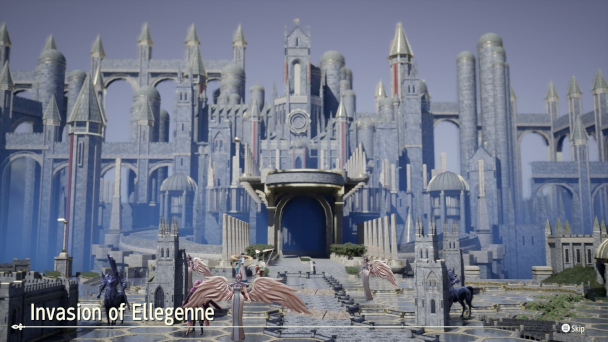
Expectedly, the core fundamentals are all recognizable. Rather than following a party of adventurers through a linear campaign, ABYSS hands over a nation. With the continent of Meltitea thrown into turmoil by the return of the Abyssloa Empire, story mode splits its campaign into six different campaigns, all centering on a different faction.
Meanwhile, the game’s Mission mode expands things into a strategy sandbox, letting you lead 24 playable nations, who all have their own victory conditions. It’s here that ABYSS most feels like the 1998 original, where you’ll spend hours staring at a map of color-coded territories with ambitions of painting the whole thing with your chosen hue. Games like Romance of the Three Kingdoms and Dynasty Warriors have long demonstrated how compelling the cartographical conquest can become after the first few land grabs.
The Spreadsheet is Mightier Than the Sword
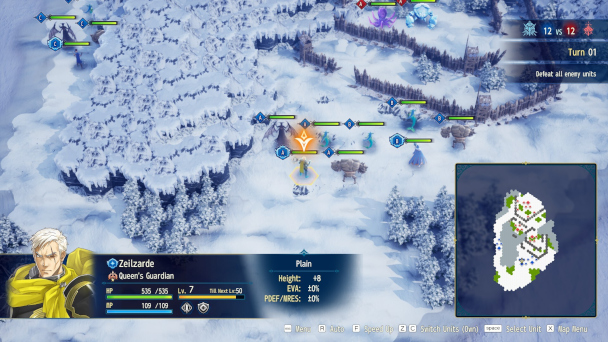
As with previous entries, play shifts between strategic management and tactical combat. During the Organization Phase, you shuffle troops between bases, equip characters, upgrade classes, develop facilities, recruit or strengthen monsters, and send personnel on quests. Then comes the question that has always made Brigandine interesting: where should everyone go?
Every offensive push creates another potential weakness. Concentrate your best troops on one border and an opportunistic rival might invade from another direction. And while leaving one of your decorated commanders to defend a remote fortification might seem foolish, your outlook can change once a throng of enemies shows up at the front gates. Yes, Runersia thrived at turning geography into a strategic puzzle. But ABYSS adds additional systems around the franchise’s familiar framework, making each Organization Phase just a bit thornier. That said, not everyone is going to appreciate the extra granularity. Managing a sprawling empire can feel laborious and ABYSS doesn’t do much to lighten the cognitive demands. That said, the additional effort can make battles feel even more consequential.
Hex Marks the Spot
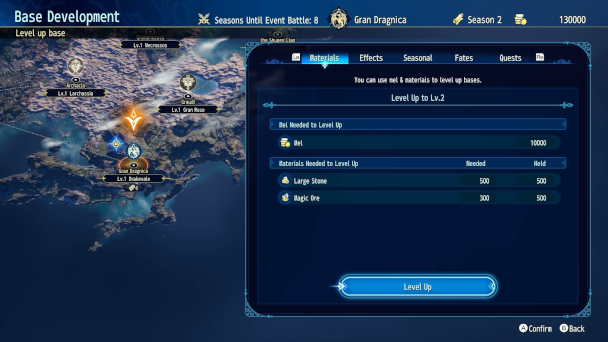
Once swords are inevitably drawn, ABYSS becomes a hex-based tactical RPG. You’ll lead squads that have up to five monsters, with each creature consuming a portion of the leader’s Command Points. Dragons, wolves, golems, unicorns, spellcasters, and even stranger creatures each have their own movement properties, attacks, elemental affinities, and roles. Leveling up your monsters opens stronger classes and additional abilities, but promotions can increase their Command Point cost. Notably, making one of your monsters stronger can also make it harder to fit into your preferred formation. That’s the kind of trade-off that really makes Brigandine feel distinctive.
Arguably, the biggest change is found in Rallying. Normally, monsters operate as independent units, but they can instead Rally around their commander, granting some useful bonuses. Naturally, different kinds of creatures have different effects, adding another layer of squad-building possibilities. Now, monsters aren’t just valuable because of what they can do on their own. Instead, augmenting someone else might be even more worthwhile.
It’s a smart addition that injects a bit of flexibility rather than simply adding yet another resource meter. A vulnerable monster can now be pulled out of danger by Rallying, while carefully chosen bonuses can turn a routine commander into a powerhouse presence. As armies collide and formations begin splintering, deciding whether you need another body occupying a hex or if you’d rather beef up your leader is one of ABYSS‘s more interesting decisions.
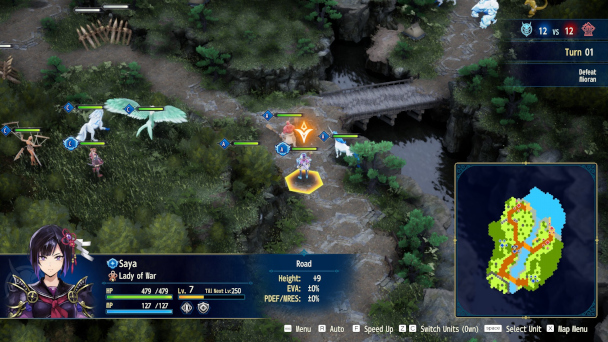
High Ground Now Matters
Battlefields have also received a welcome overhaul. Compared with the flatter maps of Runersia, elevation, rivers, bridges, fortifications, and terrain allow for some tactical advantages. Movement limitations can stretch out what might seem like a short trip while some environmental funneling forces you into using defensive formations and ranged attacks.
Magic is especially useful since spells have guaranteed accuracy, while physical attacks can be influenced by positioning and other factors. Pleasingly, ABYSS‘s interface is a capable assistant, previewing damage output and highlighting movement and attack ranges. And it wouldn’t be a Brigandine game without one assistive tactic. When you eliminate a squad’s commander, their remaining troops retreat. I don’t often cheer at turn-based games, but these executions were habitually accompanied by a subdued fist pump on my commutes.
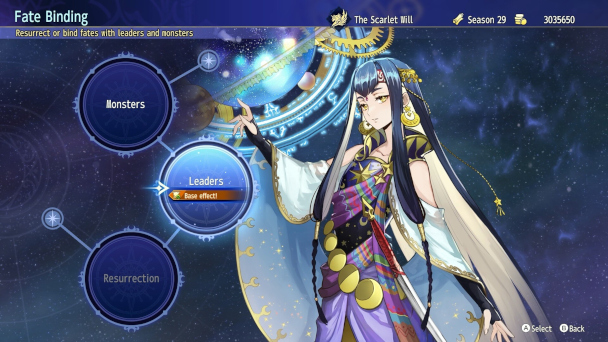
More Intrigue Between Invasions
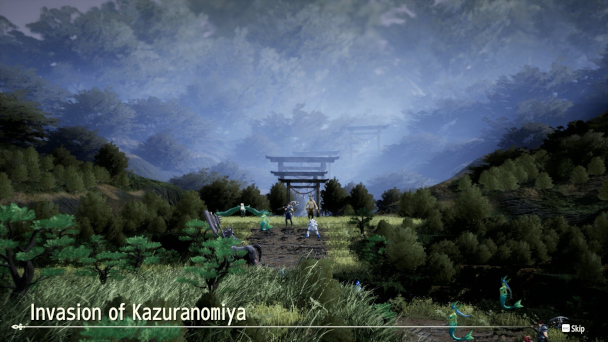
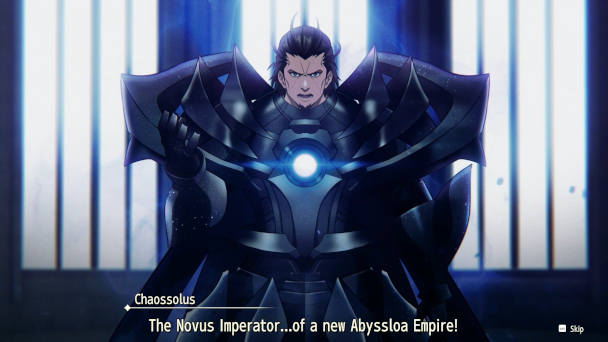
ABYSS makes a real effort to connect context and conquest in a way Runersia didn’t always bother with. Runersia had some solid character art and some interesting personalities, but its storytelling could feel like it took a backseat to the strategy. To remedy this, ABYSS has dedicated Event Battles before and after combat, animated cinematics, and visual novel-style segments woven around its biggest missions.
The follow-through is more uneven than I’d hoped, though. Each of the six campaigns leans on just a trio of main characters, which keeps the narrative focused but also caps how much room anyone gets to grow, and the six story threads share enough structural DNA that they can start to blur together by your second or third playthrough. The cycle of building your forces, taking over territories, and triggering the next event can grow repetitive, especially once your nation is powerful enough that routine invasions start feeling like busywork between more pressing matters.
For better or worse, your CPU opponents can be excessively aggressive, sometimes attacking without caring about their own long-term survival. But hey, I’ll make a machine feel regret. That said, organization definitely needs a few more quality-of-life conveniences once dozens of troops and bases enter the equation, and the added narrative trappings don’t fully close the gap between ABYSS‘s ambitions and the depth longtime fans came in expecting.
Remembering Our Fallen Unicorn
And while repetition will inevitably emerge, it’s less damaging here than in many other strategy RPGs. Brigandine has always been about creating stories through systems, and thankfully, ABYSS doesn’t change that. That undermanned fortress that somehow survived an invasion will linger in your memory, much like that lowly monster that evolved into an absolute battlefield beast. You’ll remember the sting left by that disastrous offensive that left half a border vulnerable. Sure, winning fights feels good, but it’s the fiction made from your campaigns that makes ABYSS special.
That’s ultimately what separates BRIGANDINE ABYSS from both the original and The Legend of Runersia. The 1998 game established a cool mixture of monster raising, tactical combat, and continental conquest. Runersia demonstrated that the formula remained compelling two decades later. ABYSS feels like the first follow-up to really take chances with things. Its terrain, Rally mechanics, base development, and more robust storytelling. Most importantly, it’s still Brigandine.
Heavy Is the Head That Wears the Brigandine
ABYSS can be dense, repetitive, and intimidating before its numerous systems become familiar. But few strategy RPGs make conquest feel as good. Every dragon recruited, commander promoted, and seized fortress becomes another part of an empire that could crumble with a few imprudent decisions. And that’s an allegory for the ages.
BRIGANDINE ABYSS was played on PC with review code provided by the publisher.
Overview
GAMEPLAY - 75%
CONTROLS - 70%
CONTENT - 70%
AESTHETICS - 70%
PERFORMANCE - 75%
VALUE - 70%
72%
GOOD
BRIGANDINE ABYSS keeps the series' satisfying mix of monster raising, tactical battles, and territorial conquest while adding just enough new systems to make managing an empire feel more consequential. It can get repetitive and occasionally bogged down in busywork, but few strategy RPGs are this good at turning a string of victories or mistakes into stories you'll actually remember.


Just picked it up. I’m liking it even more than The Legend of Runersia so far!