Beyond Words review
Scrabble Meets the Roguelike in this Clever, Slightly Unbalanced Experience

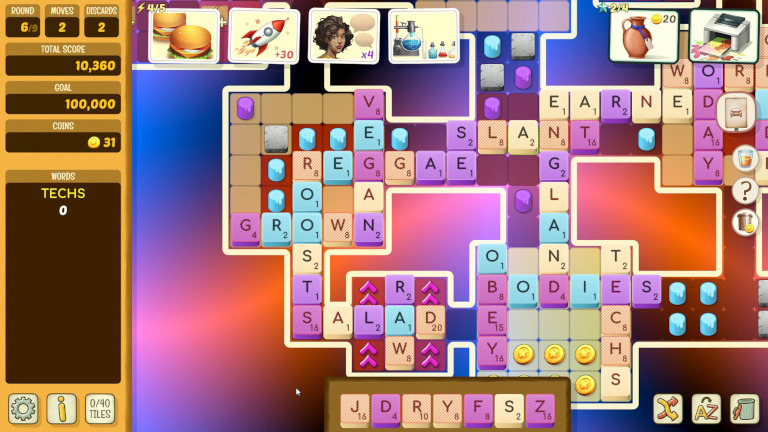
Beyond Words comes from Steve Ellis and David Doak, who previously worked on 007 GoldenEye and the TimeSplitters series. As such, the transition to a roguelike, board game isn’t something you might expect from the duo. Yet, peer beneath the surface and there’s an unmistakable similarity in the way that Beyond Words systems rather ingeniously interlock.
Unmistakably, there’s a clear emphasis on repeatable challenge loops, score-driven mastery, and even mechanical clarity that feels like a throwback to ‘90s era game design. Rather than just relaying on just building words for points, there’s an emphasis on exploiting scoring efficiencies that are arguably just as important as your vocabulary.
Where Every Letter Pull Could Spell V-I-C-T-O-R-Y
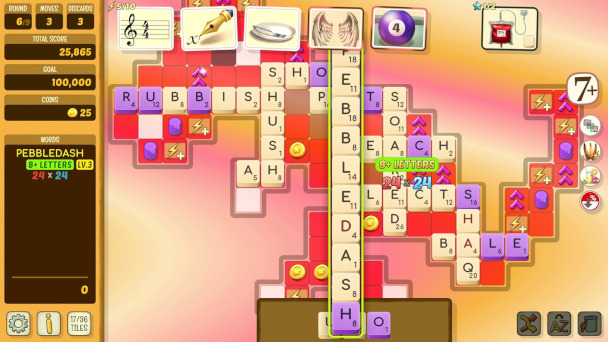
At its core, Beyond Words fuses the foundations of Scrabble with the arbitrary nature of a run-based roguelike. Each session sends you across a forking route of challnages where you’re tasked with constructing words from a randomized pool of letters. Across each run, you’ll take advantage of modifiers that do things like provide bonuses to remove scoring for specific letters. These perks and punishments push players to think beyond simple word formation.
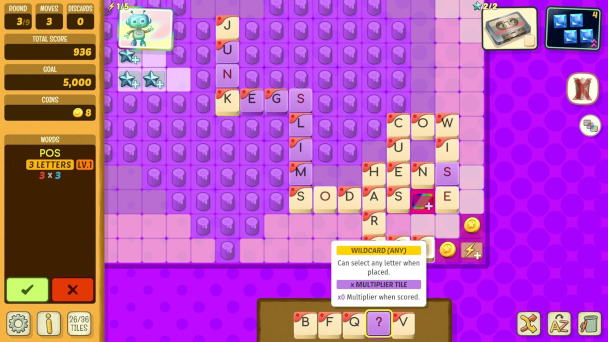
Longer, more complex words may provide high scores, but with a bit of time and planning, a three-letter word elevated by a few boosts might just be the better play. The rules are easy to understand early on, but deeper systems, such as chaining bonuses, tile multipliers, boards with pre-existing words or obstacles, and run-specific objectives, gradually add complexity and make each turn feel consequential. And if you’ve played Balatro, you already know that makes for a irresistible hook. And just like LocalThunk’s beloved title, you’re offered the ability to skip rounds if you feel you’re ready to move ahead.
Bonus Tiles
Yes, the roguelike elements are what truly gives Beyond Words longevity and depth. As you complete runs, you’ll unlock a variety of new perks and modifiers that can dramatically alter your strategy, such as bonuses for specific letter combinations, incentives for shorter or longer words, or penalties that restrict your available options. These systems inject quite a bit of variability, and having to constantly adjust your strategy to exploit each new efficiency can get pretty addictive.
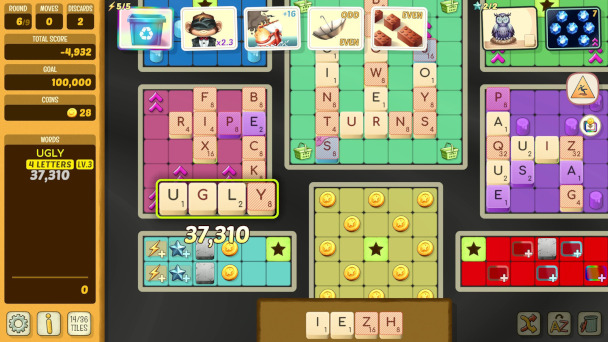
In more effective runs, the right combination of upgrades can give a satisfyingly sense of momentum, where each word builds toward exponentially larger point totals. However, this same variability can also expose balance issues, particularly when weaker perk combinations leave you struggling.
Vowels, Consonants, and Chaos
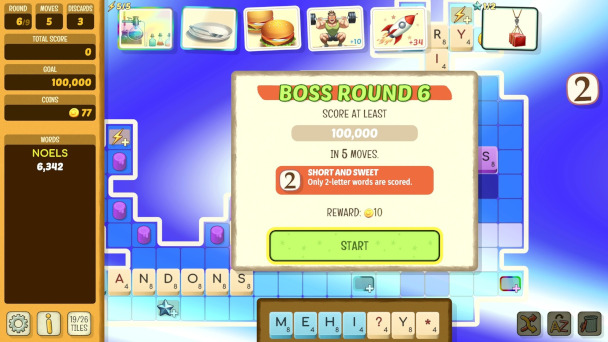
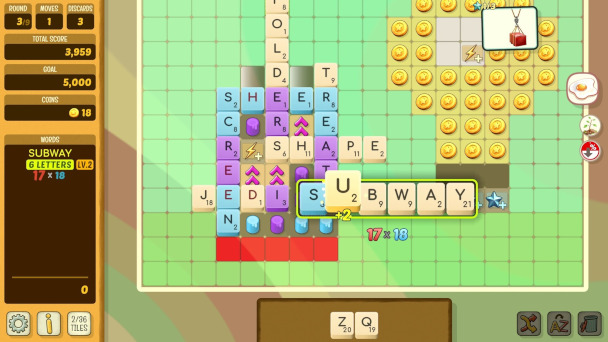
That unevenness in balance becomes more noticeable the longer you play. Some runs feel almost effortless thanks to synergistic upgrades, allowing scores to climb quickly with relatively little resistance. Others, however, feel constrained from the outset, with limited opportunities to build momentum. This can create a perception that success is sometimes dictated more by the luck of the draw than by player skill, which may frustrate those looking for a more consistent challenge curve. While the randomness is clearly intentional as part of the roguelike design, it doesn’t always feel perfectly tuned, especially when compared to the tighter balance seen in more established entries in the genre.
The Dread of the Ninth Round
Yes, progression across nine rounds is tied to achieving specific point thresholds, and this is where the game’s difficulty spikes in a way that can feel excessive. Early goals are manageable and provide a satisfying sense of advancement, but later requirements and boss battles can escalate dramatically, demanding extremely high-scoring runs to unlock further content. These targets often require near-optimal play combined with favorable modifier pulls, which can bring a robust run to a grinding halt.
Pleasingly, the interface is consistently clean and readable, presenting letters, scores, and modifiers in a way that is easy to parse at a glance, even on smaller portable PC screens like the Steam Deck. Information is generally well-organized, and the game does a solid job of communicating the rules and effects of various systems without ever overwhelming the player. However, this clarity begins to break down slightly during play, as your shifting from your titleset, activating buffs, to dropping letters on the game board. Generally, the controls work respectably, but you will encounter minor inefficiencies when playing with a controller.
Spelling Success with a Single Caveat
Despite these shortcomings, Beyond Words is an intriguing and often compelling experience. The game’s fusion of ord game mechanics with roguelike structure feels genuinely inventive. When things click, and you’re given a fertile title draw and the proper perks are aligning, the game can feel invigorating. Despite some balancing woes, each run is brimming with smart ideas and interesting, interconnected systems that can make failure seems like a temporary setback.
Beyond Words was played on PC with review code provided by the publisher.
Overview
GAMEPLAY - 80%
CONTROLS - 70%
CONTENT - 80%
AESTHETICS - 70%
ACCESSIBILITY - 70%
VALUE - 75%
74%
GOOD
Beyond Words is a clever mashup of Scrabble and roguelikes that’s easy to pick up but tough to master. When the right tiles and perks align it’s brilliant. But when they don’t, it can feel like luck’s playing against you.


Seems like half the reviews I have read mention balancing issues.