Vortica review
A scrappy shooter that’s hiding some tactical depth

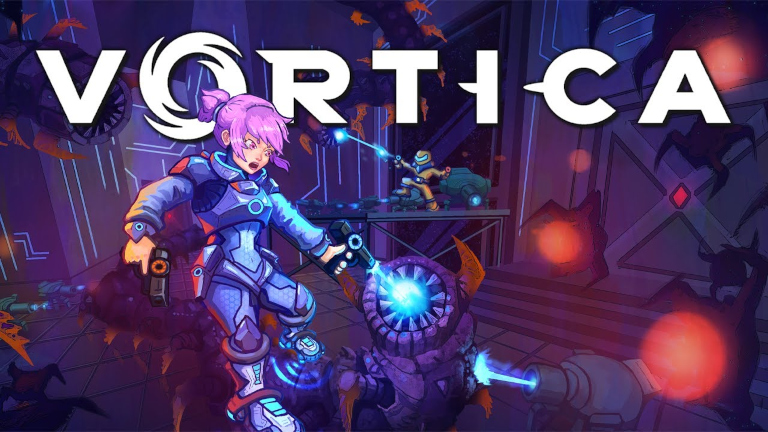
At first glance, Vortica looks like a lot of other indie twin-stick shooters on Steam. There’s the top-down perspective, the diminutive sprites, and the satisfying sound of automatic weapons that go brrr. Yes, it’s a genre that’s been done to death. And honestly, after watching a short video of Vortica in action, you’d be forgiven for scrolling right past it. But underneath that familiar exterior is a game with more heart than first impressions might imply. It’s one of those games that engages you after spending a few hours with it.
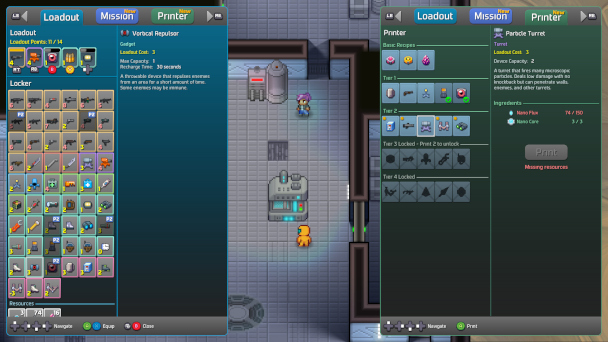
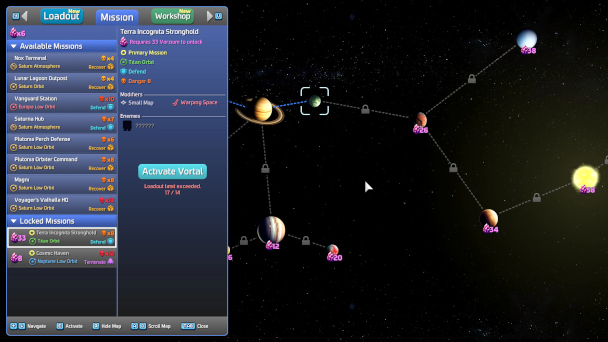
The core mechanic that separates Vortica from the twin-stick crowd is its loadout system, and it’s pretty clever. Rather than simply equipping weapons from a menu, you can augment your inventory by printing tools before each mission. Think of it as a fabrication bench. If you want to augment your armory of found weapons, perks, and support equipment, you can spend some resources to assemble it on the spot.
Print, Pack, and Pray the Difficulty Spikes Aren’t Sudden
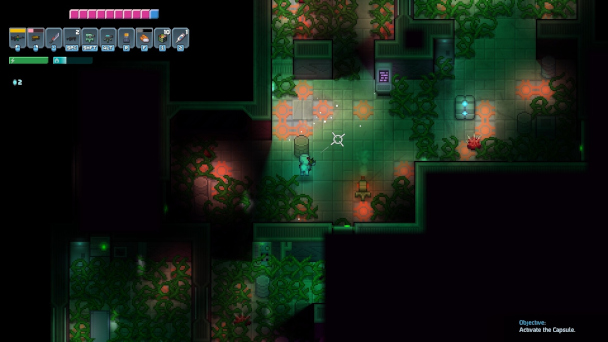
The not-so hidden catch is carrying capacity. Every piece of gear has a slot cost, and you’re working within a hard, but upgradable limit. Additionally, the slow reload speed of heavy weapons like a grenade launcher and shotgun might leave you vulnerable when encountering a nest of adversaries. As such, a specialized kit with an automapper that reveals critical locations, armor plating, perks that decrease weapon heat and reload times for your basic pulse pistol might be more effective, if you’re on the run.
This creates some genuine pre-mission tension. Do you bring in your big guns to mow down resilent monsters? Do you use some nano flux to print some better firepower? Vortica’s loadout system forces you to make some tough decisions rather than just letting you loose with the best and newest ordnance. The downside, is that you really won’t know what to take with you before teleporting down to each mission.
The Little Turrets Are Doing Their Best
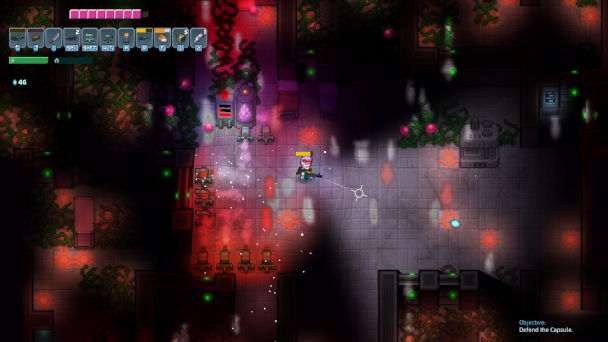
Early on, I assumed that auto-turrets would be the solution to many of the game’s challenges. Undoubtedly, learning how to deploy them well is probably the most important skill you’ll develop. You can deploy them in any empty area before lock them in a cardinal direction. They’ll fire relentlessly down that lane, making them invaluable for holding a corridor, or setting up a firing squad during a defense wave. Sometimes, you’ll use them to keep pressure on a chokepoint while you deal with another target.
But here’s the thing, though: enemies will go out of their way to destroy them. Some foes seem hellbent on it. They’ll make a beeline for your turrets the second they’re placed, and if you’re not watching, you’ll lose your entire sentry force fast. Early on, that can feel frustrating. But later, it starts to feel like Vortica wants to teach you that you just can’t set and forget them, tower defense-style. You’ll have to position them cleverly, protect them, and sometimes accept that a turret is a just a distraction that can buy you a few desperate seconds.
Objectives Beyond Survival, But Mostly Killing Creatures
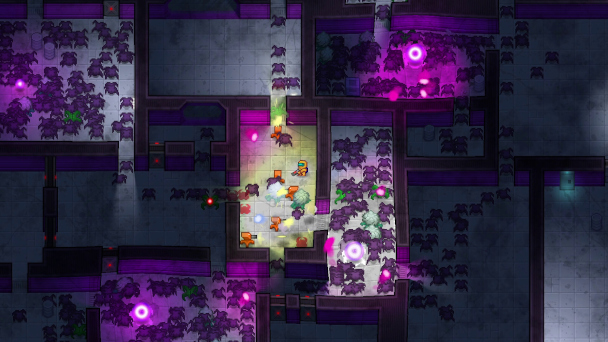
There’s a small variety of different mission styles, which aims to keep the action interesting. Some send you out to gather resources scattered across the map while enemies might try to swarm you. These tend to reward defensive movement and map awareness over brute force. Others are more defensive, tasking you with holding a point, as waves of foes take over the area.
Expectedly, these undertaking habitually require smart turret-placement although bringing the proper weapons can give you an advantage. While there’s not a huge range in mission style, there’s enough tonal difference to push different skill sets. That doesn’t completely eradicate tedium across the game’s Adventure Mode campsign, but the design decision is a step in the right direction.
No Manual, No Mercy, But You Have a Printer
Here’s something Vortica does that I respect: it doesn’t tell you much. Enemy types have weaknesses, but the game doesn’t give you a field guide. Some weapons feel especially weak against floating foes, and then there’s environmental variables like clouds of space dust that can really change up things. I won’t spoil things by getting into specific, since solo developer Christopher Fivash expects you to experiment, fail, and figure things out.
And that process of discovery is a significant amount of Vortica’s experience. There’s satisfaction in bringing the wrong loadout into a mission, getting your ass kicked, and then going back to the print bench with a new strategy. It’s especially gratifying when you plan works out. Pleasingly, losing doesn’t sting much, since every failed run earns you nano flux, a meta-currency you use to permanently upgrade your character.
Houston, We Have a Difficulty Problem
However, Vortica isn’t without its problems. Before missions, the game gives you a general overview of what’s coming, stating the mission type and giving a broad objective. Leter, you’ll get some additional enemy detailing enemy types and what kind of equipment might be found on the stage. But you’ll rarely get the kind of specificity you’ll need to really prep for things. Often, you’re going in with limited intel, making use of what’s available to you. If that sounds like roguelike game design, Vortica can provide that experience. Beyond the learning through failure in the Adventure Mode and can also opt for shorter runs where permadeath is never far. But undoubtedly the game’s most frustrating quality are the difficulty spikes. Missions can jump from manageable to masochistic without notice.
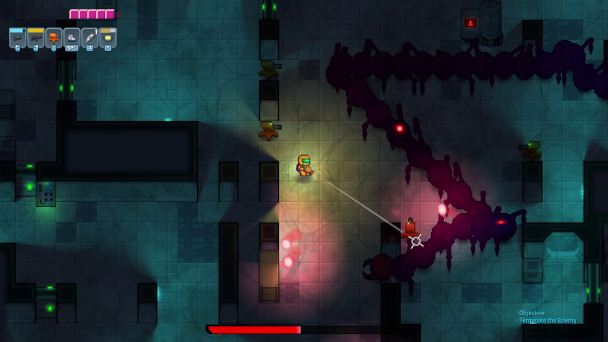
The other issue are the zero-gravity stages. Certain levels flip the physics, letting you walk off edges and float across gaps to reach other platforms. In theory, its an interesting idea, causing you to look at the game’s level designs in a different light. But in practice, it can be produce frustration across the early game, especially when a single misstep sends you adrift into the cosmos. Smartly, there’s no health penalty for stepping into the space-void. But the delay before putting back on solid ground can allow monsters to regenerate.
A Hidden Gem Beneath the Space Dust
Vortica is a better game than its screenshots or video might indicate. The loadout system gives the familiar twin-stick formula some thorny dilemmas, he auto-turret gameplay rewards smart thinking, and the decision to let you discover the game’s nuances make for an involving experience. If you’re willing to die a few times before discovering the solution to missions, Vortica can provide a surprisingly deep and rewarding shooter hiding underneath some very average Steam thumbnails.
Vortica was played on PC with review code provided by the publisher
Overview
GAMEPLAY - 75%
CONTROLS - 70%
CONTENT - 75%
AESTHETICS - 60%
ACCESSIBILITY - 65%
VALUE - 75%
70%
GOOD
Vortica looks like just another indie twin-stick shooter, but its clever loadout system, strategic turret play, and emphasis on experimentation give it far more depth than its Steam page suggests. While abrupt difficulty spikes occasionally get in the way, players willing to learn through failure will find a surprisingly rewarding tactical shooter beneath the generic exterior.




This an Bubsy is working with the same color set on the front page.