The Legend of Heroes: Trails to Azure review
True Blue

Once called the “Walkman of the 21st century” by former Sony CEO Ken Kutaragi, the PlayStation Portable was a prodigious piece of hardware. Boasting exceptional audio, visual, and storage capabilities for its time, the handheld became home to a wealth of console-quality role-playing games. For stateside players, that meant being able to enjoy celebrated titles like Star Ocean: First Departure, Crisis Core: Final Fantasy VII, Jeanne d’Arc, and Growlanser: Wayfarer of Time.
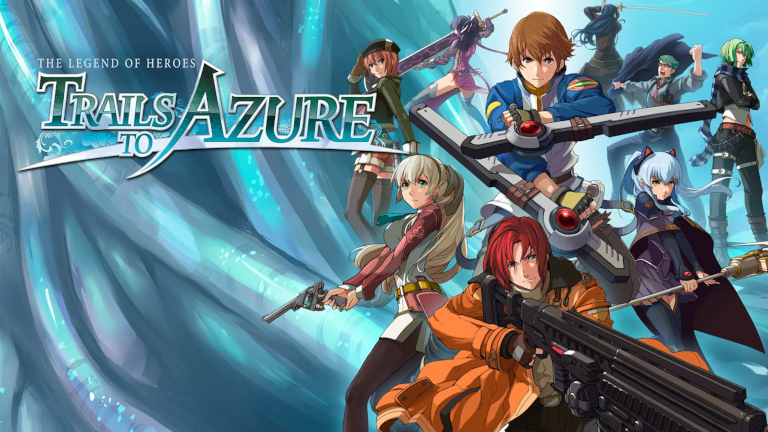
But several notable RPGs never received Western localizations. One of the most prominent omissions was Nihon Falcom’s Crossbell duology, consisting of 2010’s The Legend of Heroes: Trails from Zero and its 2011 sequel, Trails to Azure. Both eventually received fan translations from the Geofront team before NIS America collaborated with its members on the official English releases in 2022 and 2023. That partnership established an encouraging precedent for an industry where dedicated fans occasionally preserve games that publishers have overlooked.
Now, both Crossbell adventures have made their way to Switch 2. They are sold separately through the eShop, while the physical Deluxe Edition bundles the complete duology. That makes the retail release a particularly sensible option, since Azure is more rewarding when experienced right after Zero.
Starting with Azure Still Isn’t Recommended
Released in the West five months after Zero, Trails to Azure provides closure for the Crossbell arc while offering another perspective on several events depicted in the Trails of Cold Steel series. It is both a direct sequel and an key piece of Falcom’s elaborate trans-continental narrative.
But before heading into the proper review, newcomers should know two things. If you’re completely unfamiliar with the Trails series, Trails in the Sky remains an ideal starting point. However, beginning with the Crossbell arc is also perfectly reasonable, provided you play Trails from Zero first.
Although Azure provides a recap of earlier events, a synopsis can’t reproduce the narrative nuances or emotional investment created by its predecessor. Witnessing the cast develop and watching Crossbell’s geopolitical tensions gradually intensify are two of the biggest benefits of completing Zero. The Switch 2 release also supports save-data importing, rewarding returning players with additional conversations and alternate dialogue that acknowledge some of their previous choices. It’s not extensive, but the references help the game feel like a cohesive duology.
Two Newish Recruits Join the Team
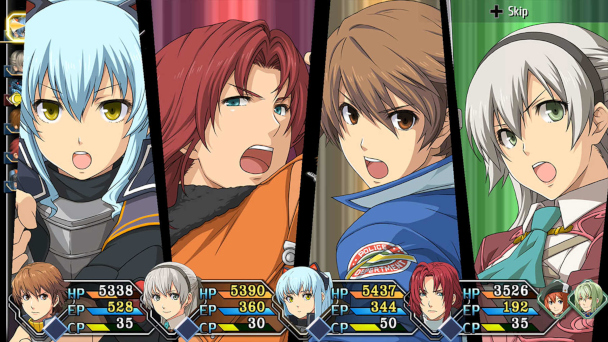
Throughout much of Zero, the Crossbell Police Department’s Special Support Section struggled with its public image. Now, the SSS has earned the support of the citizenry, which feels gratifying after everything the team endured. Better yet, two noteworthy supporting characters from Zero become full-fledged members.
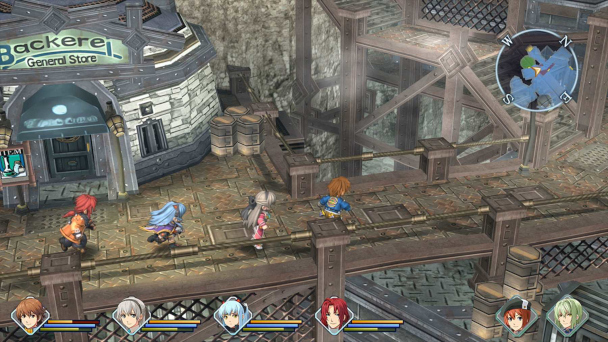
Having previously fought alongside Lloyd Bannings, Noel Seeker brings a strong sense of duty to the team, as well as considerable proficiency with vehicles. As a result, the SSS now has access to an Orbal Car that can quickly shuttle the party around the map. The vehicle can even be customized, adding a cool little detail.
In Zero, the appeal of some side quests was undermines by the amount of backtracking they required. Fast travel largely eliminates that issue here. Since a substantial amount of world-building is rooted in these optional errands, you’ll definitely want to complete them. Hearing citizens reflect on Crossbell and its two imposing neighbors often provides the kind of detail that makes Azure’s setting feel remarkably convincing.
The SSS’s other new member is Wazy Hemisphere, the leader of the Testaments gang. A bit of a playboy, Wazy was one of Zero’s more spirited side characters. Here, his motivations for joining the SSS add a bit of intrigue, while his distinctive personality produces some enjoyable banter with his teammates.
Early on, Azure sends Tio Plato and Randy Orlando away to deal with the repercussions of the D∴G cult, providing Noel and Wazy with plenty of time in the spotlight. Later, you’ll be able to select your preferred party members, and choosing between favorite personalities and complementary skill sets can be surprisingly difficult.
Crossbell Remains Caught in the Middle
Like most Trails entries, Azure’s early hours slowly bring political tensions to a rollicking boil. The SSS contends with belligerent monsters, people with enigmatic intentions, and the mounting pressure surrounding a diplomatic conference held in the continent’s first skyscraper.
Even if you’re good at predicting plot twists, Trails to Azure’s intricate storytelling will probably keep you guessing. There’s plenty of foreshadowing for each major revelation, but the trajectory of the storyline is obscured by new factions, conflicting agendas, and emerging opportunities for political power grabs. The result is a narrative that moves convincingly between intimate character moments and matters capable of reshaping the entire continent.
The sole downside is that Azure’s denouement can feel hurried, especially after investing upward of 80 hours across the duology. Falcom spends dozens of hours carefully layering its narrative pieces, only to rush through some of the aftermath once everything finally comes crashing down.
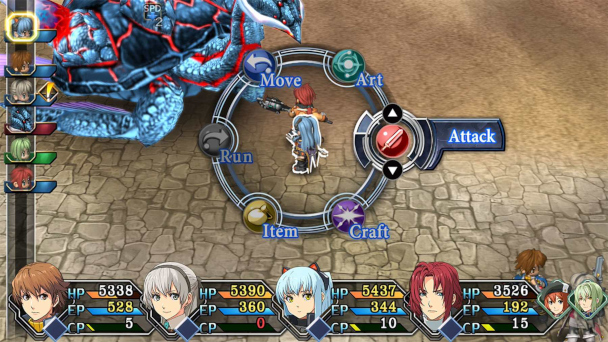
Expectedly, combat regularly breaks out during your duties, with a battle system that largely follows Zero’s solid lead. Battles are turn-based and fought across compact, gridded arenas, but Azure avoids the rigid move-and-attack cycles associated with many strategy RPGs. Select a standard attack and characters automatically move into range. Alternatively, they can summon slower but powerful Arts or use Crafts, which draw from a separate pool of Craft Points. Boss battles remain the real challenge, especially at higher difficulty settings. The concluding showdowns feels suitably epic, although a few gimmicks can also seem annoyingly cheap.
You Just Can’t Burst at Any Time
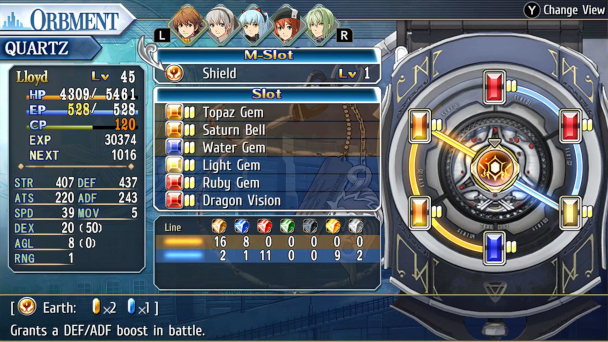
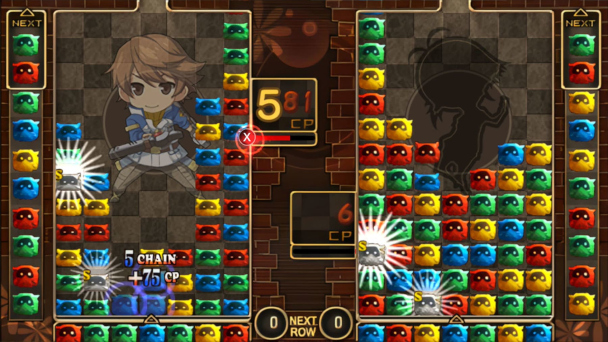
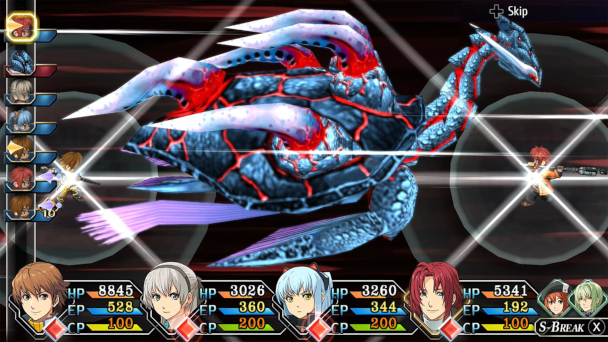
Azure’s biggest combat additions are Master Quartz and the Burst system. Regular Quartz unlocks Orbal Arts and can be freely swapped between party members, allowing you to create specialized loadouts. Master Quartz, however, is intended to remain equipped for longer stretches, gaining experience and new abilities alongside its user. Once a Master Quartz has matured, its wielder can summon a Master Art, providing a powerful immediate benefit alongside a lingering secondary effect. Unsurprisingly, the system became a fixture in subsequent Trails titles.
The Burst mechanic adds a gauge that gradually fills during combat. Once the meter reaches capacity, triggering Burst mode provides several advantages, including stronger Crafts, immediately cast Arts, status recovery, and additional turns for the party. As such, it can be invaluable for reversing a fight that seems headed south. The main stipulation is that the Burst gauge isn’t always available, typically appearing only when the level of antagonism intensifies. Back Attacks add another tactical consideration, rewarding, or punishing, how carefully you approach enemies in the field. None of these additions radically transform the foundations laid down by Zero, but together they make Azure’s battles more flexible and satisfying.
Crossbell Has Never Looked Better
Visually, Trails to Azure will remain a bit divisive. Those who appreciate intricate spritework will undoubtedly admire Falcom’s artistry. Characters, monsters, and environments suggest the picturesque charm of a miniature diorama viewed from an isometric perspective. Even after all these years, Crossbell remains one of the series’ most inviting locations.
The Switch 2 edition makes the presentation considerably cleaner. Players can choose between the original assets and newly upscaled textures, with the latter sharpening environmental details and interface elements without undermining the game’s pixel-art personality. The new hardware supports resolutions up to 4K and frame rates as high as 120 frames per second, although the exact output depends on your display and selected settings. Either way, exploration and combat feel smooth.
Admittedly, Azure still resembles a lavishly remastered PSP game rather than a contemporary title. Character models are simple, animation is limited, and a few environmental elements reveal the adventure’s handheld origins. But that kind of modesty is also part of its appeal. High-Speed Mode also returns, letting players accelerate traversal and combat. It’s a valuable convenience in an adventure this lengthy, particularly when revisiting familiar roads or grinding for experience. Meanwhile, Switch 2’s optional mouse support offers another way to navigate menus and issue commands. It’s hardly essential for a turn-based RPG, but it works well and gives players a welcome alternative to conventional controls.
Falcom Sound Team jdk’s soundtrack delivers the expected excellence, offering everything from searing guitar solos and choral-driven battle themes to buoyant melodies that embody unadulterated optimism. The improved presentation might draw your attention first, but the score remains one of Azure’s most impressive components.
Fifteen years after its Japanese debut, The Legend of Heroes: Trails to Azure hasn’t lost its luster. The game boasts an immensely endearing cast and a storyline that scales effortlessly from poignant personal moments to sharp political allegory. The hurried ending and a handful of antiquated elements remain, but the Switch 2 edition’s higher-resolution visuals, smoother performance, and portable convenience make this an excellent way to experience the conclusion of the Crossbell arc. Simply put, Azure remains role-playing at its best.
The Legend of Heroes: Trails to Azure was played on Nintendo
Switch 2 with review code provided by the publisher.
Overview
GAMEPLAY - 95%
STORY - 100%
CONTENT - 90%
AESTHETICS - 80%
PERFORMANCE - 95%
VALUE - 95%
93%
EXCELLENT
Trails to Azure offers both closure to the Crossbell arc and an introduction to some of Cold Steel’s characters. But the game functions as more than just connective tissue for Nihon Falcom’s prolific property. Spending time with Lloyd and the rest of the Special Support Section exemplifies role-playing at its best, courtesy of compelling combat, a delightful cast of characters, and more geopolitical intrigue than a stack of history books.


One of my all time favorites. Might have to double dip on this.
Wasn’t expecting a 93% score. Suddenly, I’m interested.