The Legend of Heroes: Trails from Zero review
Crossbell’s Finest Get Some Switch 2 Polish

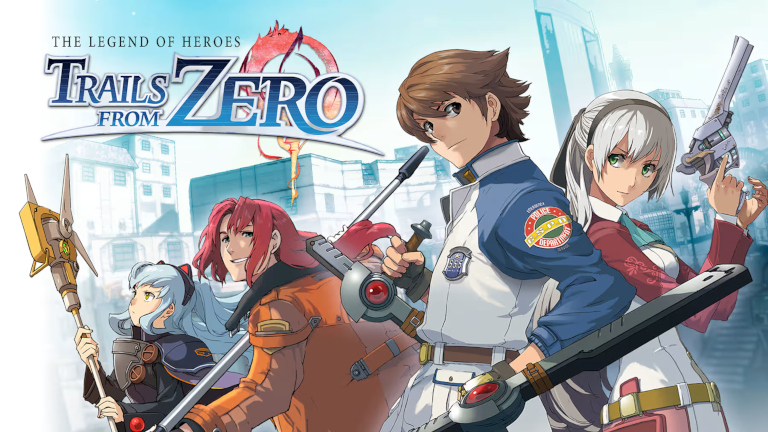
The success of shows like Shōgun and Andor demonstrates that audiences still have an appetite for sprawling, densely plotted stories. But television isn’t the only medium enamored with elaborate narratives. Nihon Falcom’s Trails series now stretches across more than a dozen interconnected adventures, collectively chronicling political conflicts, technological shifts, and an alarming number of secret societies. Arguably, it’s intricacy is at least, part of the allure.
For years, one of its most important chapters remained officially unavailable in English. Unless Western players were fluent in Japanese or willing to apply a fan-made translation, the Crossbell arc represented a conspicuous gap in the saga. That changed when The Legend of Heroes: Trails from Zero was localized in 2022. Four years later, Lloyd Bannings and the Special Support Section have returned in a native Switch 2 edition.
This isn’t a remake on the scale of Trails in the Sky 1st Chapter. Instead, it’s an enhanced edition of the existing remaster, adding higher resolutions, frame rates of up to 120 fps, upscaled textures, and oddly, Joy-Con 2 mouse support. Those additions make this the most polished portable console version of Zero, even if they don’t provide existing owners with a particularly compelling reason to double-dip.
A Link to the Past (and the Future)
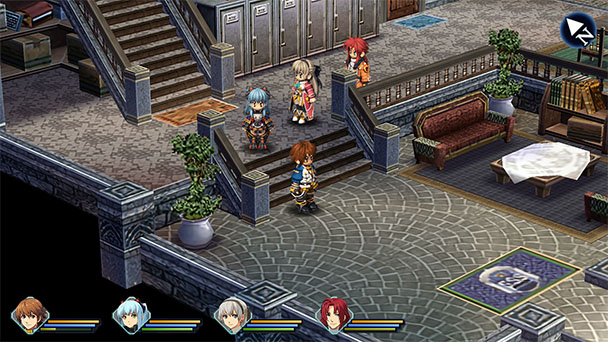
Within a few hours, it becomes evident why fans spent years requesting an official localization. Set after the Liberl arc and before the Erebonia storyline, Zero is connective tissue rather than an inconsequential detour. Characters and unresolved plot threads from the Trails in the Sky trilogy reappear, while Crossbell’s political situation foreshadows developments that become increasingly important throughout Trails of Cold Steel and beyond.
Naturally, hardcore fans will get the most from the references and returning faces. Fortunately, the renewed availability of the Sky arc means Nintendo players no longer have to go hunting for aging handhelds merely to understand who Estelle and Joshua are. Still, Zero contains enough exposition to function as a starting point. Newcomers might miss the emotional significance of a few scenes, but Lloyd’s story remains easy to follow.
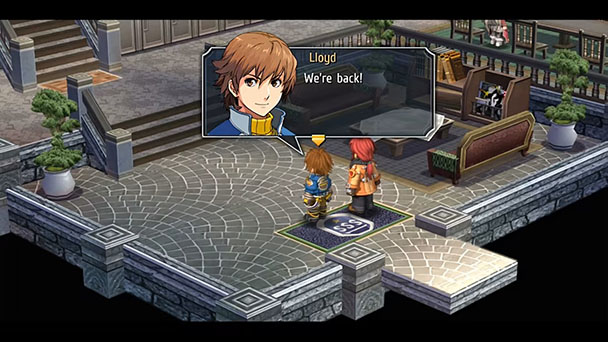
In fact, Zero can feel more welcoming than some of its sprawling successors. Instead of immediately introducing a small army of allies, Falcom concentrates on four core characters. The reduced roster allows each member of the Special Support Section to receive meaningful attention, and the team’s growing camaraderie gives the adventure much of its appeal.
Crossbell’s Finest
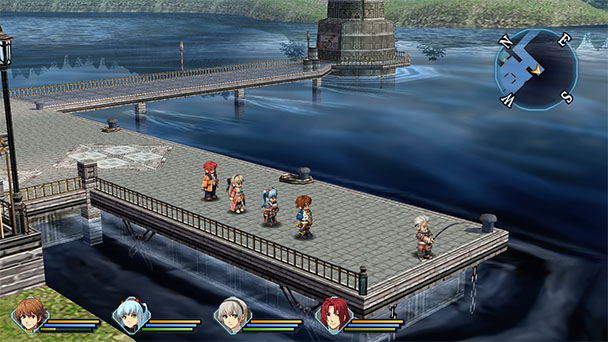
As a rookie detective with the Crossbell Police Department, Lloyd Bannings is earnest enough to risk feeling bland. But his devotion to his late brother, talent for deduction, and eagerness to overcome every metaphorical barrier make him an affable lead.
His teammates initially resemble familiar anime archetypes. Randy Orlando is the roguish womanizer who upends Lloyd’s motivational speeches with playful remarks. Yet his protective instincts and some hints about a troubled past gradually make him far more than mere comic relief.
Tio Plato initially maintains an emotional distance from the group. Watching her slowly trust her colleagues, become more outspoken, and even tease them, demonstrates Falcom’s skill at long-form characterization. Meanwhile, Elie MacDowell brings experience and composure to the SSS. Her familiarity with Crossbell’s political establishment makes her an invaluable second-in-command, while her disillusionment with the city’s institutions gives her a relatable personality.
Their relationships develop gradually, often during seemingly mundane assignments. Best of all, the group doesn’t become found family because the script repeatedly says so. Instead, that bond emerges across dozens of conversations, shared meals, investigations, and moments of mutual support. It feels organic, like some of the best role-playing relationships.
A City Worth Protecting
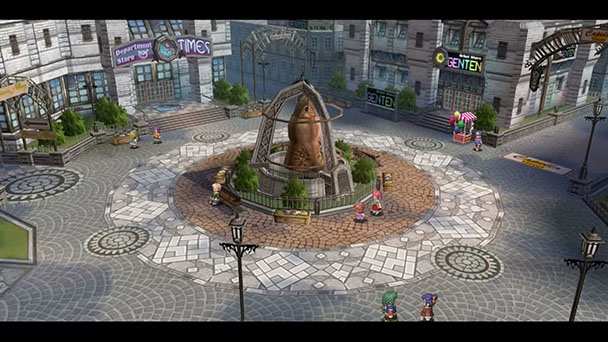
Pleasingly, Trails from Zero offer more than just solid characterization. The autonomous state of Crossbell sits between the Erebonian Empire and the Calvard Republic, two military powers that both exert influence over the region. Its status as a prosperous trade hub has produced a cosmopolitan population, but it has also invited foreign interference, organized crime, and institutional corruption.
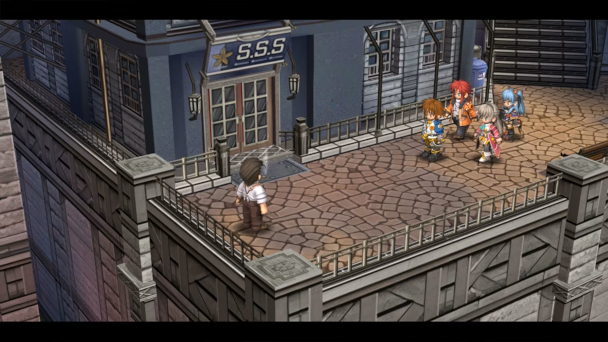
Crossbell itself is compact enough to become familiar. Over time, its entertainment district, residential streets, waterfront, shopping areas, and surrounding settlements begin to feel like parts of an actual community rather than disconnected role-playing-game zones. Returning to the same locations might sound repetitive, but regular conversations with residents show how people respond to unfolding events.
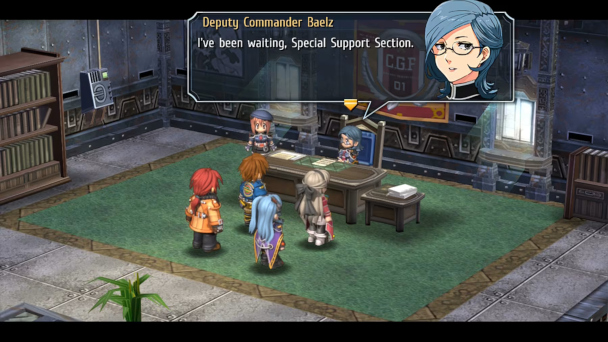
As part of the newly formed Special Support Section, Lloyd and his colleagues are asked to restore public confidence in a police force that has become politically compromised. That means handling civilian requests that range from locating lost property to intervening in conflicts between rival gangs. Some assignments resemble conventional role-playing busywork, but many provide valuable context or quietly introduce characters who become important later.
Admittedly, Zero takes its time. Anyone hoping for immediate conspiracies and uninterrupted spectacle could find the opening chapters sluggish. But the leisurely pacing has a purpose. By showing Crossbell during comparatively ordinary days, Falcom ensures that later threats feel personal. You aren’t merely preventing another fictional city from being destroyed; you’re protecting neighborhoods and people you’ve come to recognize.
Majoring in Arts, Crafts, Quartz Slotting
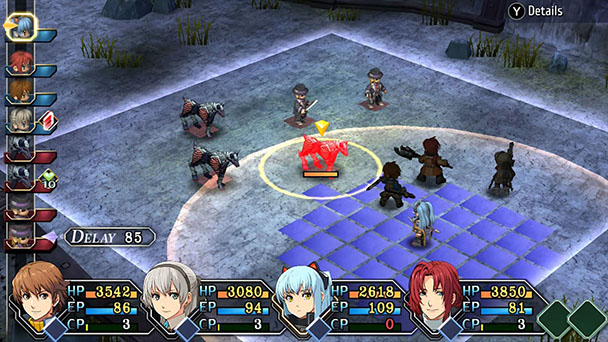
Combat regularly interrupts the SSS’s duties, leading to a turn-based system fought across small, gridded battlefields. Characters reposition themselves automatically when executing standard attacks, while Arts require casting time and Crafts consume CP. Successful play involves managing turn order, elemental vulnerabilities, positioning, and the occasional bonuses attached to the timeline.
S-Crafts let combatants interrupt the normal order to unleash dramatic special attacks, making them useful when a dangerous enemy is preparing something nasty. Team Rush attacks can also let the entire party pummel a group of opponents. Neither mechanic is especially complicated, but together they keep battles energetic.
Enemies are visible while exploring, so most regular encounters can be avoided. Strike an opponent from behind and you can enter battle with an advantage; let one surprise Lloyd and the enemy receives the initiative. This simple system keeps exploration engaging without forcing you into endless random encounters.
The orbment system provides the game’s main source of customization. Inserting quartz into a character’s slots can raise attributes, confer passive benefits, or unlock new Arts. You’re never rebuilding party members from scratch, but there’s enough flexibility to emphasize healing, elemental offense, evasion, or raw physical damage. On the higher difficulty settings, thoughtful quartz arrangements become increasingly important.
High-Speed Mode remains one of the remaster’s most useful additions. It can accelerate movement and combat, substantially reducing the time spent watching familiar attack animations or revisiting previously explored roads. Fast travel and Crossbell’s bus network also become available as the campaign progresses. Given the abundance of dialogue and backtracking, these conveniences keep a 40- to 50-hour adventure from feeling quite as old as its PSP foundations.
A Sharper Crossbell
The Switch 2 edition provides a praiseworthy adaptation Trails from Zero. It supports resolutions up to 4K when docked and frame rates as high as 120 fps on compatible displays. Of course, you shouldn’t expect 4K and 120 fps simultaneously, but either option feels extravagant for a game that once debuted on the PSP. Performance is smooth, while transitions and area changes feel cleaner than they did on the original Switch. The sharper output also enhances character portraits, text, and environmental details. Meanwhile, the compact environments and sprite-based cast remain especially well suited to handheld play.
Players can switch between the original textures and newly upscaled alternatives. The updated assets look cleaner at higher resolutions, although the treatment can occasionally smooth away details. Purists might prefer the more cohesive original artwork, so being able to swap between the two is welcome. The Switch 2 edition also supports Joy-Con 2 mouse controls, although this feels more like an optional convenience than an essential addition. Zero was designed around conventional controls, and using a controller remains intuitive whether you’re exploring Crossbell or issuing orders during combat.
But ultimately, there’s only so much that resolution, texture filtering, and a higher frame rate can do. Character sprites still rely on limited animation routines, environments retain their PSP-era geometry, and some cutscenes look conspicuously dated on a large television. The new edition preserves the art rather than reinventing it. Fortunately, the colorful aesthetic, expressive portraits, and miniature-diorama environments have almost all aged gracefully.
Falcom Sound Team jdk’s music has fared even better. Whether Lloyd is patrolling Crossbell, confronting a criminal organization, or simply wandering through the countryside, the soundtrack continually supplies memorable melodies. There are moments when the environmental themes are so good that entering battle almost feels like an unwelcome interruption.
The English localization also remains excellent. NIS America’s script grew out of the celebrated Geofront fan translation, retaining much of its personality and attention to detail. With an adventure this dependent on dialogue, the natural exchanges and consistent characterization are every bit as important as the Switch 2’s technical enhancements.
Conclusion
There’s a slight awkwardness surrounding this re-release. The original Switch edition already looked good and ran well, making the absence of a straightforward upgrade path difficult to ignore. Physical collectors should also know that the Switch 2 compilation of Trails from Zero and Trails to Azure uses a Game-Key Card, requiring a download instead of containing both complete games on the card.
But those commercial frustrations don’t diminish the quality of the adventure itself. Few studios build fictional communities as convincingly as Nihon Falcom. Through a combination of appealing characters, simmering political intrigue, rewarding combat, and an outstanding soundtrack, Trails from Zero makes Crossbell feel like a place worth understanding And eventually, one worth defending.
The Switch 2 enhancements are welcome rather than revelatory. Upscaled textures, high-resolution output, and 120 fps support can’t hide every aspect of the game’s handheld origins, while mouse control is unlikely to change how most people play. Still, newcomers will receive a remarkably polished version of one of the series’ strongest chapters. Sixteen years after Lloyd first reported for duty, the Special Support Section remains deserving of its latest promotion.
The Legend of Heroes: Trails from Zero was played on Nintendo
Switch 2 with review code provided by the publisher.
Overview
GAMEPLAY - 95%
STORY - 95%
CONTENT - 100%
AESTHETICS - 80%
PERFORMANCE - 85%
VALUE - 90%
91%
GREAT!
Trails from Zero remains a captivating RPG thanks to its lovable cast, rewarding combat, and a city that becomes worth fighting for. The Switch 2 upgrades aren’t reason enough to double-dip, but newcomers are getting the most polished portable version of this essential Crossbell adventure.


I don’t want keycards. Give me physical!