Survivor Mercs review
War is Hell, But Grinding is, Too

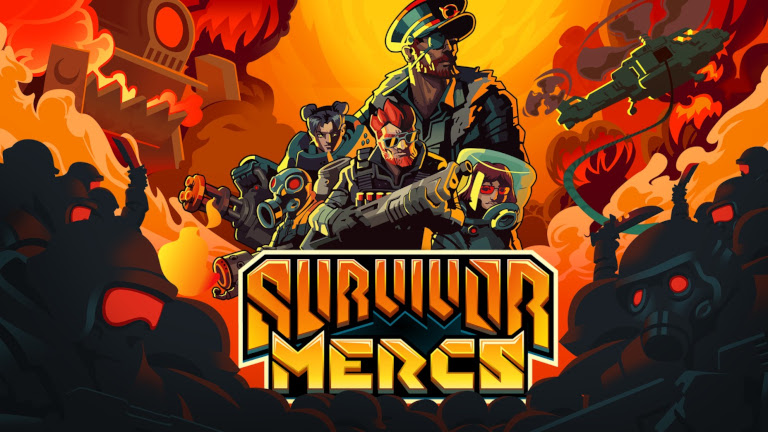
If you’re going to release a Vampire Survivors-style game in 2026, it needs to do more than just follow formula. It needs to stand out from the legion of bullet-heaven clones. Yes, the genre has become crowded with imitators, each of them trying to put a unique spin on the concept of mowing down waves of enemies while gradually becoming an unstoppable force. Survivor Mercs, which has been in Early Access since 2023, attempts to distinguish itself with a military theme, squad-based gameplay, and base-building elements. While those ideas demonstrate potential, the execution struggles with balance, pacing, and clarity.
At its core, Survivor Mercs swaps out the lone-wolf power fantasy for a team of operatives. Instead of a single character evolving into a one-person army, you gradually recruit up to four allied mercenaries during a run. On paper, this is a compelling twist. Coordinating a small team of specialized operatives with their own weapons and abilities should add a bit of tactical depth.
Slowing Slow with Feeble Firepower
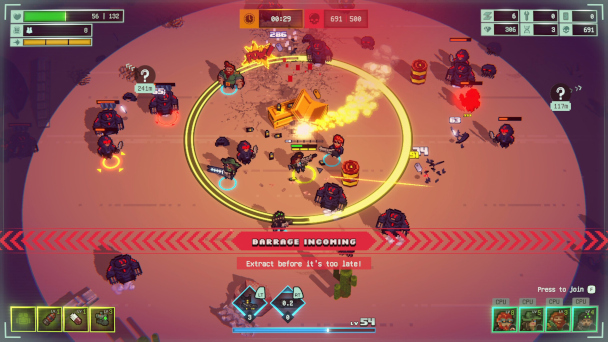
However, that promise is undercut by how weak everything feels in the early game. Each run begins at a sluggish pace, as your commander trudges through environments filled with crawling enemies, stationary gunners, and explosive barrels. Notably, weapons lack impact, and the sense of progression is dulled by underwhelming upgrades. One glaring example is the machine gun, which comes with a base six-shot magazine and a painfully long reload time. In a genre built around constant action and escalating power, five full seconds of downtime feels especially punishing.
Your allied mercenaries suffer from the same issue. When they first join your squad, they’re barely effective, often contributing little to the chaos on screen. It takes several upgrades before they become useful. Even then, their improvement feels uneven. Part of the problem lies in the upgrade system itself. Rather than delivering satisfying power spikes, many upgrades offer marginal gains with 1% or 2% stat increases that are difficult to perceive during battle. This creates a disconnect between player effort and reward, making progression more of a grind than a thrill.
Not Quite Following Orders
Even when upgrades begin to stack in interesting ways, such as grenades that burst into flames or bullets that pierce enemies and fragment into additional projectiles, the results can feel inconsistent. Allies tend to target enemies somewhat randomly, which diminishes the sense of control and strategy. There are moments where your squad comes together effectively, especially during boss encounters where sheer volume of fire can make a difference, but those moments are the exception rather than the rule.
Undoubtedly, the structure of each run also adds to the sense of repetition. Stages revolve around capturing territories by standing within designated zones for a short period. These objectives are occasionally spiced up with timers or tougher enemy waves, but over time they all begin to blur together. The lack of variation in objectives or environmental interactions makes each run feel similar which is a disadvantage in a genre that thrives on unpredictability and ever-escalating chaos.

One of the more notable systems in Survivor Mercs is a bunker-building mechanic, which offers meta-progression. Between runs, you can construct underground bunkers that provide various stat boosts and long-term upgrades. This system has the potential to add a satisfying layer of progression outside of individual runs, giving players a reason to keep coming back even after a failed attempt.
You’re On Your Own, Out There
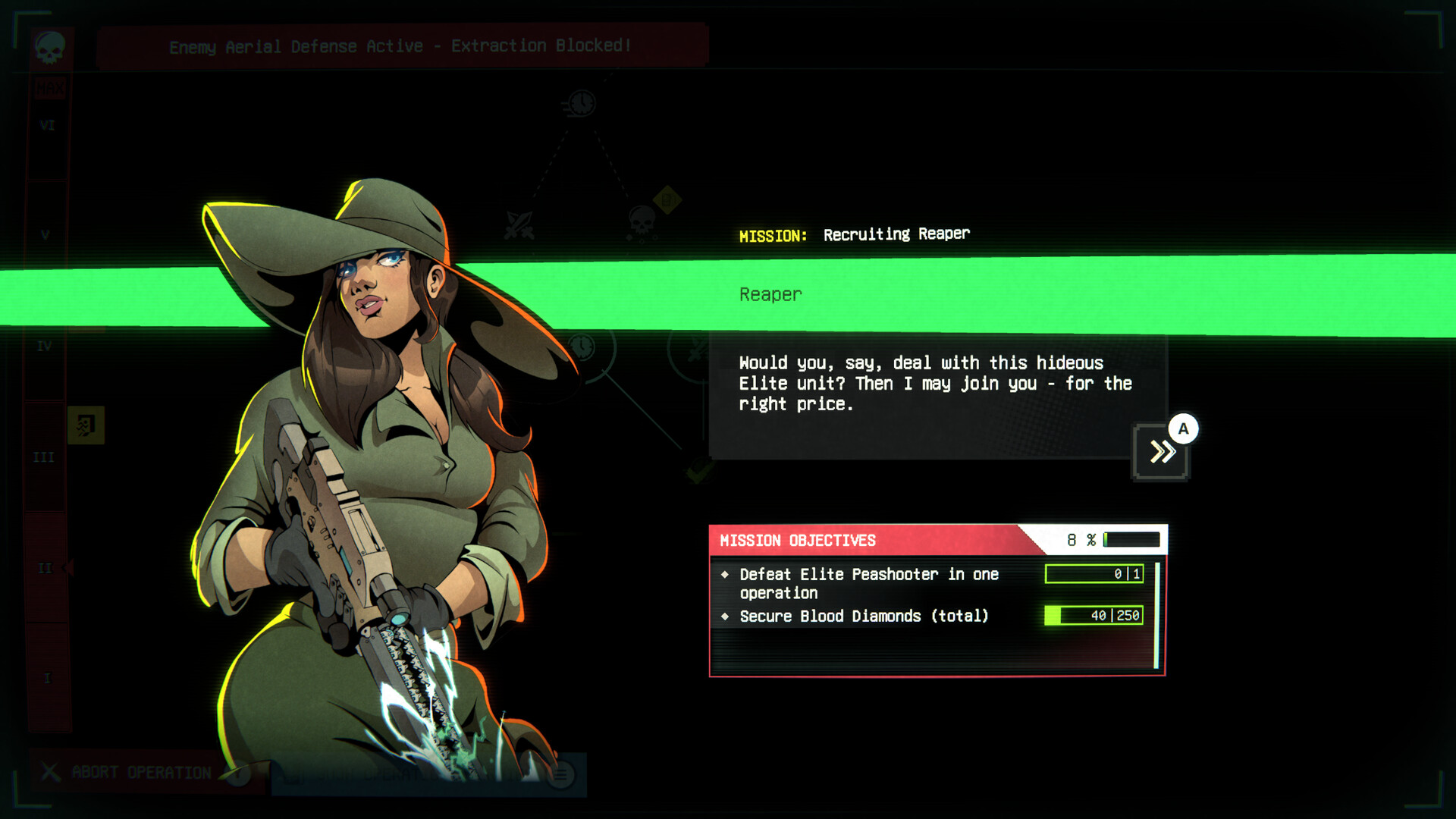
Unfortunately, the game does a poor job of explaining this system, or many of its mechanics, for that matter. It took me a significant amount of time to even realize that bunker construction was an option, let alone understand how it meaningfully impacted my performance. This lack of any kind of tutorial is rather puzzling, and might further frustrate players who are already struggling with the game’s slow pacing and unclear progression systems. There’s a whole component of unlockable perks, but I still not quite sure what the tiers are showing or offering. Wolpertinger Games, if you’re reading this, please consider some play testing to obtain some indispensable feedback.
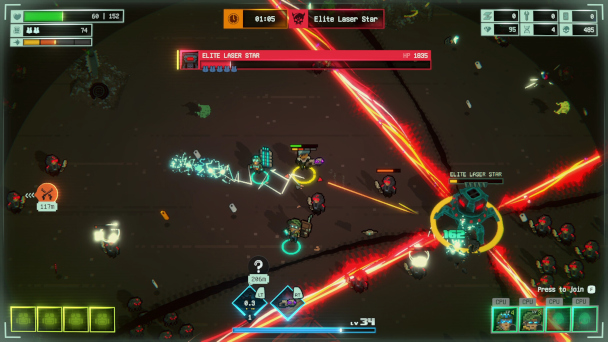
One of Survivor Mercs more interest design decisions is the focus on shorter runs. Compared to some of its peers, which can stretch into some lengthy sessions, Mercs provides a more condensed experience. In theory, that should make it more accessible and easier to pick up in short bursts. But when a run ends just as your squad is starting to feel effective, it can leave you feeling unsatisfied rather than eager to jump back in again.
Not Ready for Deployment
For players who absolutely adore the bullet-heaven genre, Survivor Mercs may be worth a look, especially to see if there are any post-release revisions. But for a genre that already has a surplus of worthwhile offerings, any new contender should provide a sense of progression that gratifying, rather than grindy. Unfortunately, Mercs favors the latter, meaning you should truly consider if you want to enlist in this battle.
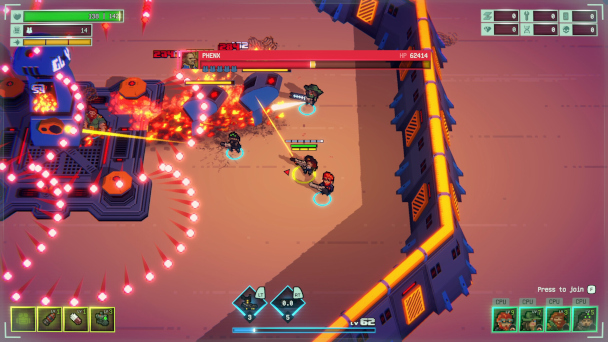
Survivor Mercs was played on PC with review code provided by the publisher
Overview
GAMEPLAY - 55%
CONTROLS - 60%
CONTENT - 70%
AESTHETICS - 60%
ACCESSIBILITY - 40%
VALUE - 50%
56%
LACKING
Survivor Mercs has some cool ideas, like squad-based combat and base-building, but it struggles to make them feel rewarding. Slow starts, weak upgrades, and unclear systems keep it from standing out in an already crowded genre.