R-Type Tactics I & II Cosmos review
A rewarding revival of R-Type's strategic side

When R-Type Tactics launched in 2007 (as R-Type Command in North America), it represented a brave departure for Irem’s celebrated shoot-’em-up franchise. Rather than placing players behind the cockpit of a solitary fighter battling waves of enemies in real time, the game reimagined the series’ sprawling conflict with the Bydo Empire as a turn-based strategy title. Now, that’s a genre jump.
Players commanded entire fleets positioned on hex-based battlefields, directing military campaigns that explored humanity’s long-running war against the alien species. One of the game’s biggest strengths was its dual-campaign structure, allowing players to experience the conflict from both the human and Bydo perspectives. Interestingly, each campaign featuring distinct units, technologies, and story developments. Sadly, Western players didn’t receive the sequel, 2009’s R-Type Tactics II: Operation Bitter Chocolate. In the followup, team earth isn’t a cohesive whole, with factions fighting over the usage of Bydo technologies.
Of Wave Cannons and War Rooms
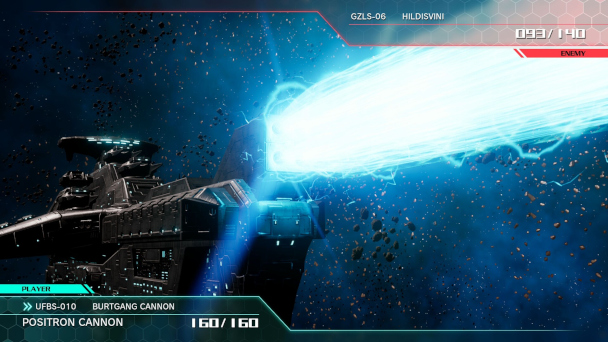
R-Type Tactics I & II Cosmos brings these two strategy titles to modern platforms with a substantial visual overhaul. The numerous cinematic sequences have been remastered in high definition, while added voice acting and improved tutorials make the games more approachable than ever. Not every change is an improvement, however. The space battle cutscenes, despite their sharper presentation, appear noticeably choppy on lower-spec’d systems. It’s a surprising blemish in an otherwise definitive package that aims to preserve and modernize these niche strategy sleepers.
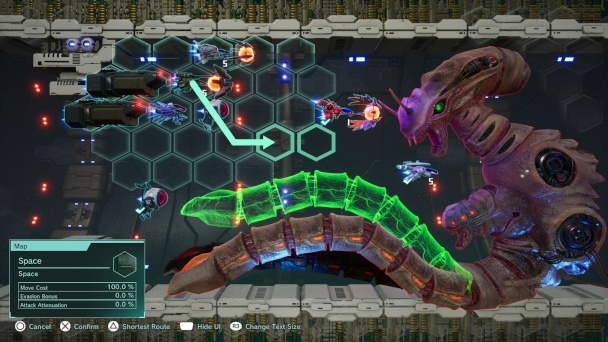
That said, Cosmos isn’t for casual turn-based cadets. While it’s build around the fundamentals of a turn-based strategy game, it remains rooted in R-Type’s shoot-’em-up DNA. The battlefield is designed to emulate the side-scrolling action of the main series, with fleets advancing across maps rather than maneuvering freely in all directions. As such, units can only move from left to right, while powerful charged attacks can only be aimed across the hex-based battlefield. This design decision gives battles distinction, requiring you to think about positioning, firing lanes, and momentum in ways that aren’t like most tactical titles.
Moving Forward, But Thinking of the Big Picture
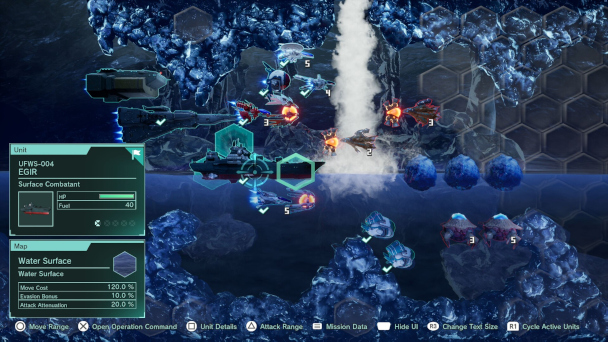
Of course, the challenge extends beyond just maneuvering ships into a proper firing position. Many actions are governed by a limited resource pool, forcing you to balance sheer aggression against sustainability. Everything from deploying reinforcements, repairing damaged vessels, and launching certain special attacks all consume valuable resources that can be difficult to replenish in the heat of battle. More than many of its peers, resource scarcity plays a critical role in Cosmos’ protracted battles.
Fleet composition is equally important, as escort ships, transports, and reconnaissance units each serve critical functions beyond direct combat. Success often depends on planning several turns ahead, anticipating enemy movements, and knowing when to commit resources to secure an objective. The result is a rewarding but often tough strategy experience that demands patience. Familiar elements from the shooter series, from Force pods, charge shots, and wave cannons, to the iconic fighter crafts all make an appearance. Learning how and when to harness their abilities gives Cosmos a bit of a learning curve, but also provides long-term appeal.
FAQs Recommended, Regrets are Optional
Of course, that difficulty can occasionally border on intimidating. Certain missions feel designed around knowledge only earned through repeated failures, while unlocking and upgrading new units may require replaying stages to accumulate essential resources. Yet there’s something refreshing about how little hand-holding Cosmos provides.
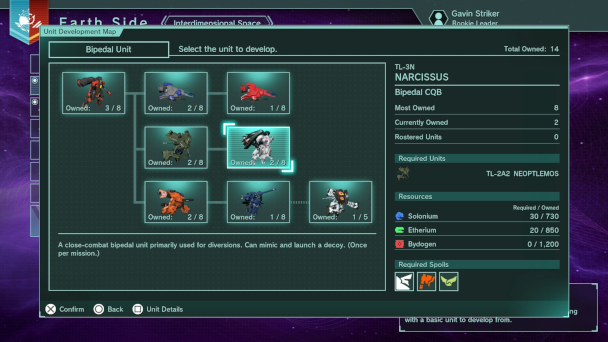
Rather than pushing players toward a specific kind of fleet composition, the game gives you autonomy over development and technological progression. Naturally, you’ll probably make some bad decisions. And like the original games, Cosmos doesn’t always provide all the information you’ll need. Some of this dates back to a different era, when mastering a game meant downloading a FAQ, combing through forum discussions, or simply spending an entire month learning a game’s naunces through trial and error. For some players that old-school approach will be frustrating. But for others it will be one of Cosmos’ strengths, as it gives the game plenty of longevity.
Operation: Bigger Sequel
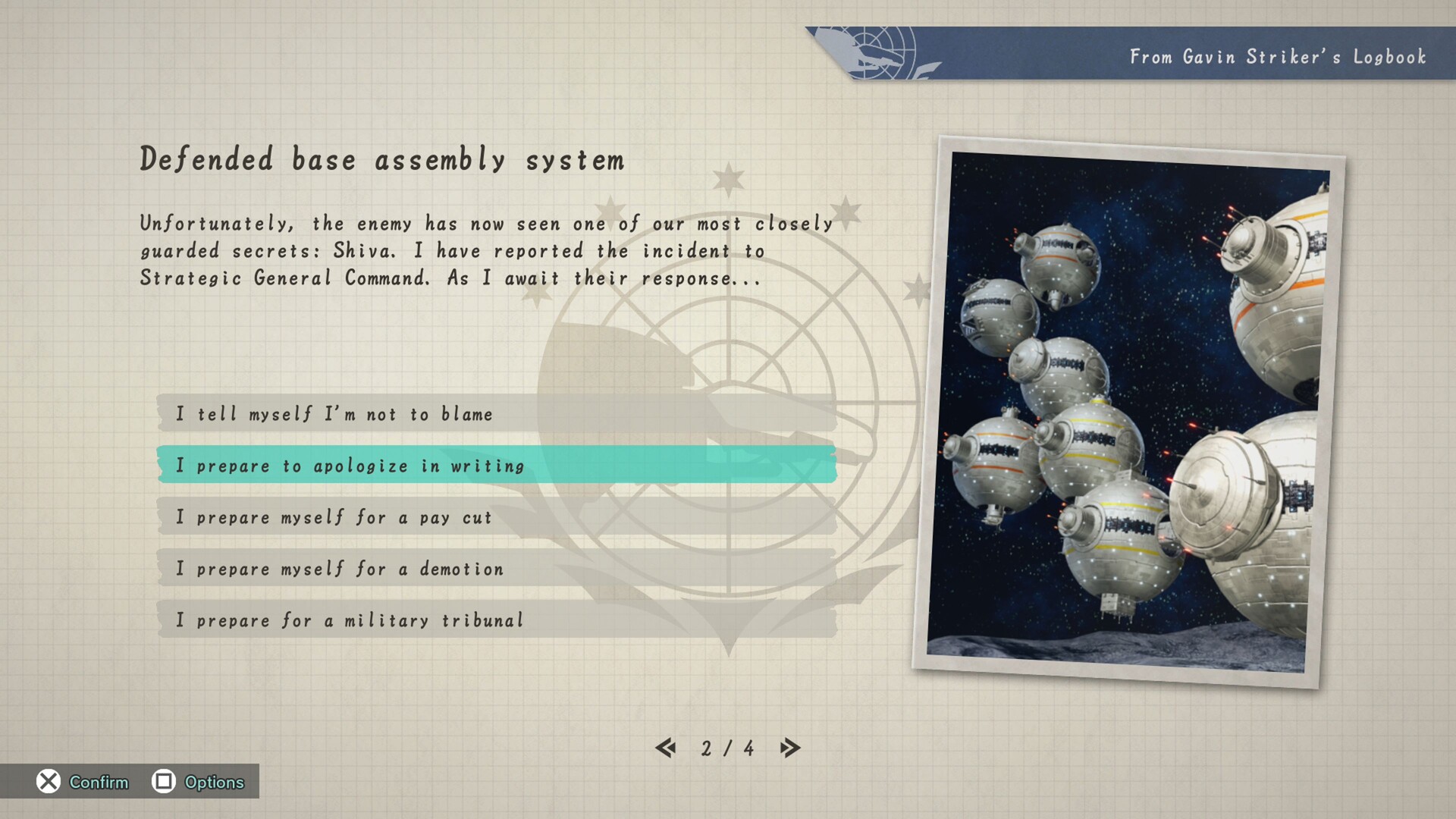
Like most sequels, Tactics II expands on its predecessor’s ambitions. Here, maps are larger than the ones in the first game, and some stages introduce vertically scrolling layouts, which are a welcome deviation from the horizontal advances found in Tactics I. More significantly, there’s mission branching, with alternate paths unlocking based on choices in your journal. Now, dialogue selections made during pre-mission briefings can also alter routes, providing some incentive replay. Sure, the exposition isn’t robust enough to rival a standalone visual novel, but it’s an improvement over Tactics I.
Undoubtedly, Tactics II’s story is the narrative highpoint of the package. Rather than a telling a basic humanity-versus-Bydo war, the sequel depicts a civil conflict between the Earth Allied Armed Forces and the Granzella Revolutionary Army, a rebel group seeking independence and access to Bydo’s weapon technology. What’s interesting is that your choices have real consequences across the storyline. Game history buffs might be be interested to learn that Cosmos’ developers named their studio after the faction, rather than the other way around.
Taking the Offensive Online is Optional
Beyond its campaigns, Cosmos offers competitive multiplayer available across both titles. The original PSP games supported wireless play locally, but not you can test your fleet compositions against online friends or strangers. But if you’re here primarily for the single-player experience, the hundreds of ships and dozens of maps means that you won’t be forced to head online unless you’re absolutely willing to. Best of all, there’s an entirely new, twelve-mission campaign set after the events of Operation Bitter Chocolate. It’s more of an epilogue that a full-fledged expansion, but there are some cool references that fans will enjoy.
Since their original PSP releases, the R-Type Tactics games have largely been considered cult favorites rather than mainstream classics, and Cosmos is unlikely to change that. These are demanding, occasionally aloof strategy experiences that ask players to embrace unconventional mechanics, lengthy battles, and even a bit of trial-and-error. Yet for those interested in diving into Cosmos, the combination of tactical planning and uncovering Bydo lore elevates the package. It may not be a strategy title for everyone, but as a preservation effort and a re-release of two overlooked gems, R-Type Tactics I & II Cosmos earns its wings on the battlefield.
R-Type Tactics I & II Cosmos was played on PC with review code provided by the publisher.
Overview
GAMEPLAY - 80%
CONTROLS - 75%
CONTENT - 80%
AESTHETICS - 80%
PERFORMANCE - 70%
VALUE - 70%
76%
GOOD
R-Type Tactics I & II Cosmos revives the franchise’s ambitious turn-based strategy spin-offs, blending tactical gameplay with the series’ signature ships, enemies, and weaponry. While its steep learning curve and resource-heavy battles won’t appeal to everyone, the expanded sequel content, visual upgrades, and wealth of lore help to make it a rewarding experience for dedicated R-Type fans.

What’s the price going to be?
Wish you wrote more about the new campaign.