Runeomicon review
The Mouse Is Mightier Than the Sword

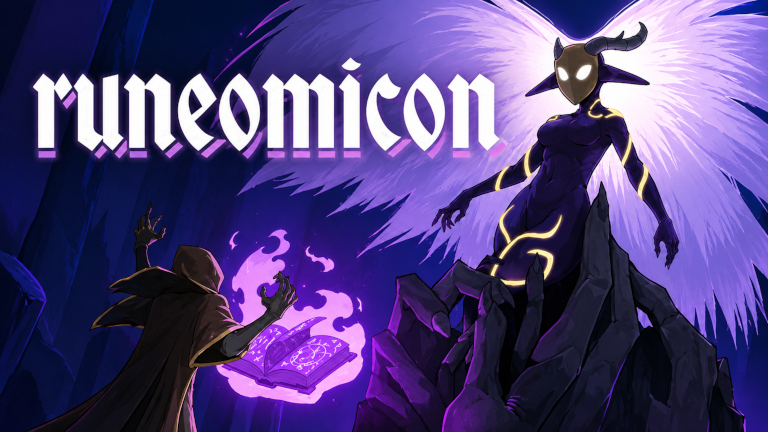
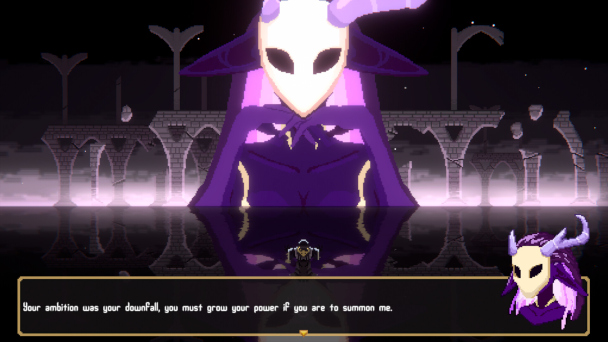
Tower defense games often give you brief breaks while building your little corridors of death. But Runeomicon has no interest in those kinds of comforts. You’re a vengeful sorcerer who has been revived by Ilur, the goddess of death, and tasked with completing the ritual that will summon her. Meanwhile, a furious mob is trying to break down your fortified door, so there’s little time for whatever dark wizards do during their downtime.
Rather than merely placing towers and watching them work, you generate power by drawing runes with your mouse. There’s something cool about using the same peripheral to navigate spreadsheets by day and perform occult rituals at night. That said, after a few evenings of casting, my wrist had run through near all of its mana.
Wreck from Home
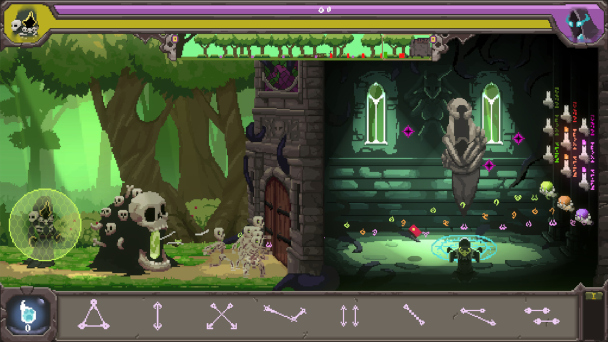
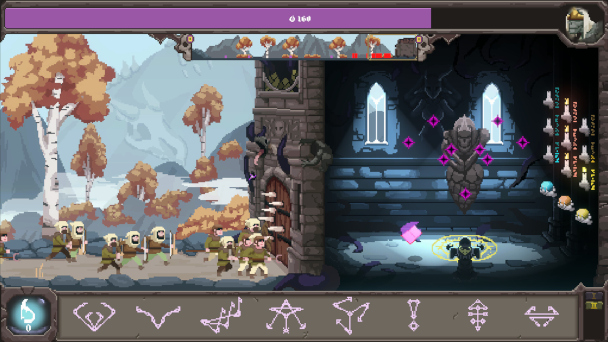
Runeomicon’s playfield is split between the siege taking place outside and the rituals unfolding within. Across most of the left side, a procession of peasants, knights, and other wannabe heroes marches relentlessly toward your front door. On the far right, a constellation of nodes needs your summoning gestures. Holding down the mouse button and passing over these points in the correct order generates the arcane power you need to survive and complete the ritual. Make one wrong connection and the rune fails, producing nothing while squandering precious seconds.
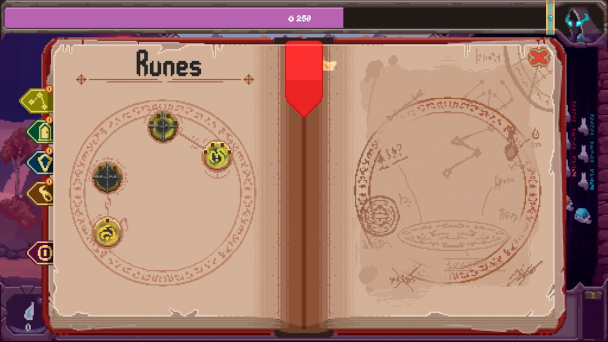
Expectedly, the earliest symbols are simple enough, with only three or four nodes to connect. But soon, it feels like you’re learning obscure kanji as you tackle patterns built from more nodes, crisscrossing lines, and strict stroke orders. Sure, you can consult the eponymous Runeomicon. But constantly flipping back to the in-game reference book will mess with your rhythm. Like real handwriting, it gets easier as you stick with it.
I eventually caved and downloaded the free, standalone Runeomicon: Training Room app. Apparently, the developers had tricked me into committing their symbols to muscle memory. Sure, that knowledge is about as useful as learning to speak Klingon, but I’m a half-decent sorcerer-scribe now, and I’m debating whether I should add that to my LinkedIn profile.
Ritualized Spending Habits
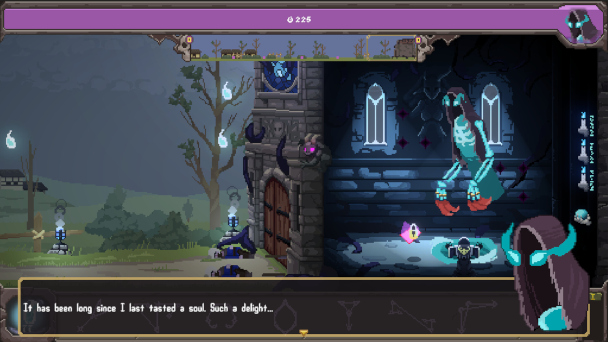
Of course, symbol writing is only half the ritual. You’ll also have to manage the arcane power you generate, along with souls harvested from fallen enemies, to cast spells, summon creatures, reinforce defenses, and purchase some upgrades. Since arcane power also advances the ritual, there’s tension between immediate safety and medium-term progress. A new defense can buy you some breathing room, but spending too freely delays the summoning and can leave you vulnerable later.
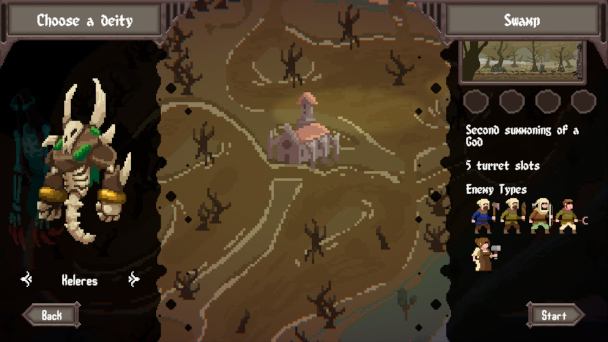
Interestingly, turrets occupy predetermined slots rather than letting you select their exact placement. Naturally, that limits spatial stategy, although the branching upgrade paths still offer some decisions once the positions begin filling up. Meanwhile, active abilities can assist with everything from crowd control to focused onslaughts. Summoned creatures can keep the mob occupied while you prepare something especially destructive. Six dark gods broaden your options further. Each brings its own spells, towers, defenses, abilities, and upgrades, so the entity you court can alter how you approach the ritual.
Level-specific challenges round out the progression system. Finish a stage quickly enough, use a particular god, or intentionally botch a required number of runes, and you’ll earn skill points for permanent improvements. These objectives give you a bit of incentive to return to completed stages and experiment with tools you might otherwise ignore.
Yet, despite these different mechanics, rune-drawing dexterity often reigns over strategy. Once your turrets are established, success depends more on how quickly and accurately you can manifest magic than on clever defensive positioning. Different enemy roles and occasional boss encounters will test your priorities, but the fixed construction slots narrow opportunities for experimentation.
Slow HP Drain IRL
Additionally, moving up through the tiers of rune complexity can produce some harsh difficulty spikes. A level can shift from manageable to overwhelming once it starts tossing several similar higher-tier patterns at you. Difficulty settings can soften the enemy pressure, and time spent in the Training Room will pay dividends. But honestly, practicing symbol sketching outside the campaign might feel like homework for some players.
Then there’s the physical aspect of Runeomicon. Long play sessions can provoke cramps, and a laptop trackpad is not an ideal substitute for a proper mouse. Post-launch graphics-tablet support offers a potentially more comfortable alternative, but there still isn’t conventional gamepad support listed for desktop players.
Steam Deck owners fare better than I expected. Valve currently rates the game as Playable, and its default configuration makes every function accessible. Even so, tracing intricate shapes on a handheld trackpad isn’t my preferred way to perform the ritual. Essentially, there’s no getting around it: Runeomicon demands precision. A single failed trace during a hectic wave can feel maddening.
Let’s Play Master Occultist
Runeomicon’s visuals do a solid job of cultivating a sense of menace. Outside your chambers, barren trees and smoky hillsides reveal a ravaged landscape, while your shadowy study feels suitably dangerous. Best of all are the villagers’ animations as they march toward your fortification with pitchforks and swords in hand, hell-bent on halting your dark magic. The pixel art is sinister without drowning everything in gore, while the in-game grimoire looks suitably ancient and forbidden, like some kind of pixillated Necronomicon.
Most games simplify magic by reducing spellcasting to a button press. Runeomicon works because it makes you feel like a dark sorcerer, drawing arcane symbols quickly enough to defend yourself against an angry, incessant mob. Sure, the concept can be physically tiring across long sessions. However, TLR Games has conjured something that feels genuinely unique. I can’t remember the last time a game that actually made me feel like an angry old sorcerer instead of a spammy wizard.
Runeomicon was played on PC with review code provided by the publisher.
Overview
GAMEPLAY - 75%
CONTROLS - 70%
CONTENT - 70%
AESTHETICS - 70%
PERFORMANCE - 75%
VALUE - 75%
73%
GOOD
Runeomicon puts a clever spin on tower defense by making you draw runes yourself while trying to hold back an angry mob. The physical demands can wear you down, but its unusual spellcasting and dark atmosphere make it a memorable occult strategy game.