Rune Dice review
A Roguelike Roll of the Dice Worth Taking

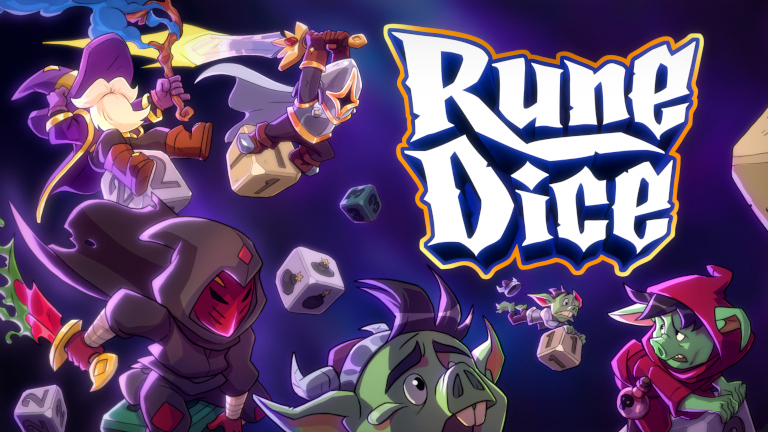
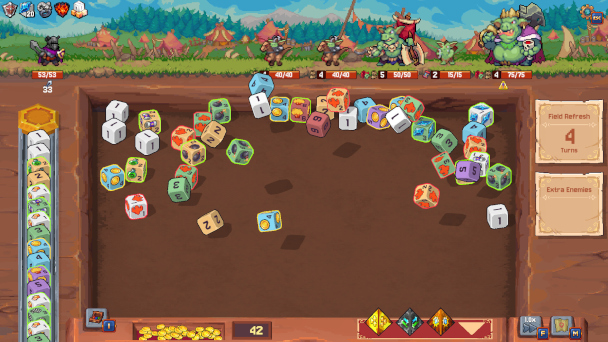
At the core of Rune Dice is one really good hook. After eyeing a cluster of dice on the tabletop, you pull back the analog stick and launch a single die. It bumps into another die showing a one, transforms, flips, and ricochets into a nearby two, then a three, four, and finally a five. After several satisfying collisions, an entire chain of dice shoots to the left side of the playfield, each one dishing out damage to a procession of enemies. You might not have engineered every step of that chain reaction yourself. But a vague plan and a bit of luck collide quite cleanly, and suddenly you’ve cleared another location on the overworld map.
This combination of half strategy and half improvisation is what makes Rune Dice compelling. At its best, Smart Raven Studio’s debut effort cultivates the feeling that you’re close to breaking the game’s mechanics wide open, discovering a cheat that puts you on a certain path toward victory. Right alongside is the thrill of serridipitious accidents. In Rune’s case, it’s when a dice seems magnetically drawn to its mate, leaping across the table like a long-lost lover. This tension between control and unpredictability drives the best roguelikes and puzzlers, and its dense in Rune Dice.
Gotta Keeping Rolling
I can’t say for certain whether that the game’s core mechanic will retain its magic over dozens of hours. But over the past week, Rune Dice has hooked me hard. It repeatedly crept into my thoughts whenever I was waiting for a moment. And if I had a longer stretch of downtime, I found myself reaching for my Steam Deck to squeeze in another run. That’s perhaps the most truthful endorsement I can give: Rune Dice became a game I wanted to return to constantly, not because of some metagame progress treadmill, but because playing it is satisfying.
At least some of the game’s success is rooted in how tactile things feel. Dice tumble around the board with momentum and some collisions are just unpredictable enough to generate suspense. Launches almost feels like lining up a pool shot, since where you can infleunce the post-collision trajectory by aiming toward different parts of the taregt die. Sure, some mechanics are kind of abstract, but Rune Dice feels organic because you’re always manipulating everyday objects with weight and movement.
Stacking the Odds With Runes
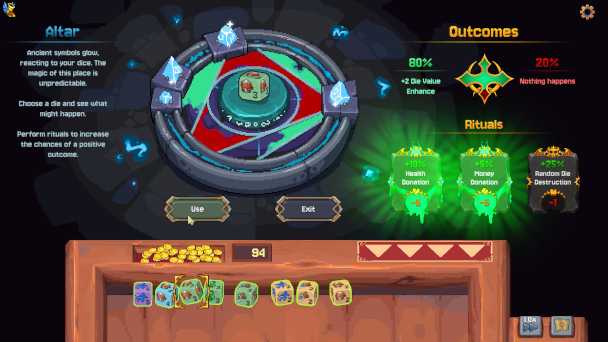
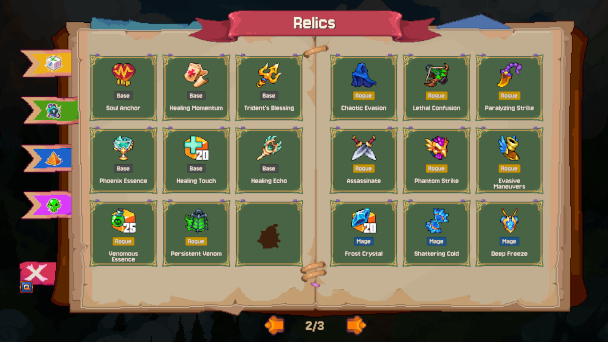
The game’s rune system adds an additional layer of strategy to the experience. Between rolls, you’ll collect and equip runes that offer protections, alter enemy order (target those bosses!), or introduce new synergies. Some runes favor aggressive playstyles, encouraging risky chain reactions that can wipe out an entire enemy wave in a single turn. But others favor defensive tactics, allowing players to manipulate probability or recover from bad rolls.
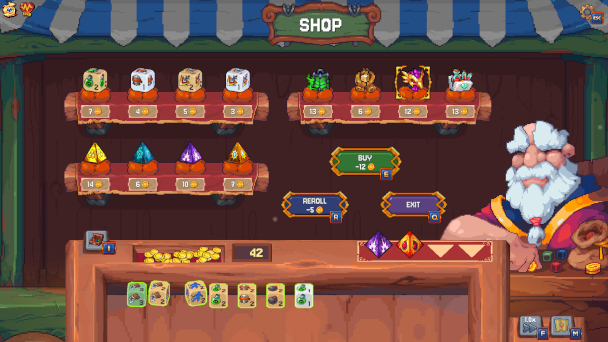
The result is a healthy amount of flexibility that rarely feels overwhelming, especially because the game limits the number of runes you can hold. On top of this, you’ll periodically be able to select additional assists in roguelike fashion. From replenishing your HP, adding poison dice, or just claiming gold that can be used to buy an assortment of assists, Rune Dice understands the gratification found in a drip-feed of reward.
Expect Some Arcane Mysteries
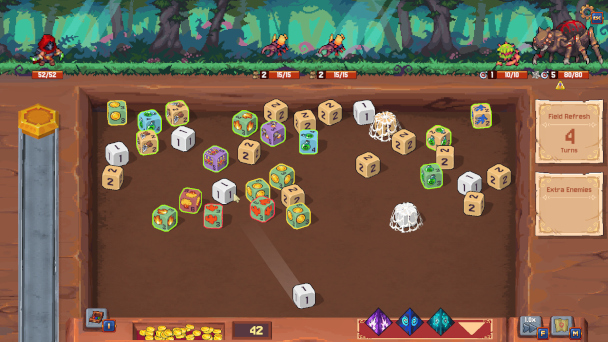
While Rune Dice teaches its fundamentals with a tutorial, the interface could do more to support players in the long run. The game throws a surprising number of rune effects, enemy abilities, shop items and dice interactions at you, and there are moments when remembering what every symbol or modifier means can be cumbersome. A simple hover-over information system would go a long way here, especially on smaller portable PC screens like the Steam Deck. Being able to quickly inspect a rune or enemy effect without digging through menus would make the experience smoother and less mentally taxing. What do they red-outlined dice mean? The game expects you to learn through observation, which might annoy some players.
Rune’s balancing can also occasionally flirt with frustration, especially when it comes to health management. Health is arguably your most valuable resource, but recovery opportunities feel too small when compared to the damage enemies dish out. While some dice can restore small amounts of health, and upgrades can help enhance their powers foes habitually steal far more than you can realistically recover during a run. This imbalance becomes especially punishing during boss encounters, where a few unlucky collisions or poor rolls can end an otherwise promising run. Rune Dice soars when experimentation feels encouraged, but the stingy health economy can encourage overly cautious play instead of risk-taking.
The Sweet Spot Between Skill and Serendipity
Rune Dice succeeds because it transforms the simple act of flicking dice across a tabletop into a satisfying fusion of strategy, improvisation, and a dash of luck. Pleasingly, Smart Raven Studio has crafted a roguelike puzzler where chain reactions straddle the space between careful planning and blind luck. The result can make every successful turn rewarding in a way that few roguelikes can manage.
With its assistive rune system and a steady stream of upgrades, the game understands the power of reward and playing the odds as well as any casino. Much like roulette or blackjack tables, success never feels far, even after a string of setbacks. Although the interface could communicate some of its more complex systems a bit better and health blancing occasionally discourages experimentation, those frustrations rarely overshadow the game’s strengths. Even after repeated defeats, Rune Dice is difficult to put down because the simple act of playing it is consistently exciting and satisfying. Take a chance on this one.
Rune Dice was played on PC with review code provided by the publisher.
Overview
GAMEPLAY - 80%
CONTROLS - 75%
CONTENT - 75%
AESTHETICS - 70%
ACCESSIBILITY - 70%
VALUE - 85%
76%
GOOD
Rune Dice turns the simple act of flicking dice across a tabletop into a thrilling mix of strategy, improvisation, and luck, where every chain reaction feels uniquely satisfying. While its UI and health balancing might frustrate, the game’s tactile gameplay loop and constant stream of rewarding upgrades make it dangerously addictive.