Marsupilami 2: Salsa Palombia review
Finding a Rhythm, But Neglecting the Flow

The best platformers understand the importance of flow. That’s the sensation you feel when a game’s controls, hazards, and level design all work together, letting you move through a stage without breaking a sense of immersion. Super Mario Bros. Wonder guides you with coins and visual cues, while Donkey Kong Country: Tropical Freeze barrel launchers and swinging vines create chain. Even most of the best Sonic stages reward players who can read and respond to stage elements.
Flow doesn’t always mean moving quickly. It means generating a rhythm where every jump naturally leads into the next action. Clearly, Marsupilami 2: Salsa Palombia understands the appeal. At its best, Ocellus Studio’s sequel serves up spirited sequences where swinging, bouncing, gliding, and bopping enemies can feel like one continuous routine. But the game also threatens to interrupt that rhythm. While some will master Marsupilami’s movement, other players might get frustrated when the game tasks you with juggling multiple characters and increasingly elaborate button combos. Sometimes, its fun just to chill out and butt stump bad guys.
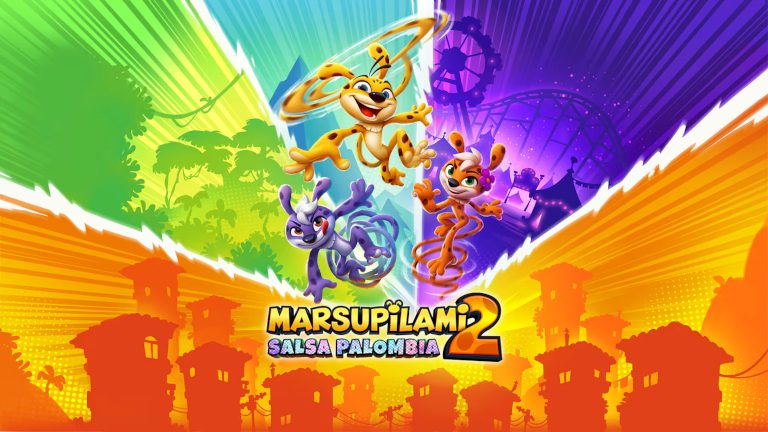
Salsa Palombia’s premise keeps it simple. A unusual melody is sweeping across Palombia, causing its wildlife to dance and generally spreading chaos throughout the region. Expectedly, the returning Mummy Queen is responsible, goading three young Marsupilamis, the brash Punch, agile Twister, and spirited Hope, to stop her cursed concert. As descendants of the long-tailed comic creature created by Belgian artist André Franquin (Marsupilami was a 1995 Genesis/Mega Drive game) the trio have all the requisite abilities for platforming stars.
Showcasing lithe acrobatics and just a bit of mischievous, the marsupilamis let their action do the talking. They’ll move through jungles, cities, across snowy mountains, and into the villain’s subterranean domain, which is all a colorful platform really needs, right? Honestly, I’m glad the focus in on play.
A Trio of Long-Tail Talents
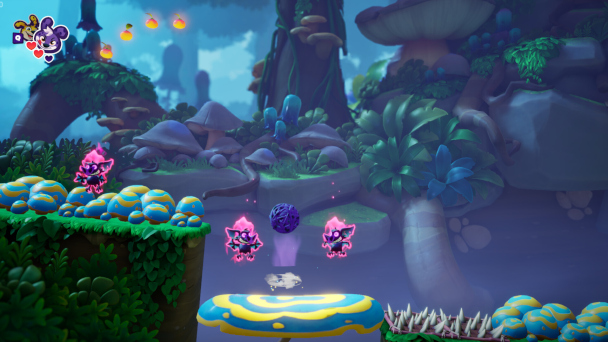
In the first game, choosing a marsupilami was mostly a cosmetic decision. This time, each animal has their own ability. Twister can propel himself horizontally through the air before using his tail to slow his fall. Hope can dish out a spinning vertical leap that gives some extra height, while Punch curls into a bouncing ball that can cross spikes and smash particular objects.
Only two characters are available in any stage, and soloist can switch between them instantly. Initially, this seems like a smart way to add a bit of complexity. One Marsupilami might bounce toward a collectible before being swapped in midair, allowing another to glide toward a far-flung ledge. Secrets and musical notes habitually require this kind of cooperation, making the team feel more useful that a trio of different colored avatars.
‘Less Is More’ is Not Marsupilami Wisdom
But merely adding a layers or mechanics don’t necessarily produce better platforming. Salsa Palombia needs to teach you three distinct abilities, indicate when they’re needed, and explain which commands let them handle different obstacles. As a result, early stages are littered with signposts warning you to change characters or reminding you which button combination bypasses the enemy immediately ahead.
Sure, these signs are helpful, especially fgor younger players, but they also reveal the problem. Instead of having the environment communicate what you should do, Salsa Palombia repeatedly stops to provide instructions. Spot a sign, change Marsupilamis, recall the indicated maneuver, get past one obstacle, and then switch again when the next notice appears. I know its supposed to be helpful in getting you accustomed to the game’s flow, but they revealed how fussy the game could be.
Additionally, there’s also imbalance between the abilities. Twister’s aerial burst is satisfying because it maintains your momentum and can even salvage a mistimed jump. Hope’s extra height is also easy to understand and appreciate. But Punch’s bouncing form is less intuitive. It can occasionally trigger an expected rebound when you’d prefer a predictable landing. Although switching between Marsupilamis can produce some pleasing aerial combos, it doesn’t always feel as effortless as Donkey Kong Country’s navigation.
Giving Danger Some Distance
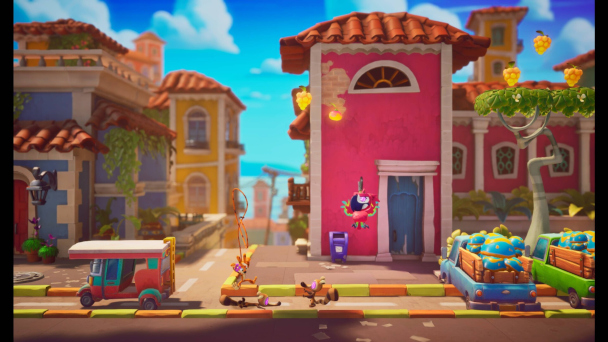
One design decision that does work well in the pulled-back camera. Yes, characters appear comparatively small on the screen, but the additional visibility lets you see platforms, enemies, and incoming hazards before you reach them. That kind of perspective is vital for a game that frequently favors forward momentum. Here, you can usually see enough of the route to prepare.
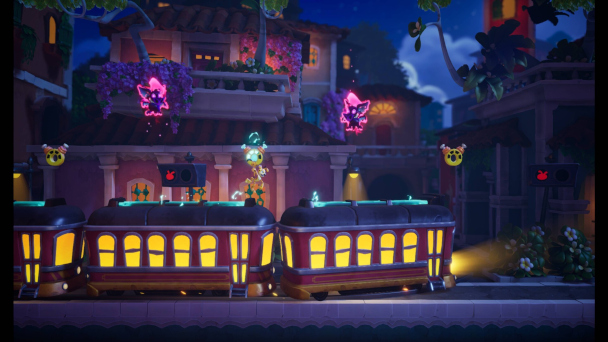
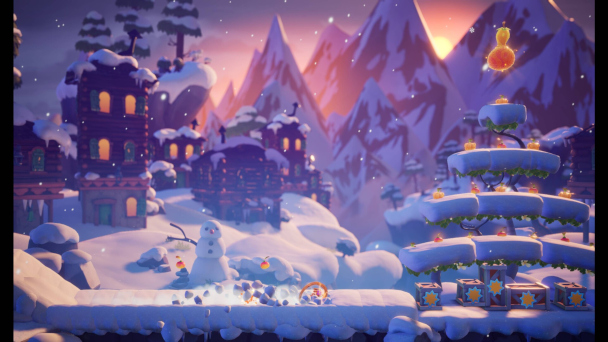
The perspective also help to showcase the game’s attractive art. Palombia is rendered in a vibrant 2.5D style that consistently eye-catching. The jungles are lush without obscuring objects, while the city stages mix colorful architecture with traffic and electrical hazards. Expectedly, the snowy region adds icy caverns, strong winds, as well as some of the campaign’s most impressive backdrops. Throughout, the game’s character animation is fluid, while flaunting both foreground and background detail.
Similarly, the game’s performance is commendable. On Steam Deck, Salsa Palombia can deliver a stable 60 frames per second, which is exactly what this kind of game needs. Control feels responsive, animations are smooth, and brightly-colored comic-book aesthetic meshes with the game’s overall vibe. Best of all, everything stays fluid even in the game’s co-op mode.
Learning to Salsa
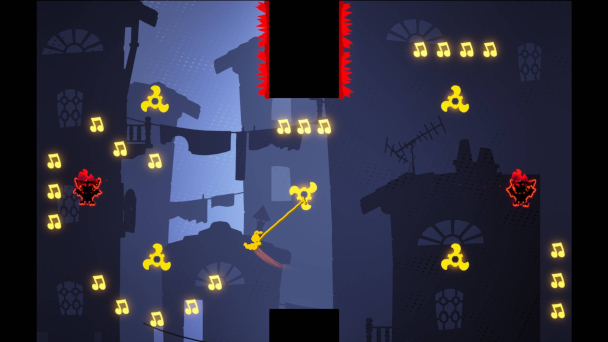
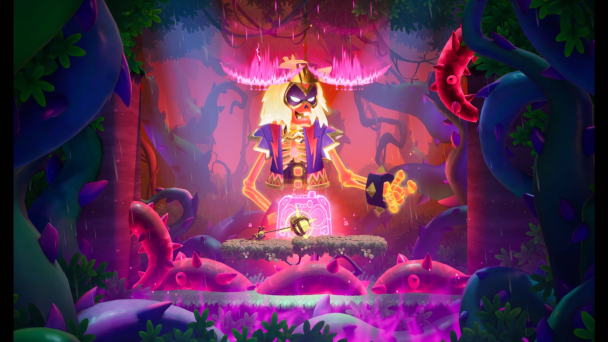
Each stage contains fruit and hidden musical notes, with the latter used to unlock boss encounters and eventually gain access to the final world. Collectibles are usually placed along side paths or behind challenges that need a certain character’s ability. Secret dojos offer some additional tests, while optional stages can be unlocked by spending some of your gathered fruit.
Completing a regular stage also unlocks its Salsa variation. Here, collecting fruit in rapid succession builds a multiplier, while taking damage or waiting too long between pickups breaks the chain. Instead of cautiously examining every corner, you’re encouraged to learn the layout and dash through it with purpose. Largely, it’s the closest that Salsa Palombia comes to delivering a sense of flow, but still trails behind Rayman Legends’ stage design. One problem is that the courses weren’t all designed exclusively around speed. Long stretches, collectible detours, and character switching can all clash with the multiplier system, leading to some lost chains. When it happens near the end of the lengthy stage, Salsa mode can leave a bitter aftertaste.
Some Marsupilamis Don’t Know When to Say When
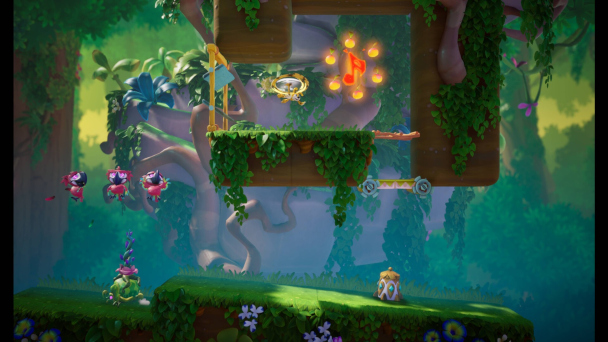
And yes, the stages are often too long. A level might introduce an enjoyable mechanic, develop it, and once things reach their natural conclusion, you might be halfway through the stage. Since collectibles encourage careful exploration, a single visit can become exhausting. Salsa mode worstens this issue since maintaining momentum across an extended course is more demanding than surviving a compact challenge.
The design decisions lead to some odd contradictions. The main adventure can be completed in roughly four or five hours, yet individual stages can often feel overextended. The problem isn’t that the campaign contains too much material. It’s that the existing content could have been divided into smaller levels. Shorter courses would better serve the game’s emphasis on replaying stages, hunting notes, and perfecting Salsa runs. Fortunately, frequent check-pointing keeps failure from becoming overly punitive.
A Tail of Two Design Directions
Ultimately, Marsupilami 2: Salsa Palombia is a fairly charming and technically polished platformer. Its pulled-back perspective provides excellent visibility, its bright environments look lovely, and the targeted 60FPS performance allow the responsive controls to shine. Salsa mode even demonstrates that Ocellus Studio understands exactly why flow is so important to the genre.
However, that sense of flow is too often sabotaged by constant character changes and stages that don’t know when to finish. The sequel is definitely more ambitious than its predecessor, but it sometimes mistakes more mechanics for more depth. When the music, movement, and fruit trails create a rhythm, Salsa Palombia shimmies. But it steps on its own tail just a little too frequently.
Marsupilami 2: Salsa Palombia was played on PC with review code provided by the publisher
Overview
GAMEPLAY - 60%
CONTROLS - 60%
CONTENT - 65%
AESTHETICS - 75%
PERFORMANCE - 75%
VALUE - 70%
68%
OK
Marsupilami 2: Salsa Palombia is a colorful and technically polished platformer that feels fun whenever its movement, music, and level design all find the same rhythm. Unfortunately, fussy character swapping and overlong stages can break the groove. But if you’re looking for a platformer with a bit more complex, grab this one by the tail (or on sale).





Silly me thought a Marsupilami was a real animal.
Can the make the title any harder to say?