Lou’s Lagoon review
Paradise Isn’t Without Its Annoyances

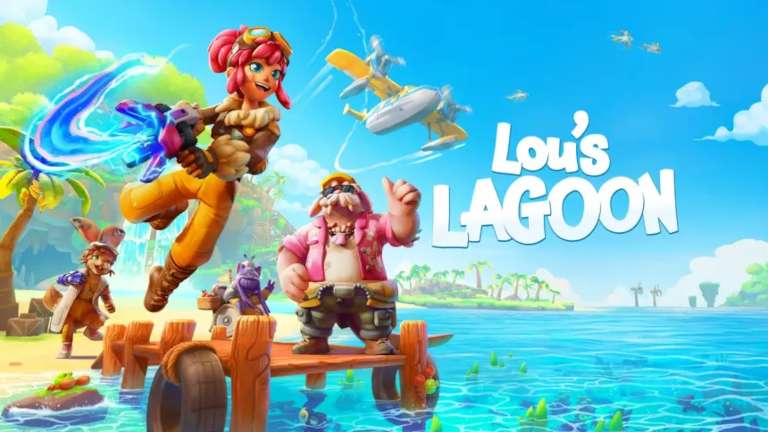
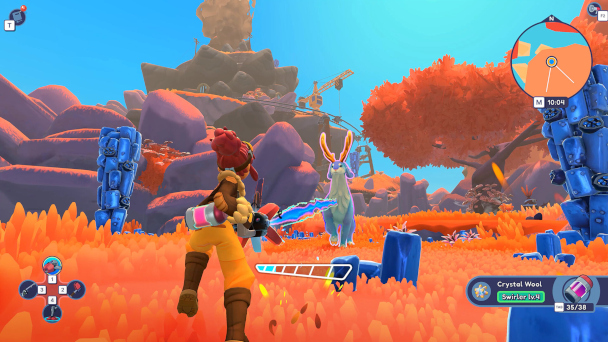
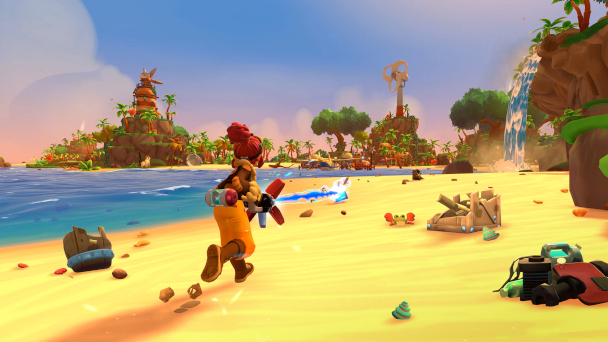
Lou’s Lagoon understands that a good tool can make ordinary chores feel satisfying. Plenty of crafting games have asked me to chop trees, plow fields, and plant seeds, and it hasn’t always been engaging. Developer Tiny Roar’s tropical adventure gives you something a bit more more entertaining: the Swirler, a vacuum-like gadget that sucks resources with a mighty ‘whoosh’. Aim it toward driftwood, scrap, or fruit, then pull the trigger, and everything comes tumbling toward you.
It’s an easy interaction and one that you’ll be doing often. Gathering materials is one of Lou’s Lagoon’s main tasks. The tactile pull of the Swirler, similar to Slime Rancher’s Vacpack, helps to offset the feeling of doing busy work, at least for the first few hours. Unfortunately, Lagoon’s other systems aren’t as playful. Limited storage, lengthy crafting timers, and pacing woes can tamper with the pacing of a adventure that’s best when it lets you wander freely.
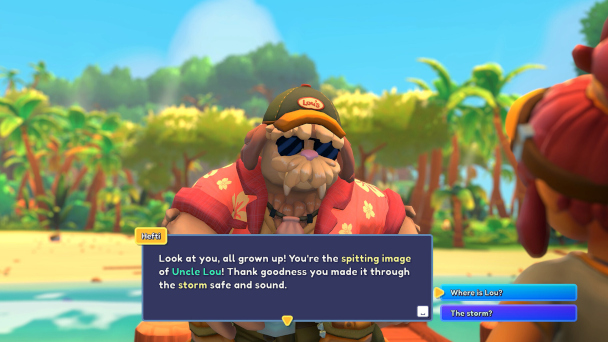
The game’s premise provides a familiar reason to visit the Limbo Archipelago, especially if you’d played other cozy games. After receiving a distress call from Uncle Lou, you find out that a severe storm has damaged the islands and your relative is missing. His seaplane business needs attention, the local communities need help rebuilding, and scattered clues just might reveal his whereabouts. While the setup doesn’t exactly feel fresh or particularly compelling, it does provide motivation for exploration, repair, and some interaction with the islands’ quirky residents.
The Missing Uncle Epidemic
Undoubtedly, a missing family member should create at least a little intrigue. But Lou’s disappearance often ends up feels like an excuse for a sequence of errands rather than a real mystery. The plot occasionally provides bit of exposition, but then takes a backset as you upgrade equipment or obtain resources needed for crafting. Instead of feeling as though I was following my uncle’s trail, I often felt as though I was waiting for the game to drop a clue as a reward for working.
Sure, the colorful characters and light tone keep the atmosphere relaxed, but the writing rarely digs beneath the surface. Islanders tend to function more effectively as quest dispensers than personalities you’ll have a relationship with, with conversations habitually revolving around their needs. By the time the game eventually closed in on Uncle Lou, I almost forgot why finding him was so urgent. After all, I was doing a pretty good job of running the business, according to the islander NPCs.
Flying the Overly Friendly Skies
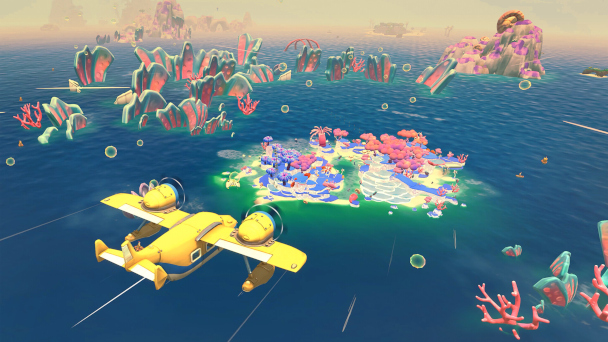
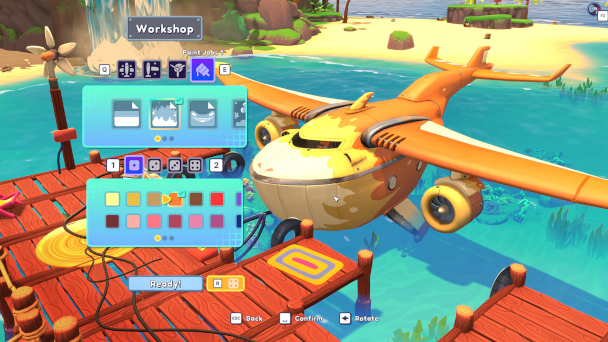
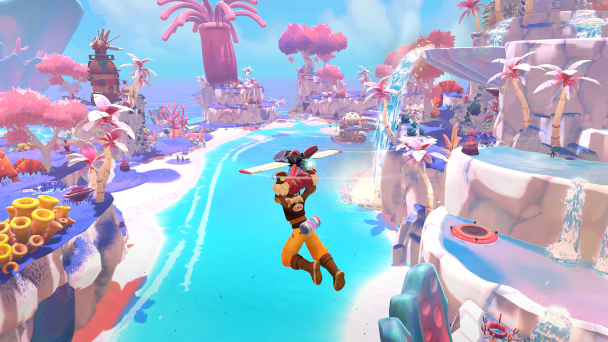
Fortunately, the archipelago is a welcome getaway even when its story isn’t. Lou’s Lagoon looks terrific, with plenty of saturated tropical blues, pinks, greens, and purples. Beaches, caves, cliffs, and towns, and make exploration feel like a treat, especially when a new gadget lets you reach a previously inaccessible area. Meanwhile, flight sequences have you island hopping in a seaplane. While framerates and draw distances are solid and there are plenty of airborne response deposits to hunt down, takeoffs and landings aren’t shown. As such, flying feels a bit lifeless. Sure, it’s better than selecting destinations from a static menu. But I do wish Tiny Roar injected a bit of more urgency into its skies.
There isn’t much danger on land, either. Lagoon doesn’t have a health bar, stamina meter, or any kiond of penalty for tangling with the local wildlife. An angry creature might charge at you, but the worst it can do is knock you around before you retaliate with the Swirler. That forgiving design certainly suits the cozy atmosphere, yet it also strips exploration of a sense of intrigue. The caves and islands might look as though they conceal danger, but there’s rarely a reason to proceed cautiously. Without any real consequences, reaching a remote corner of the archipelago can feel less like an expedition and more like just another resource-gathering trip.
That said, Lagoon does attempt to keep things interesting. Swirler upgrades allow you to harvest tougher or rarer materials, providing some incentive to revisit locations. Gadgets provide additional options, allowing you to fish, search underground, build machinery and furniture or even glide on currents of air. These tools provide a nice rhythm of discovery, even if some of the devices feel like the drive the progression cycle.
Crafting a Waiting Game
However, the trouble begins once you start crafting. Raw materials habitually need to be refined and then converted again by specialized machines before they become the component for a quest. Yes, that kind of structure is common to the genre, but the production timers here are far too slow. Machines process a limited number of items at once, so a request for several advanced parts can become a chain of waiting periods. The timer doesn’t really add anything to the game, it simply delays the activity that I’d rather be doing and ultimately stretching out the game’s playtime.
These delays are especially annoying when crafting sends me back to the Lagoon, only for the finished item to be needed on another island. Flying is OK, but repeated journeys made solely for quests are worsened by protracted load times. All too often, I felt like Lou’s Lagoon was adding commute times to my work days, which I could have done without.
Small Islands, Smaller Storage
Inventory management issues worsen the problem. Your personal storage starts painfully small, and the seaplane’s cargo compartment provides only limited relief. Lou’s Lagoon has a rather large range of raw resources, refined materials, quest objects, and specialized components, while giving you little insight into what the next assignments might require. Naturally, I wanted to keep everything. The game’s answer was to make me shuffle items between character and plane, discard items, or sell supplies that I might soon need to purchase again.
Additional slots can be earned through progress and found when exploring, but the opening limitations definitely leave an impression. Decorative storage objects are especially misleading when they cannot serve as practical containers. For a game that encourages gathering and base customization, the inability to build genuinely useful storage is baffling. It turns the satisfying act of vacuuming up the environment into a recurring question: do I have enough room to collect the thing directly in front of me?
A Vacation With Too Many Layovers
That said, these frustrations can’t undo what Lou’s Lagoon does well. The Swirler is an cool gathering tool and the archipelago is bright, distinctive, and pleasant to inhabit. At its best, the game delivers exactly the kind of getaway that the title suggests. For at least some of Lagoon’s playtime, you can expect an easygoing retreat with curious creatures, hidden treasure, and stakes low enough so you never feel pressured.
But Lou’s Lagoon’s reminds us that cozy design shouldn’t be confused with slow design. Excessive crafting times, cramped storage, and progression gates repeatedly interrupt the game’s strongest sensations. There is genuine charm on is beaches and considerable satisfaction in the pull of its Swirler, but paradise would be far more inviting with a larger suitcase and less time waiting for a machine.
Lou’s Lagoon was played on PC with review code provided by the publisher.
Overview
GAMEPLAY - 60%
CONTROLS - 75%
CONTENT - 70%
AESTHETICS - 75%
PERFORMANCE - 70%
VALUE - 60%
68%
OK
Lou’s Lagoon offers a vibrant tropical getaway, and sucking up resources with the Swirler remains satisfying even after the novelty starts to fade. Unfortunately, cramped storage, sluggish crafting timers, and repetitive errands bring enough baggage to make paradise feel like work. Lagoon isn’t bad, but it should be your first destination choice.





Call of Duty 4 really showed how powerful immersive gameplay and storytelling can be. I also enjoy games that keep things simple but still make you want to play again. **Wordable** takes that approach with quick 90-second word challenges: https://wordable.live/