Ink Reverie review
A Soothing Clicker Soaked in City-Building Ink


With its structures, streets, and busy populace, Rolling Cat Studio’s Ink Reverie resembles a traditional city builder. However, spend a bit of time with this title and you discover it’s more of a cozy clicker. There’s gratification to be had, but it’s more rooted in Reverie’s lush aesthetics rather than the game’s undemanding mechanics.
Undoubtedly, the game’s ink wash visuals are the game’s most conspicuous quality, painting the screen with muted colors and delicate brushstrokes. This sumptuous artistry is complemented by gentle mechanics where there’s no fail state. Undoubtedly, Rolling Cat is aiming for an experience that’s more meditative than mentally demanding.
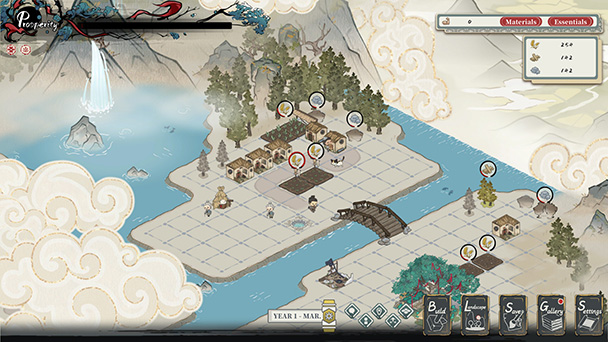
The Path to Chang’an City
Reverie’s campaign is split across five distinct stages that are unlocked in sequence. As you progress, you’ll face increasingly elaborate environments. Beyond an introductory tutorial dumping a load of dense information, the game is rarely overwhelming. Instead, each new stage offers new contexts and resource types, but the basic gameplay loop remains arguably consistent.
For better or worse, there’s no clock to beat, no disasters to survive, and no enemies to fend off. Instead, you’re tasked with filling each level’s Prosperity Bar by building, upgrading, and arranging structures. Once that is accomplished, you can move onto the next area, as you push toward the administration of Chang’an city, the world’s first million-person metropolis.
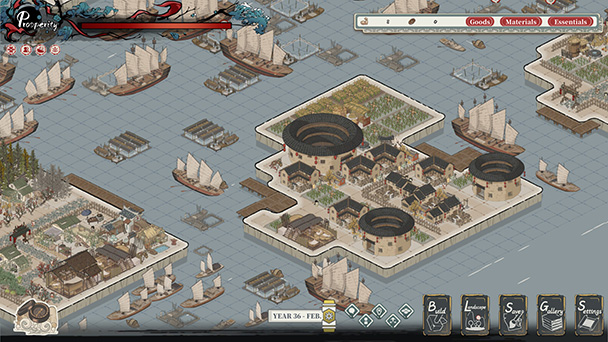
Metropolitan Duties Made Easy
A significant portion of your time with Ink Reverie will be spent managing resources. You start with the basics, from farms for food, trees for wood, quarries for stone. And unless you build certain auto-collection structures, every resource requires a click. Sure, you can sweep the mouse to gather inventory. But even with that shortcut, Ink Reverie feels like an idle clicker more than a traditional city sim especially because there’s no getting around clicking to grab exotic items requested by the local populace.
Construction and building upgrading are deliberately simple. Placing structures is intuitive, and repositioning is as easy as dragging an icon around the screen. Instead of scanning elaborate tech trees, you simply merge three identical structures to create a more advanced version. Expectedly, your resource output scales with each upgrade, providing a bit of satisfaction as you watch your productivity surge.
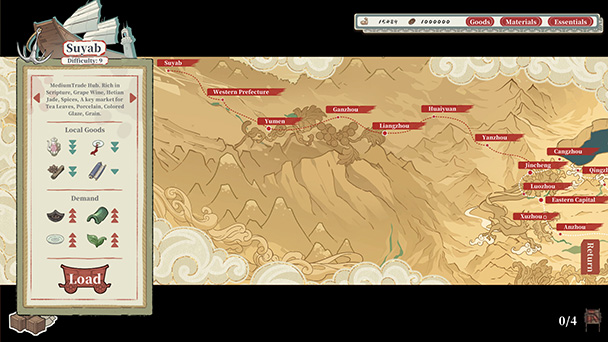
Later stages add just enough variation to keep the gameplay cycle engaging. Requested resources like blossom petals and tea leaves spawn in specific areas, which means leaving space for ground tiles. Meanwhile, prosperity perks are unlocked through specific structure combinations. These can grant passive bonuses like improved production or reduced food usage. But largely, these are optional optimizations that are aimed at getting players to experiment.
Keeping it Casual
Ultimately, Ink Reverie is less about building cities and more about tranquil clicking and swiping. As such, don’t expect to be tested. The only urgency here is to decide to continue. But for players who prefer slower-paced, dopamine-inducing gameplay, Ink Reverie can be a relaxing, although repetitive, way to pass the time.
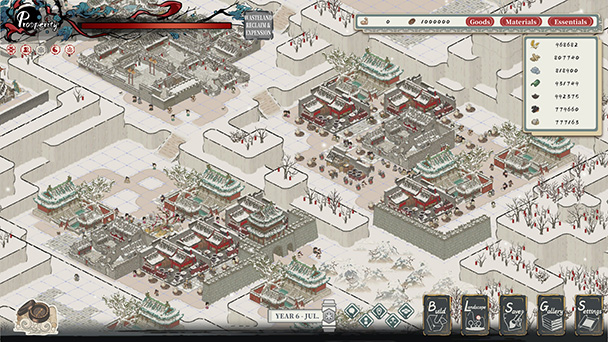
Ink Reverie was played on PC with review code provided by the publisher.
Overview
GAMEPLAY - 65%
CONTROLS - 55%
AESTHETICS - 80%
ACCESSIBILITY - 70%
PERFORMANCE - 70%
VALUE - 65%
68%
OK
Sure, it might look like a city builder. But Ink Reverie is more of a cozy-clicker with ink wash visuals and a soothing soundtrack. While light on challenge, it might beguile if you prefer zoning out over the burdens of urban engineering.