Inazuma Eleven: Victory Road review
Victory Road Makes a Miraculous Recovery After an Extended Sidelining

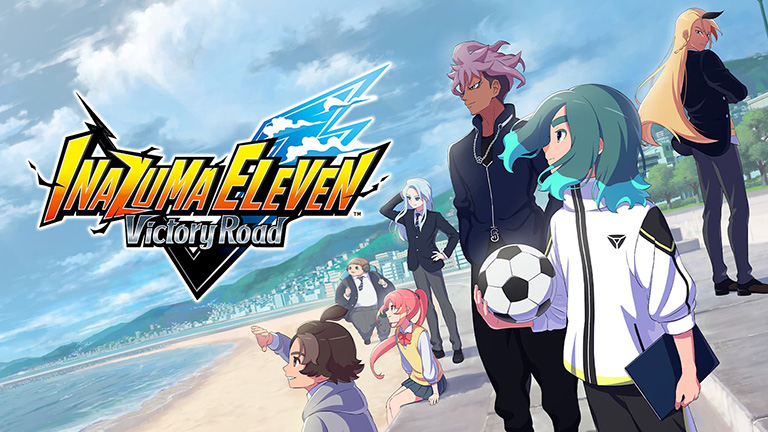
Since its 2008 debut, Inazuma Eleven has enjoyed a loyal following thanks to the franchise’s spirited interpretation of football. Across seven mainline entries as well as numerous remakes, and spin-offs, Level 5’s series has taken the fundamentals of the sport, added role-playing elements, memorable characters, and signature over-the-top moves.
Victory Road represents the long-anticipated evolution of the franchise, originally announced in 2016 as part of the Inazuma Eleven Ares cross-media project. After suffering multiple delays, the title’s launch feels like a culmination of years of development.
Fortunately, players who were patient enough to endure the delay are in for a treat. Save for some grindiness and some peripheral features that are still forthcoming, Victory Road delivers a polished, feature-rich experience that effectively modernizes the series while staying true to the high-energy charm and tactical depth that longtime fans expect.
40+ Minutes of Animation, But a Sluggish Kickoff
Fundamentally, Victory Road remains a football RPG, but the title diverges from previous Inazuma Eleven entries by significantly expanding the game’s scope and mechanics. Classic elements like story-driven matches and team building are still a core focus, but they’re now complemented by a massive roster of over 5,400 players, that includes returning favorite as well as new characters. But if you’re looking for a bit of nostalgia or some competitive play, Victory Road also accommodates, with a Chronicle mode that could occupy fans for weeks.
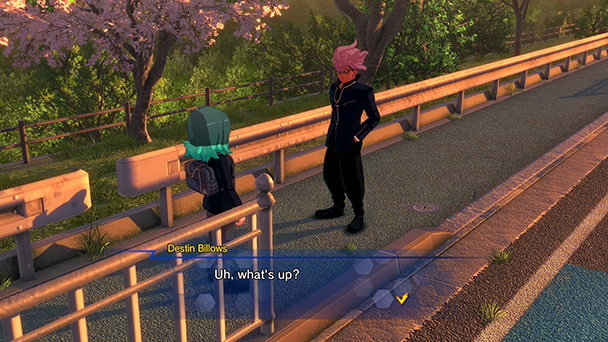
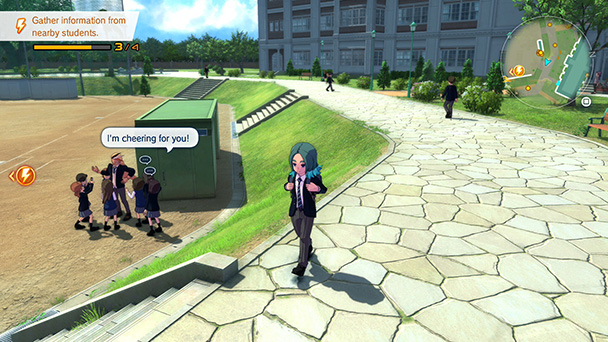
Like many of the more mainstream soccer simulations on the market, the emphasis here is on progression and collection loops. While Studio MAPPA’s (Attack on Titan, Chainsaw Man) animated cinematics and a richly orchestrated soundtrack elevate the experience, the game’s campaign is burdened by a sluggish start that can feel like busy work where a hunt for collectables and monotonous rock-scissors-paper battles undermine the storytelling.
Rekindled Passions and a Bit of Reiteration
Victory Road’s main storyline centers on Unmei Sasanami, a boy who once loved soccer but gave it up after a distressing incident, as he enrolls at Nagumohara Middle School where football has effectively disappeared. There, he meets Haru Endo and other ardent players who help him rediscover his love for the sport, pushing him to join the school’s struggling soccer club. Sure, it’s a pretty standard underdog tale about reinvigorated passions, that gradually reveals why the sport fell out of favor amidst the usual school drama and rivalries. While there’s a notable lack of antagonism, a separate narrative thread about the son of a famed former star offers a welcome counter-balance to the proceedings. And while Kenichiro Saigo and Kohei Fujii’s soundtrack brilliantly underscores the exposition, some plot points are superfluously restated, slowing down the pacing.
Pleasingly, the storyline escalates from small practice matches and local competition into conflicts that involve powerful schools and organizations trying to control or suppress football, echoing the series’ tradition of over‑the‑top opponents and dramatic stakes. Supernatural elements like Keshin (avatar-like spirits) and special techniques return as symbols of the players’ resolve, and the narrative balances lighthearted moments of club life with more serious themes of regret, redemption, and the courage to stand up for what you love. Thankfully, the game allows you to select between the original Japanese names and their localized equivalents, ensuring all Inazuma fans will feel at home.
A Sky Filled with Bond Stars
Meanwhile, Chronicle Mode adds an entirely separate storyline set in a distant future where a being known as the Mind Eater threatens to wipe out humanity, providing the game with an epic “save the world through football” premise. You play as Victorio Cryptix, traveling through time in the Inazuma V Caravan, gathering the strongest players from across the series’ history to awaken the Ultimate Keshin capable of stopping this threat. Here, winning matches reward you with Bond Stars, the in-game currency used to recruit new athletes.
Within this mode, the timeline is laid out as a grid map divided into eras (Original, GO, and Ares/Orion) letting you step into iconic matches from all eight anime seasons and even revise their outcomes. As such, Chronicle Mode feels like a celebration of the franchise, pairing its world‑saving plot with fanservice moments where dream teams from different generations form up. If you’re a fervent fan of the series, this component alone makes Victory Road worth the price of admission.
A Game of Possession and Persistence
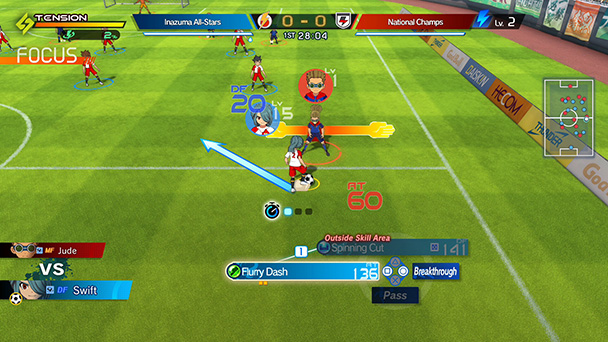
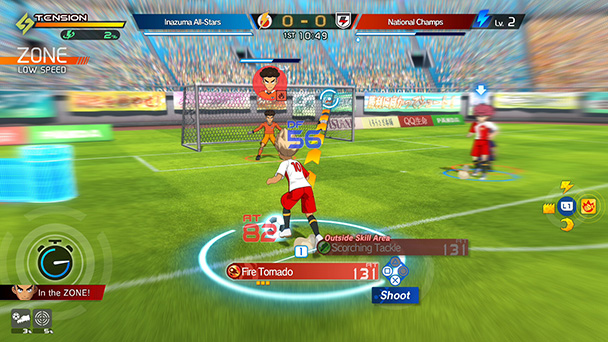
On the pitch, Victory Road refines the series’ signature blend of real-time movement and command-based actions rather than comprehensively reinventing it. Matches play out with a familiar emphasis on positioning, tension management, and the strategic use of special moves, but quality-of-life improvements make the flow smoother than in past entries. Manual control feels responsive, while AI teammates are more reliable at maintaining formations and making smart passes. That said, encounters can still devolve into repetitive exchanges of special techniques, especially during longer sessions, reinforcing the sense of grind that occasionally surfaces in both story modes.
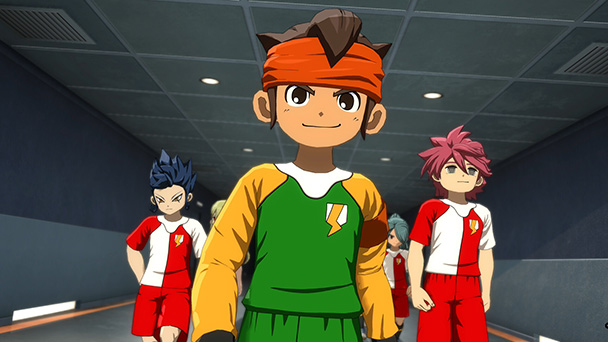
Team building remains one of Victory Road’s strongest pillars. With thousands of players available, experimentation can be immensely rewarding, and the revised training systems favor long-term investment over quick optimization. Meanwhile, bond mechanics can deepen relationships between characters, unlocking elements like passive boosts and cooperative techniques that add an additional layer of tactical consideration. However, the sheer volume of options can be overwhelming at times. When coupled with dense menus, early customization is less intuitive than it should be.
The Right Amount of Flash
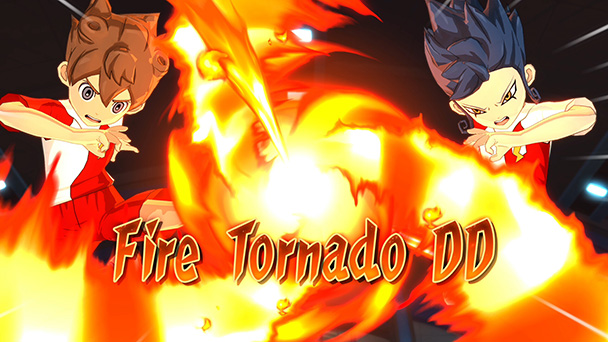
Visually, Victory Road strikes a shrewd balance between anime-style spectacle and practical functional. Character models are expressive, special moves are impressively animated, and MAPPA’s pre-rendered cutscenes are a genuine highlight, rivaling standalone anime episodes in quality. Yet, Level 5 ensures the visual effects don’t overpower and it’s always easy to keep track of ball possession. Performance is generally stable, though occasional frame drops during especially effect-heavy moments can occur on lower-end rigs. If you have a portable PC like Steam Deck or an ROG Ally, expect rock solid 60 frames-per-second performance.
While promising on paper, Victory Road’s online and competitive features still feel like a work in progress. Level-5 promotes an anti-cheating system to keep ranked play fair, but in practice it’s already been cracked by players, allowing exploits to slip into matchmaking and turn what should be tense competitive matches into a frequent annoyance rather than a highlight.
A Resounding Win
Despite a twelve-year hiatus since the last entry, Inazuma Eleven: Victory Road is a fitting revival for the football franchise. Despite a slow opening and some moments of repetition, the game’s ambitious scope, heartfelt storytelling, and celebratory Chronicle Mode make it a gratifying experience for longtime fans and newcomers who are willing to invest the time. Victory Road may not be perfect, but it proves that Inazuma Eleven’s signature blend of friendship, over-the-top moves, and role-playing elements still has the power to shine.
Inazuma Eleven: Victory Road was played on PC with review code provided by the publisher.
Overview
GAMEPLAY - 85%
CONTROLS - 85%
CONTENT - 90%
AESTHETICS - 90%
PERFORMANCE - 85%
VALUE - 80%
86%
A Winning Shot
Inazuma Eleven: Victory Road is a long-overdue comeback that modernizes the series without losing its over-the-top football RPG soul. Fusing solid storytelling, slick presentation, and fan-pleasing components like Chronicle Mode, it’s a reward reminder of why the football franchise remains relevant.




It’s a shame that the Inazuma series didn’t get more Western localizations. Maybe that will change if this sells.
Fun fact: Inazuma means lighting in Japanese. LIterally, the wife of lightning, showing the close relationship between the weather and a harvest.