Fantasy Maiden Wars – DREAM OF THE STRAY DREAMER review
Where Spell Cards Meet Strategy

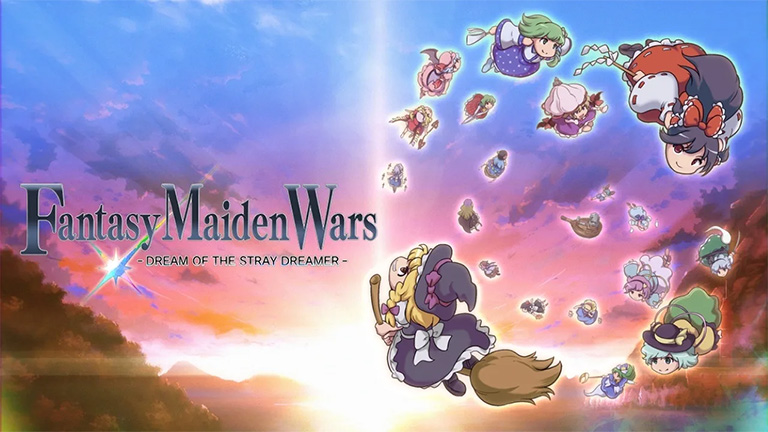
Few game series have had as wide and unexpected an influence on indie development as Touhou Project. What began as a series of bullet hell shooters has since grown into broad range of genres that spans from fighting games, puzzlers, rhythm titles, metroidvanias, platformers, and roguelikes. Pleasingly, each effort doesn’t simply borrow Touhou’s core mechanics. Instead, they reimagine the signature bullet hell patterns and mythos in new ways.
With the release of like Fantasy Maiden Wars – DREAM OF THE STRAY DREAMER developer Sanbondo attempts to unite dozens of characters into an epic adventure that’s punctuated by tactical, turn-based battles. Yes, it’s about time Touhou gets a proper TRPG.
Beneath the Scarlet Mist: Touhou’s Ever-Expanding Roster
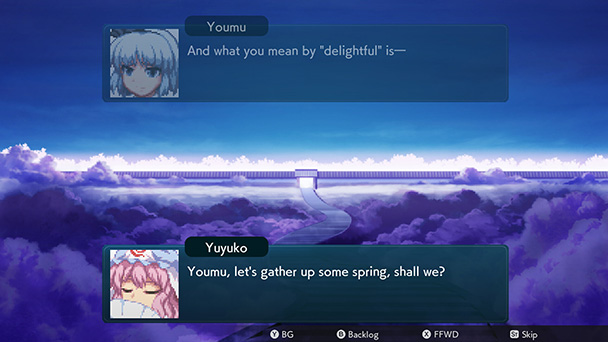
At the heart of Maiden War’s collection of narratives is the setting of Gensokyo, a fantastical landscape where humans, youkai, and gods cohabit in an uneasy balance. Abnormal incidents begin to undo the sense of stability, pulling shrine maiden Reimu Hakurei and magician Marisa Kirisame into a conflict that stretches across multiple arcs.
The choice between these two heroines at the outset shapes the order in which events unfold and also affects character interactions and how certain mysteries are revealed. What makes the story compelling is not just its scale but its layered structure. Maiden Wars adapts and connects numerous arcs from Touhou lore, presenting them as a single, narrative.
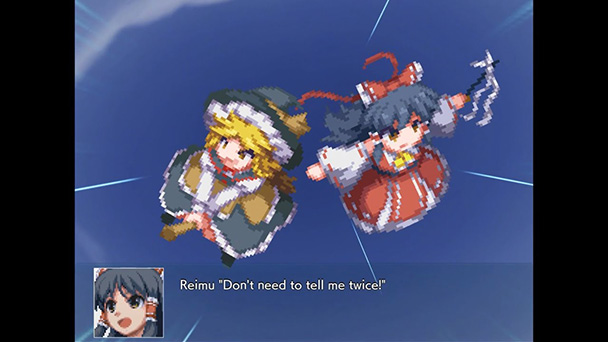
But STRAY DREAMER’s expositional ambitions are both a strength and a risk. On one hand, the game has over seventy characters, each with their own distinct personalities and backstories, letting you explore multiple threads without the feeling of being stuck in a linear campaign. On the other, that scale can lead to uneven pacing. Some incidents are deeply impactful, while others pass quickly, and for players unfamiliar with Touhou’s lore, the sheer amount of information can feel overwhelming. Each of the four arcs aren’t equally interesting, with the tempo slowing for the final two acts. And then there’s the localization. Undoubtedly, there’s a substantial amount of text here. However, there are also quite a few awkward phrasings. These aren’t severe or numerous enough to soil the storyline. But they can make reading dialog a chore.
To its credit, the game includes an in-game encyclopedia and glossary that contextualize the dense mythology, along with a music room housing over two hundred tracks, which a testament to how much care has gone into honoring the source material. And even if the second half of the game can drag, STRAY DREAMER’s cast is nearly interesting enough to forgive these issues.
Turn-based Danmaku: Spectacle via the Spell Card
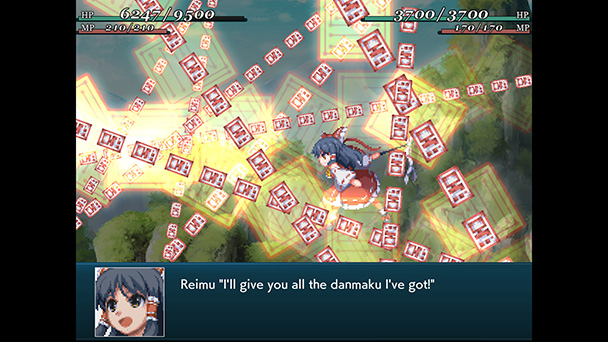
Mechanically, DREAM OF THE STRAY DREAMER turn-based battles recall the structure of Super Robot Wars. Here, the storytelling momentary recedes to spotlight fights where positioning, unit synergy, and timing determine success. The game’s system augments traditional movement and attack options with Spell Cards, which deliver spectacular special attacks inspired by Touhou’s bullet-hell heritage.
These abilities don’t just add a bit of pixel-pushing spectacle, they influence the tactical tide, creating shifting areas of danger and opportunity. Meanwhile, squad composition is flexible, allowing players to experiment with various team builds, and difficulty levels are tuned to accommodate both newcomers and genre veterans. For a game with so many moving parts, its interface is approachable, with thorough tutorials guiding you through the game’s early battles.
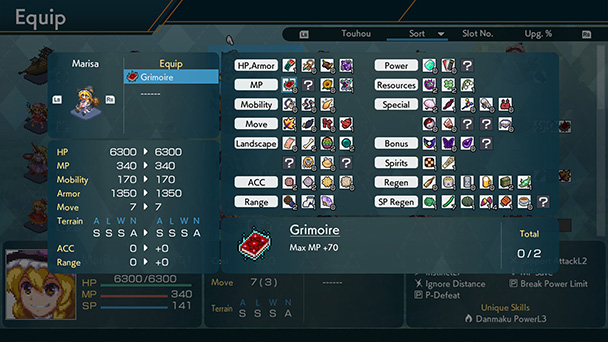
And while the comparison to Super Robot Wars’ narrative structure and encounters is evident, in the Spell Cards that give the game distinction. Many TRPGs emphasize smaller casts and more linear growth. But Fantasy Maiden Wars favors breadth and spectacle, allowing you to oversee massive teams and experiment with flashy, screen-filling attacks.
A Pleasing, Pixelated Gensokyo
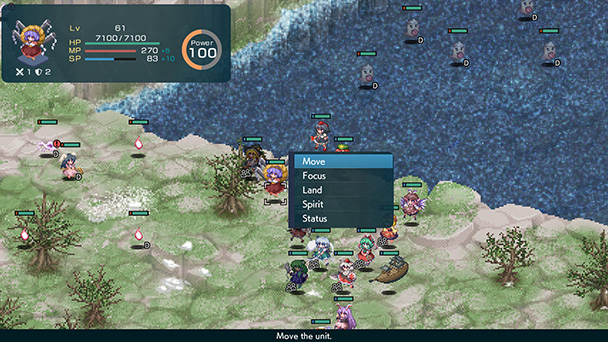
Presentation plays a key role in generating a sense of scale. Largely, visuals are vibrant, with detailed character portraits, expressive animations, and dynamic cut-ins during Spell Card sequences that showcase each character’s abilities. And while there’s some aesthetic improvements from the original Japanese release (titled Gensou Shoujo Wars Complete Box), there are still some sprite-art that looks like a stand-in asset. In fact, I thought the out-of-bounds area in the first battle was a visual glitch. Meanwhile, Touhou’s legacy of cherished melodies and fan arrangements are accounted for, with tracks adding energy to each battle.
Gentle to Giant Levels of Challenge
Agreeably, DREAM OF THE STRAY DREAMER embraces accessibility. Many SRPGs can be daunting to genre newcomers. But here, multiple difficulty settings and tutorials help to make the game approachable. As the campaign progresses the bullet-hell inspired attack patterns introduce an extra layer of complexity. As such, you can’t simply cluster units and trade blows. Instead, you’ll need to account for enemy formations, attack cones, and spell patterns that compel movement and penalize poor positioning. This dynamic creates a more active, puzzle-like approach to encounters than many comparable games offer.
Fantasy Maiden Wars – DREAM OF THE STRAY DREAMER succeeds because it doesn’t merely translate Touhou into a tactical role-playing game. Instead, it reimagines this Gensokyo-based story as ensemble epic. The game’s biggest imperfection is its sheer narrative sprawl, but even that demonstrates a sense of ambition that few fangames or even commercial TRPGs attempt. For Touhou fans, STRAY DREAMER is a celebration on a grand scale and that alone makes it worth consideration.
Fantasy Maiden Wars – DREAM OF THE STRAY DREAMER was
played on PC with review code provided by the publisher.
Overview
GAMEPLAY - 75%
STORYTELLING - 70%
CONTENT - 80%
AESTHETICS - 70%
PERFORMANCE - 75%
VALUE - 80%
75%
GOOD
Fantasy Maiden Wars – DREAM OF THE STRAY DREAMER transforms Touhou’s bullet-hell chaos into a sweeping, tactical epic that feels both reverent and ambitious. Its massive cast and dense lore can overwhelm, but the dazzling Spell Card battles and devotion to Gensokyo’s mythos make this dream memorable.



How many hours do it take to complete?