Dream Echo review
Building a Better Dream (On Your Own)


Dream Echo has a story, but the game knows that isn’t why you’re here. You play as a worn-out office worker whose isolated existence takes a strange turn after falling into a dark dream and meeting a mysterious girl. She reveals a world in which our dreams are connected, providing just enough justification for repeatedly falling asleep, beating up monsters, collecting upgrades, waking up, and doing it all again.
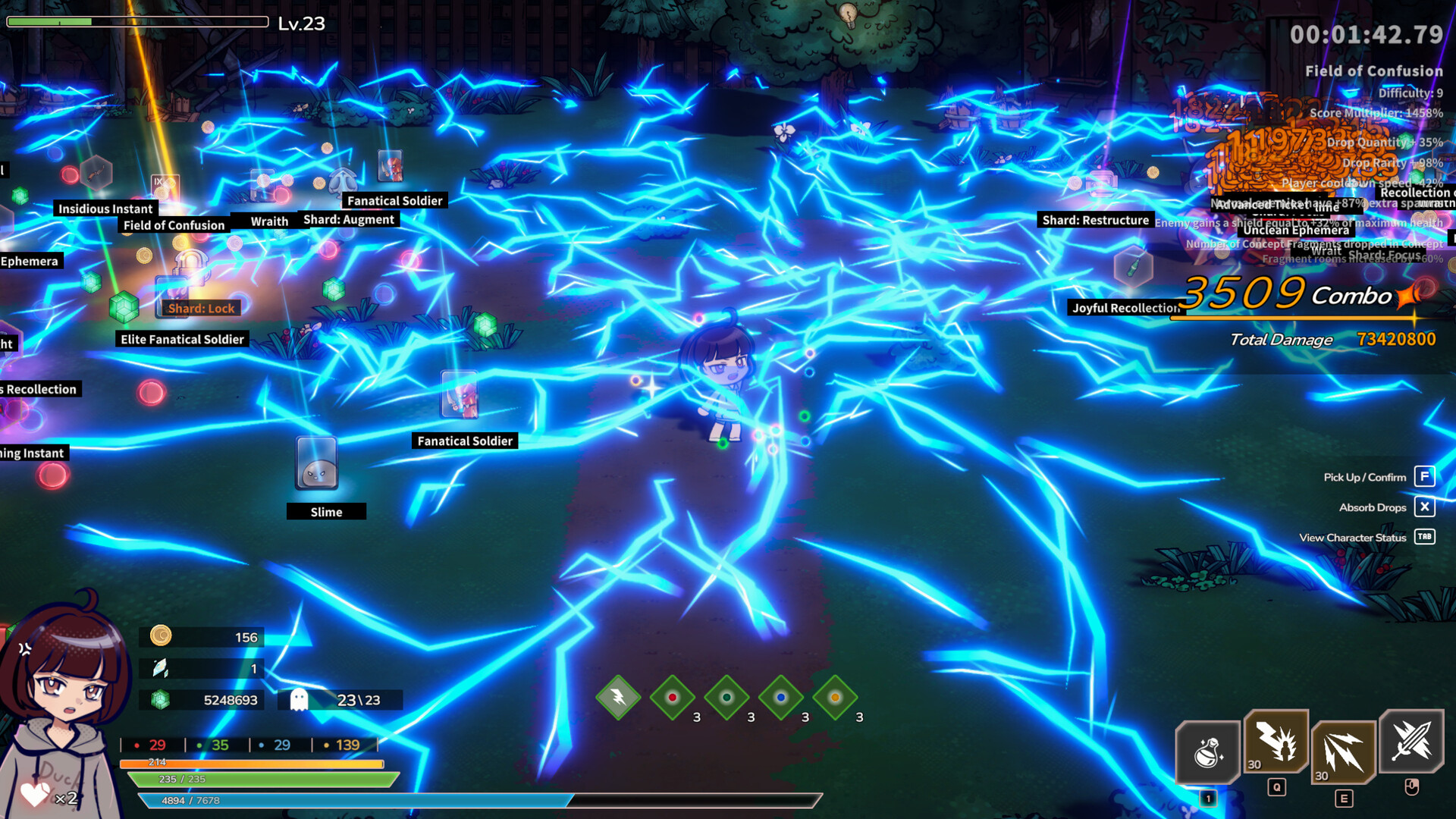
That last part is what really matters. Dream Echo is an action roguelite that borrows the intricate progression systems of Path of Exile and stacks it on top of something that’s closer to an arcade brawler. As such, it’s hardly surprising that the game’s components don’t always mesh together cleanly. But when your character build starts dishing out damage and digits start filling the screen, the game can be difficult to put down and you just might overlook the repetition.
May Your Weapons Swing Freely and Your Cooldowns Be Short
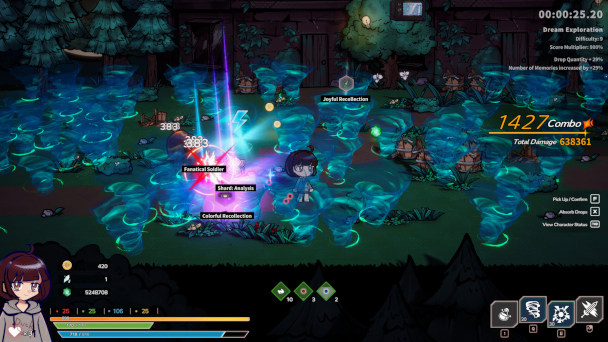
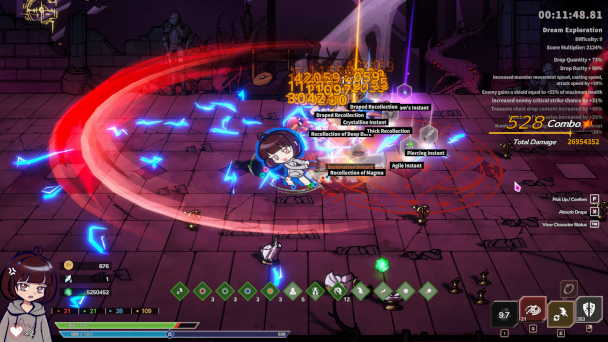
Pleasingly, combat is accessible and sufficiently hectic. You’ll carve through hordes of enemies while triggering different attacks and abilities, grabbing any upgrades as your run progresses. Dodging is essential to avoid your enemies’ visually telegraphed attacks, which give you so welcome i-frames. The game’s roguelike structure means you’re constantly making decisions about how your current character will develop. Nicely, Dream Echo gives you a bit more control than its “choose one from three options” peers.
Echo‘s defining design decision is found in the Concept system. Instead of simply choosing something like “Fireball +5% damage,” Concepts are like modular building blocks that change how your abilities behave. So a projectile can become a spread of projectiles, while another modifier can make attacks chain between targets. The influence of Path of Exile‘s skill gems is obviously intentional and there’s a nice sense of progression.
Show Me How to Grow, Please
The problem is that Dream Echo doesn’t always do a good enough job of teaching you how all of these things work together. Instructions cover the basics, but the more intricate systems aren’t clearly explained, forcing you to figure things out through trial and error. With sub-menus for Talent, Equipment, Memory, and Desire, as well as Basic Actions, Skills, and a Skill Backpack, there’s a lot to digest.
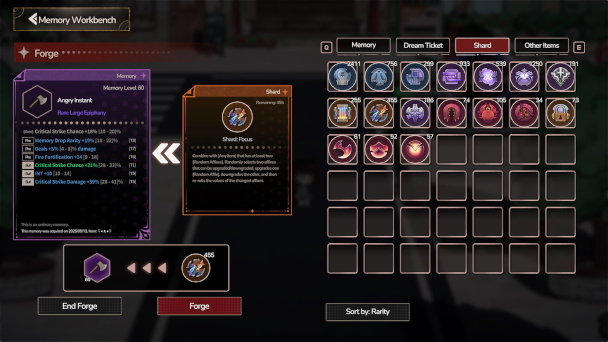
Experimentation is undoubtedly part of the allure, but there’s a difference between discovering a OP build and simply not understanding how to slot in harvested memories. A stronger tutorial and clearer descriptions would make Dream Echo‘s signature systems much easier to appreciate. Then there’s the issue of overlapping menuing. At present, examining collected Memories covers your inventory and occasionally your equipped Memories.
Don’t Wake Me Up
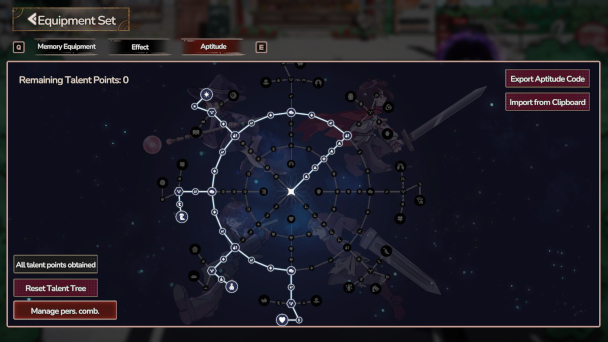
And that’s important, as Memories play a key role, potentially preserving Concepts between excursions and allowing for refinement back at home. When coupled with Equipment and an expansive constellation-style progression system, much of your build is defined outside of the action. As such, Dream Echo can feel less like a conventional roguelike and more like an action-RPG where dungeons fuel progression.
That progression is where most of the game’s growth actually comes from, and it’s worth being upfront about what that means moment to moment. As you slot in new Concepts, refine Memories, and fill out your talent constellation, your numbers climb dramatically. Runs that once felt like a slog against a group of resilient enemies eventually turns into you wiping entire rooms in a second or two. Just know that the gratification isn’t immediate, with Dream moving at about the same speed as an incremental clicker kind of game.
A Reoccurring Dream
Yes, whether you’re twenty minutes or twenty hours into the game, you’re basically still doing the same thing you were doing at the start. Moving into a crowd, triggering your loadout, and picking up whatever drops can grow tiresome. Sure, new Concepts change the shape of your damage, but they rarely change the shape of combat, where you’ll face successions of familiar foes. In execution, the allure of a new build can lose its luster pretty quickly.
Yes, enemies don’t do much to counter that sameness, either. Rather than introducing new attack patterns or forcing you to adapt your positioning as you go deeper, Dream Echo mostly just pads its health bars. That outcome is that Deam Echo can feel like you’re slashing away at a larger sponge rather fighting smarter. As such, this Dream grows tiresome before you’ve really had a change to appreciate your build.
Dream Echo was played on PC with review code provided by the publisher.
Overview
GAMEPLAY - 70%
CONTROLS - 65%
CONTENT - 70%
AESTHETICS - 70%
PERFORMANCE - 60%
VALUE - 60%
66%
OK
Dream Echo can be a blast once its Path of Exile-style progression starts turning you into a room-clearing monster. But getting there means struggling with vague tutorials, cluttered menus, and a whole lot of repetition. There’s real satisfaction in watching a character build become an adversary annihilating badass even if this dream grows familiar too soon.




Sounds like a pass.