Demons’ Night Fever review
The Many Joys of Being a Misanthropic Jerk

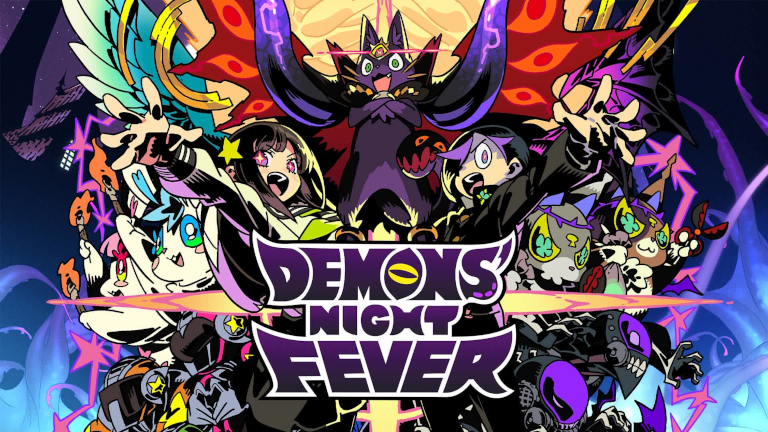
With Disgaea creator Sohei Niikawa overseeing its planning, scenario, and production, Demons’ Night Fever arrives with some impressive credentials. Sure, 2003’s Hour of Darkness wasn’t the first console strategy role-playing game (1985’s Bokosuka Wars has that honor), but its blend of turn-based battles with spirited, visual novel-style storytelling had a significant impact on the sub-genre.
Developed by Drecom and SuperNiche, Night Fever shares Disgaea’s affections for scheming demons, over-the-top personalities, and relentless pursuits of power. But here, Niikawa showcases some different mechanical departures. Unlike Fire Emblem, building a entourage isn’t about character growth and making sure your veterans stay alive. Instead, an underling’s most valuable contribution might just be the explosion triggered by their untimely death. You’re often the cause for their deaths and as such, Demons’ Night Fever reminds us that playing as an asshole boss can be surprisingly entertaining. It might even be a bit cathartic.
Isekai for an Self-Described Incel
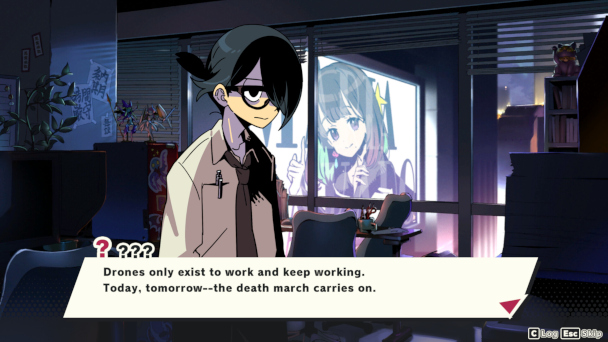
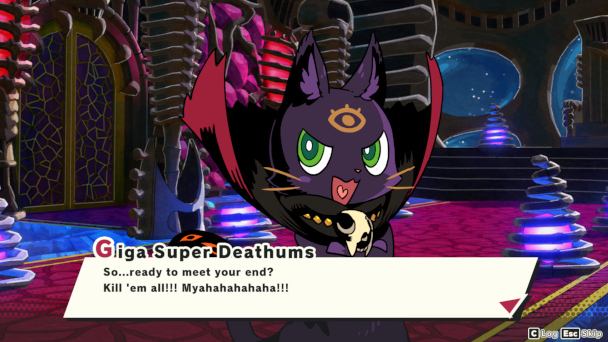
Certainly, ruthlessness suits Killshiro Katanaka, an overworked programmer whose treatment at work has contributed to disappointment with humanity. After getting tangled up in a resurrection program devised by Giga Super Death, a mighty devil reduced to a helpless kitten, he gets an opportunity for vengeance. His rapid pursuit of power and his willingness to sacrifice underlings is darker and cruder than Disgaea’s demonic antics. But there’s something compelling about seeing seeing a person that got screwed over be so welling to inflict that same punishment on others.
Killshiro’s bitterness, sexual frustration, and lack of self-awareness give the script a worldview of someone who’s spent far too much time online. Some might find the meme-humor and swearing off-putting. Night Fever is arriving a generation after Disgaea, and our humor is often darker and more sarcastic now. As such, it feels fitting for our era. The game also understands the comic potential of such a deplorable protagonist. But honestly, there’s a lot of fun is being so anti-social.
Tyranny and Time Management
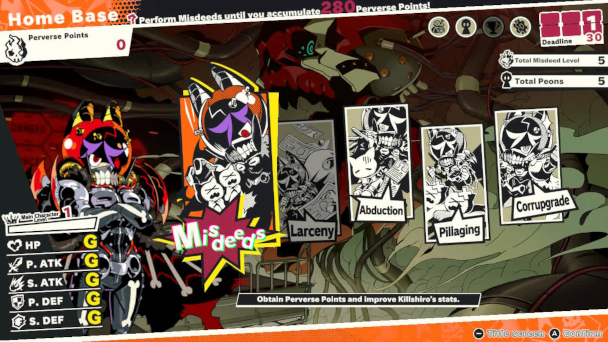
Outside of battle, misanthropy requires a surprisingly organized schedule. Each chapter imposes deadlines, making each opportunity to commit Misdeeds, acquire resources, or prepare for an event battle part of a larger plan. Shaping Killshiro to meet those demands can feel a little like a demonic-oriented version of Princess Maker, with its pleasure of deciding how limited time should influence a character’s development. Naturally, your responsibilities here are substantially less wholesome. Abduction supplies new Peons, Larceny provides items, and Misdeeds generate growth and Perverse Points. While the calendar is rather relentless, especially a few chapters in, there’s enjoyment in choosing what your budding menace needs most before those preparations pay off before the next deadline.
But comparison with Gainax’s royalty raising sim is a bit superficial. With Night Fever, your priorities revolve around combat statistics, Peon development, and the resources needed to advance through the chapter. Perverse Points feed into upgrades while competing with other demands on your progress. As such, you’ll learn that each enticing improvement needs to justify its cost. And those stat differences matter. A promising attack can prove useless against a certain targets with some exchanges causing no damage at all.
Maybe Numbers Aren’t the Universal Language
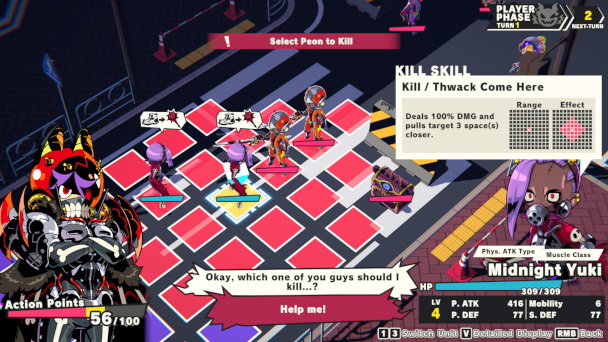
Undoubtedly, Demons’ Night Fever would explain those situations more clearly. Learning which investments actually improve your odd can be satisfying. However, deciphering the reason for an ineffective attack shouldn’t require so much guesswork. The allure of stats can feel tarnished if any enemy rejects some of your big numbers.
Battles take a substantial departure from SRPG tradition. You directly control Killshiro on the grid, while his Peons all act independently, leaving you to manage their usefulness through limited amounts of positioning and their abilities. Killshiro’s attacks are deliberately weak enough to goad you into relaying on your disposable Peons. As such, you’ll have to read battle-maps quite differently. With Night Fever, you’re assessing where the Peons have wandered, which enemy they can hurt, and how Killshiro can best exploit each situation. Swapping places with a subordinate provides a useful way to turn an inconvenient position into an opportunity, positioning your Peon for a sacrificial Kill Skill. As sadistically pleasurable as that is, managing uncooperative allies can become a chore.
PES? That’s a Familiar Acronym!
But there’s also some cool quirks in the Peon Exploitation System. Draining your Peon’s life can replenish Killshiro’s health, which is far more interesting than relying and maintaining an inventory of potions. Suddenly, the age-old instinct to preserve every one of your units is something you must occasionally shake off. Sacrificing a mortally wounded Peon seems counterintuitive. But having Killshiro deliver the killing blow lets that underling reincarnate and return stronger when recruited again. Let an enemy finish them off, however, and they’re lost permanently.
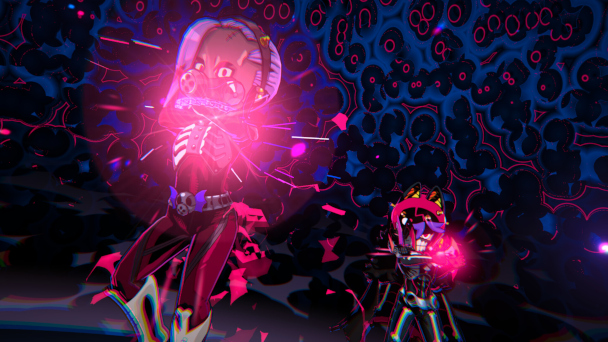
And yes, all of this wickedness is rendered in a very lovely way. Yes, Yuji Himukai’s art bares more than a passing resemblance to the work of longtime Disgaea contributor, Takehito Harada. There’s the expressive faces, bold silhouettes, and a tendency to bridge the cute and the grotesque that make each dialogue a treat. The soundtrack deserves similar praise, injecting some mischievous energy into your demonic antics. Best of all, the tracks connect the colorful visual style with the rather repugnant personalities. Where Disgaea’s soundtrack is rooted in its larger-than-life cast, Night Fever’s musical flavor is a bit darker and nastier.
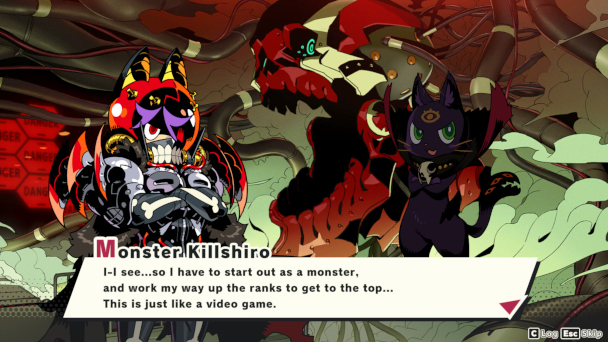
But as much as the game’s pleasing to the eyes and ears, there are a few glaring issues. Tutorials can stretch across multiple encounters yet there are still some facets of Night Fever that still feel under-explained. Worse, the English voice acting can border on amateurism. The opening narrator makes a particularly poor first impression, with an awkward delivery that saps momentum from the introduction. Elsewhere, stiff exchanges and peculiar emphasis undermine jokes that need confident timing. Sure, there’s room for some creative delivery. But far too often, it feels like the voice director was checked out rather than the game trying to seem unhinged.
Only an Shred of Humanity Beneath the Hostility
Disgaea’s appeal is rooted in its obsessive stat-improving grinds, completely ridiculous damage numbers, and, of course, the character interactions that bookend its battles. Demons’ Night Fever doesn’t inspire quite the same compulsion to squeeze every last point of potential out of your roster, and it’s hard not to feel that Niikawa and company were aiming for something more accessible. Its unusual combat system and demanding calendar offer their own pleasures, but they don’t quite capture the promise that one more round of grinding will turn an already powerful character into an unstoppable beast. Instead, Night Fever finds its identity in the sheer nastiness of its protagonist and the opportunities to make his underlings suffer for his benefit. If Disgaea revels in the absurdity of becoming impossibly powerful, Night Fever asks how much fun you can have being an absolute asshole.
Sure, that shift in priorities won’t work for everyone, especially when the combat has some ambiguities and the voice work can struggle to deliver a proper punchline. But that said, there’s something refreshing about a strategy RPG that makes being a terrible boss fun instead of a behavior that needs correcting. Killshiro is hardly the conventional lovable hero, and the game isn’t too interested in giving him a redemption arc; I appreciate that. For players who appreciate gallows humor, shameless misanthropy, and the occasional punchline at someone expense, Demons’ Night Fever is worth catching.
Demons’ Night Fever was played on PC with review code provided by the publisher.
Overview
GAMEPLAY - 70%
STORYTELLING - 75%
CONTENT - 70%
AESTHETICS - 65%
PERFORMANCE - 75%
VALUE - 65%
70%
GOOD
Demons’ Night Fever makes being an repulsive boss unexpectedly entertaining. Beyond the disposable underlings and demanding deadlines, there’s plenty of dark humor to be found. Some murky combat rules and awkward voice acting can damped the enjoyment, but there’s enough malicious fun to be had, in being bad.