Daemon X Machina: Titanic Scion review
Building on Steely Foundations with Light Role-Playing Elements

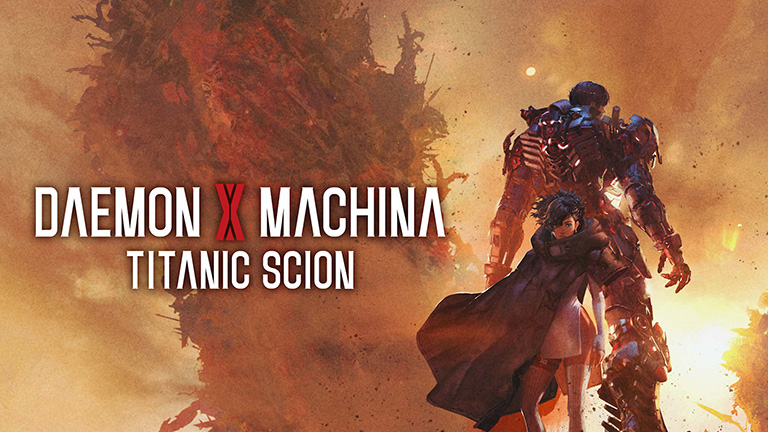
When Daemon X Machina released in 2019, it felt a bit like a long overdue homecoming. With a healthy amount of customization options, taut mechanized showdowns, and a difficulty that demanded proficiency, the title felt a bit like a spiritual successor to Armored Core, albeit with a stylized, anime-flavored visual style. Shrewdly, Daemon X Machina: Titanic Scion is an adept follow-up that attempts to create what worked with the original, while mending several of its predecessor’s shortcomings.
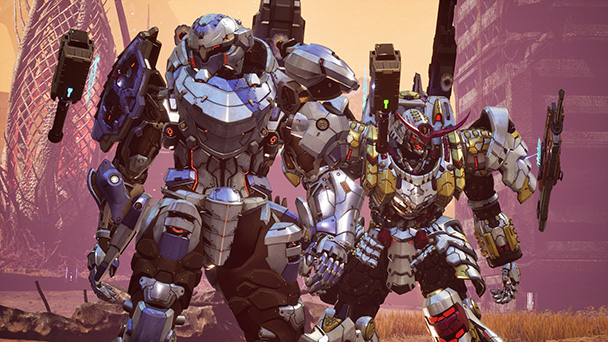
One of the most immediate changes lies is found in Shoji Kawamori’s powered armor design. Titanic Scion’s Arsenal suits are leaner and smaller, molded around the humanoids inside. Pleasingly, there’s more of a sense of weight as they move, while the strength of their offensive output hasn’t been diminished.
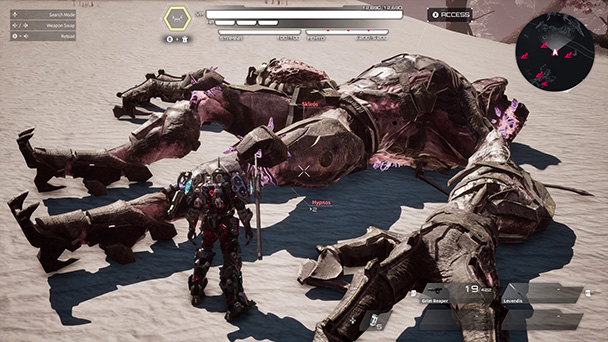
Best of all, there’s a skillful balance between style and believability, with the smaller silhouettes convincingly darting through the air and dashing across Titanic Scion’s open-world landscapes. And when the game suspends the mechanical skirmishes for a bit of exposition, the redesign allows us to see character faces. Sadly, their mugs don’t look nearly as polished as the mechs and look recycled from the first Daemon X Machina.
Forging a Stronger Arsenal
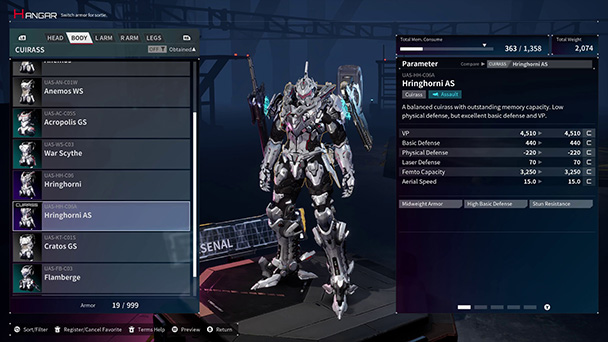
Naturally, customization is an indispensable part of any mechanized experience. Here, the team at Marvelous First Studio doubles down on the possibilities for tinkering and tweaking. Titanic Scion still tasks players to salvage weapons, armor, and items. but there’s little of the loot redundancy and ammo chasing that dragged down the first game.
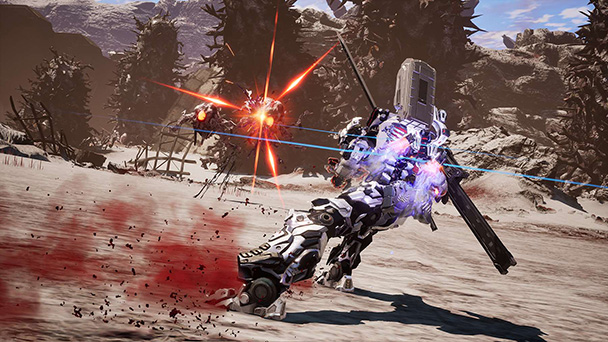
Now, new acquisitions provide a bit more gratification, whether it’s fine-tuning a shoulder mount or swapping arm modules to synergize with your other carrier gear. Even the cosmetic component got a welcome revamp. Now, paint jobs, decals, and transmogrification allow players to provide their Arsenals with personality, with the latter allowing for cohesive set of armor. Obviously, a video game will never replace the fulfillment found with Gunpla. But there’s a bit of bliss in building your own war machine. And unlike early Armored Core games, there’s much more room for experimentation.
A Ruthless Dance of Missiles, Bullets, and Blades
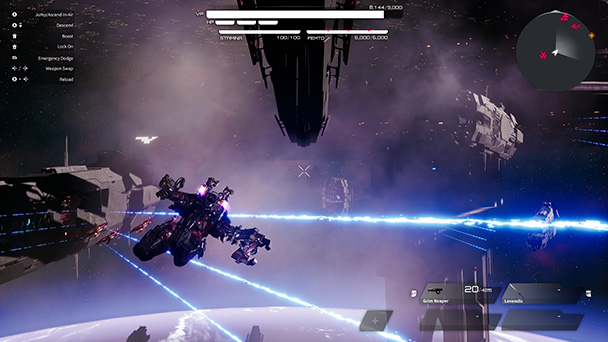
Combat difficulty is one area where the sequel stands firm. Battles are fast, chaotic, and habitually demanding, with even enemy subordinates working in unison to dish out damage. As someone who prefers ranged over melee weapons, I seized the advantage of Titanic Scion’s togglable lock on system, allowing for a volley of homing missiles or a shoulder-mounted bazooka to thin out enemy numbers. If you favor distance, you’ll probably still toggle the aim assistance off to target the explosives around some areas. Titanic Scion encourages you to scrutinize the environment and seize any tactical advantages, providing some compensation for those who lack razor-sharp reflexes.
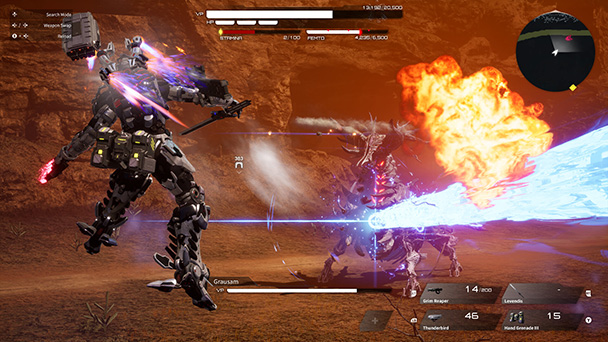
Although I’m hoping that a mechanized action game will provoke a melee weapon conversion, Scion wasn’t the title that indoctrinated me. Instead, I usually used arms like a massive tachi as a last-ditch maneuver when rushed by adversaries. But most of the time, I struggled to find the rhythm of close-quarter combat, pushing the method to the backdrop.
Titans That Tower, Terrify, and Occasionally Traumatize
Undoubtedly, boss battles were one of the highlights in the first Daemon X Machina. Titanic Scion escalates the sense of spectacle as you confront towering Titans. Once again, beating these gargantuan foes means finding their layers of weak points, utilizing the best armament for the job, and periodically seeking safety when they dispense hell-hot fury. Near the game’s midpoint, you get access to hulking Heavy Armors. Although they come with time restraints and preset loadouts, harnessing the ferocity of these machines can help balance with the difficulty of these showdowns.
Another thing I appreciated was Scion’s Particle Weapons which offer a trio of different assists. From automatically targeting and shoots enemies with the Assault Shift, the extra shielding provided by the Guard Shift, and the fast flight speeds found in the Wing Shift, each of these assists is powered by Femto. Like the first game, you’ll need to balance both your stamina and Femto levels during combat.
Daemon X Machina: Titanic Scion has substantial performance demands. As such, portable devices like the Steam Deck will have to use a mix of low and medium graphics settings alongside upscaling technologies such as TSR or DLSS to hit a staple 30 FPS output. While some sections of the game and smaller battles might reach 40 FPS, larger fights and multiplayer sessions can result in noticeable framerate drops below 30 fps. This is a marked contrast to the original Daemon X Machina, which consistently achieved 60 fps on the Steam Deck, thanks to lighter engine demands and more modest visuals.
Ambitions for Improved Storytelling are Mostly Realized
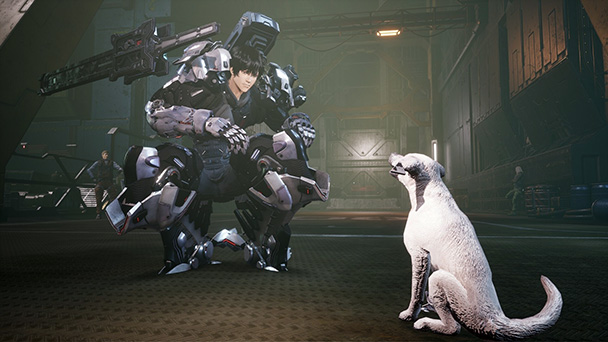
Dexterously, Daemon X Machina: Titanic Scion’s storytelling has shifted away from some of the text-based, visual novel-style conversations of the original game. Instead, expect fully voiced exchanges that keep pacing brisk and are in tune with a decent mecha anime. Sure, characters still fall neatly into familiar anime tropes, with everything from the seasoned veteran, the cocky rival, the shadowy organizations pulling the strings. And many plot beats can be spotted before they land. Yet there’s an undeniable charm in that predictability. Yes, it’s not nuanced storytelling, but it delivers a pulpy set-up that helps to carry the cast one battle to the next and even in a gladiatorial arena.
The narrative itself moves through a recognizable cycle of escalating threats, factional rivalries, and shifting allegiances, that’s dotted by a bit of posturing about power and control. Those who didn’t play the first Daemon X Machina may initially feel disoriented by references to past battles and lingering mysteries, especially since the prologue is essential a single screen of text. But Scion does provide enough context to keep newcomers from being completely lost. But unquestionably, the game could use better onboarding. Beyond a front-loaded succession of explanation screens and a few play mechanics that don’t receive elaboration, you’ll have to figure some things out for yourself.
Thrills in the Cockpit, Not the Driver’s Seat
Woefully, there are bigger missteps. Driving sequences have you steering ground-based vehicles attempt to inject some variety. But they are undeniable wonky, lacking the smooth responsiveness seen in Arsenal combat. As such they feel like an unpolished gimmick than an addition that adds anything to the experience. Undoubtedly, Daemon X Machina’s best moments are when you’re in the cockpit.
That said, when Titanic Scion sticks to its strengths, from mecha combat, build experimentation, and massive boss fight, it’s a thrill to play. Yes, the difficulty remains a high bar to clear with occasional spikes to keep players on their toes. But that’s part of Daemon X Machina identity and I wouldn’t want the game to be a pushover. Excitement is rooted in the narrow defeat of hulking, super-powered opponents.
A Steel-Hardened Success
Daemon X Machina: Titanic Scion might not win over players who didn’t like the game’s predecessor. But with refined mechanics and a worthwhile attempt at framing the action with a plotline that feels like an animated series, it’s a commendable evolution. Certainly, this title proves that the franchise has plenty of fuel left in its tanks and no shortage of Titans that need to be toppled.
Daemon X Machina: Titanic Scion was played on PC with review code provided by the publisher.
Overview
GAMEPLAY - 85%
STORYTELLING - 80%
CONTENT - 85%
AESTHETICS - 90%
ACCESSIBILITY - 80%
VALUE - 75%
83%
GOOD
Daemon X Machina: Titanic Scion sharpens its combat, deepens the customization, and amps up the spectacle of Titan battles, making it a stronger and sleeker sequel. While clunky driving segments and some onboarding missteps remain, the game thrives when it keeps you in the cockpit, balancing anime drama with thrilling mechanized showdowns.


I don’t know why you waste time reporting on SD performance. Real PC players have desktops that can handle this game without breaking a sweat.
Arsenals aren’t mecha, bro. They’re powered armor.