CONTROL Resonant review
An Aberrant Truth

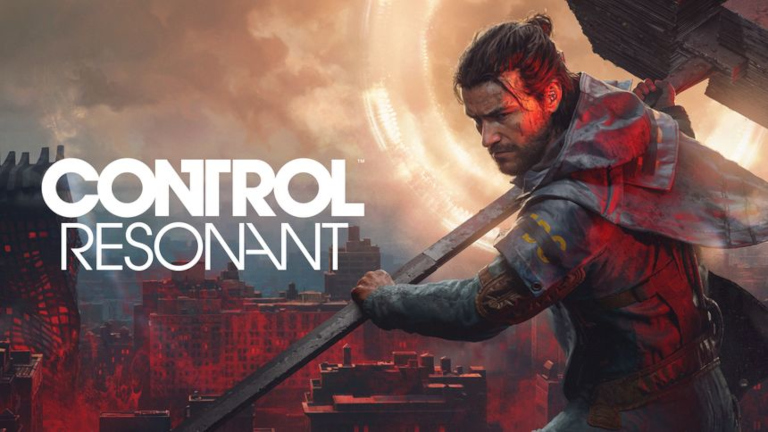
For three decades, Remedy Entertainment has understood the appeal of a firefight. Max Payne turned shooting into a Matrix-style showdown, as you dumped bullets into foes during slow-motion dives. Alan Wake made pulling the trigger the second part of a mechanic, after a flashlight had burned away any shielding. Quantum Break wrapped it’s gunplay inside time-manipulation powers, while Control let Jesse Faden alternate between launching office furniture and unloading her shape-shifting Service Weapon. Even when the studio changes genres, shooting has remained a defining mechanic.
And that makes CONTROL Resonant such an interesting gamble. Instead of handing another paranatural gun to Jesse, Remedy gives you control of her brother Dylan, who arrives with a shape-shifting melee weapon into his chest. Undoubtedly, the approach is ambitious and occasionally quite spectacular. But it also reveals just how skilled Remedy has become at building shooters, because the replacement never feels quite as satisfying.
Back to the Oldest House
After spending seven years in a coma, Dylan awakens, finding the Oldest House breached and Jesse missing. The Hiss and Mold have spread into Manhattan but they’re no longer the only threats. A new phenomenon called the Patterning is reorganizing reality based on some incomprehensible cosmic formula. The Federal Bureau of Control, which abducted Dylan as a child and subjected him to years of experimentation, now needs its former prisoner to save the city. And while introduction’s focus is on trippy visuals, there’s some palpable tension, especially if you’re familiar with CONTROL lore.
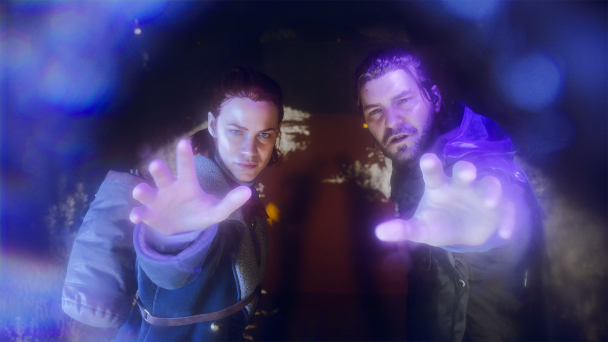
As a protagonist, Dylan is a remarkable replacement for Jesse. He carries with him the guilt of everything he did while controlled by the Hiss, along with the hatred for the Bureau that helped create him. Yet, the writing team also leave him affected by his long confinement. He can beat the shit out of a paranatural abomination but then struggle with human connection in the next cut-scene. Sean Durrie gives the contradictions human vulnerability, but he never quite commands a scene as well as Jesse.
Paranatural, New York
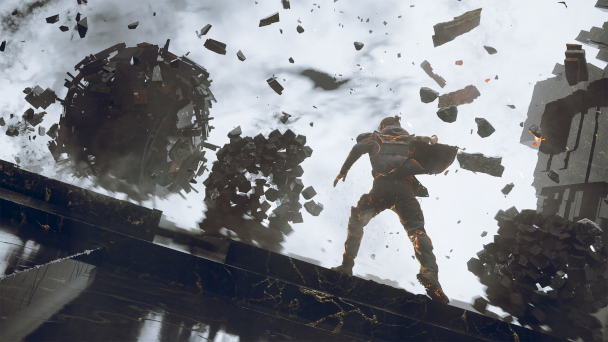
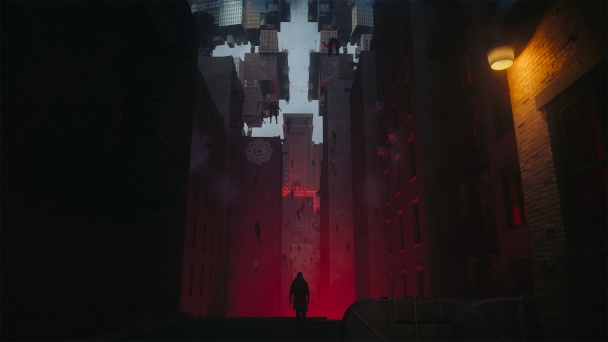
Where the first game confined its action to the Brutalist-looking corridors of the Oldest House, Resonant psychedelia spills out into the city. Here, roads climb up the sides of buildings with buses stuck on vertical pavement. Apartment blocks spiral into loops, while everything from traffic to wildlife and trapped civilians adhere to uncannily precise formations. One moment Resonant looks like a typical New York street after an emergency evacuation. But turn a corner and it looks like the world is seen through a kaleidoscope. The result is a feeling that something that doesn’t quite understand humanity has rearranged things. In an era where our world gets routinely mis-rendered by artificial intelligence, there’s something unnerving about Resonant.
Resonant build on the brand of nightmarish built in some of their previous efforts, stretching back to Max Payne’s interactive psychosis. Here, the developer mixes the mundane with the metaphysical. A place like an office building or apartment might look untouched. But soon, it can be bathed in deep crimson lighting or you’ll notice limp bodies dangling from the skyline. Layer citywide catastrophe and dreamlike floating sequences and Resonant frequently feels like a trip. That said, the studio can sustain the weirdness a bit too long at times, diminishing the sense of awe over time.
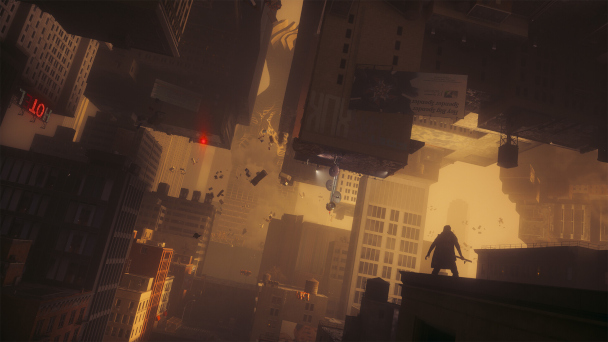
Instead of being an open sandbox, the city is divided into large, interconnected zones. Each has their own distinct personality, whether its rain-slick rooftops, inverted streets, to parks overwhelmed by blue mold. Dylan quickly gains a sprint, aerial dashes, hovering jumps, and can adjust to unusual gravitational field. And while many will focus on the fighting, Resonant doesn’t skimp on the platforming. Here, cross a gap, up a wall, and what used to be a ceiling feels unfamiliar and exhilarating. Unfortunately, the in-game map isn’t cut up for so much verticality while artificial barriers can prevent seemingly reasonable shortcuts. You can possess powers that reject gravity but still be thwarted by a fire escape that is disappointingly decorative.
Resonant’s looser structure does offer some opportunities for diversions. Redacted documents remain sarcastically bureaucratic, while side assignments preserve some of CONTROL’s ancillary activities. Deciphering a code or identifying an anomalous object can offer a welcome break from clearing another street of monstrosities. Some of the best missions bend presentation, scale, and perspective in a way that few studio’s dare. One late sequence shifts format in a way that might seem playful at first before becoming rather moving.
A New Object of Power
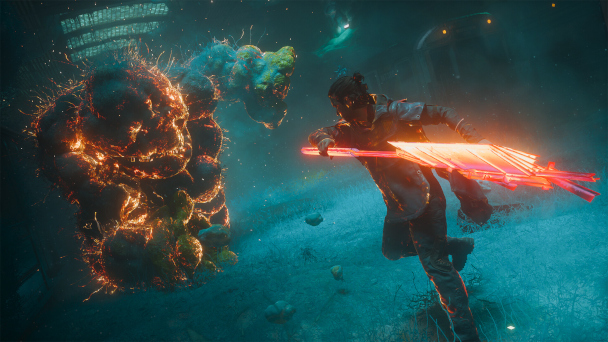
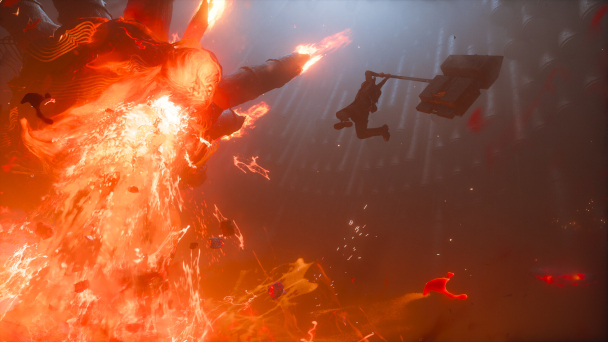
Dylan’s Aberrant can become dual blades, a hatchet, scythe, hammer, drill, and other less conventional instruments. You ‘ll select a form for light attacks, another for heavy strikes, and a third to finish a combo. Defeating the titular Resonants also extends paranatural abilities, including telekinetic projectiles, elemental effects, and summoned assistance. Skill trees and equipment bonuses goad you into specialization, while status combinations can ignite, poison, or otherwise weaken opponents.
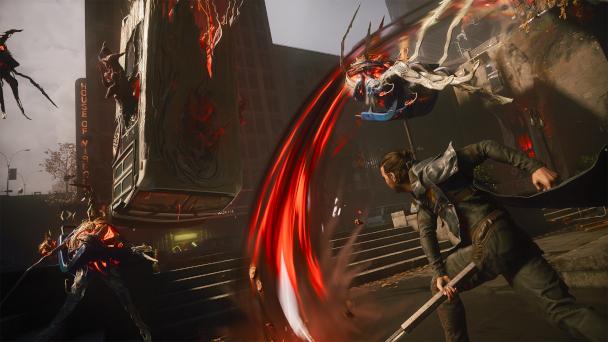
In theory, there’s plenty to try out. However, the melee-based encounters never quite reach the depth suggested by the game’s menus. Basic blows lack power against larger enemies, which encourages a recurring routine of staggering weaker creatures, executing them to collect bonuses like healing, and spending that fighting a heavy target. Perfect dodges add another boost, but there’s no parry to generate a driving defensive rhythm. Instead, encounters are built around relentless offense, although that philosophy becomes less useful when projectile-pumping enemies attack from off-screen while Dylan is caught in an animation.
Yet when everything gels, combat can be frantic fun. Dylan might air-dash toward one foe, driving it into the ground, hurl debris at another, before using his weapon to finish another adversary. Sporadically, inconsistent targeting can squander a power on the wrong foe, teleporting enemies can vanish during a charged swing, or another projectile will interrupt the combination. Inflated health bars compound the problem. As such, some encounters can become endurance tests in which spectacle is abundant but actual decision-making is scarce. But hey, I could lodge this complaint against
Although the original CONTROL wasn’t a very deep shooter, its different offensive elements complemented each other well. A shotgun-style blast took down a nearby threat, a precise Service Weapon form reached across the room, and Launch turned near any object into lobbed ammunition. Resonant retains much of that movement, yet melees pull Dylan toward a single target eliminating space and a lot of ranged options. While different weapon forms change speed, range, and stun ability, loadouts can’t be changed during a fight. Sure, the system eventually grows more elaborate, but it seldom becomes more engaging than CONTROL.
Combat Right Out of Gaming’s Golden Era
Oddly, there are moments when CONTROL Resonant feels like an action game from the PlayStation 2 era, which is not a criticism about the game’s technological qualities. Instead, it’s rooted in the way environments funnel Dylan into conspicuous arenas, lock him into waves of enemies, and then release him toward to solve a light environmental puzzle or to fight an oversized boss. New abilities open navigational possibilities, districts have strong visual designs, and secondary activities follow similar templates. As such, there’s the momentum of an older action-adventure, before every game needed crafting, survival mechanics, and roguelike elements.
But that kind of simplicity can be refreshing. Many older action games also knew that a succinct campaign could prevent a combat system from descending into tedium. Resonant is Remedy’s most expansive game, and its middle has just a bit more melee-driven combat than its campaign can support. Limited enemy variety becomes noticeable, just like many of the interchangeable rooftops, subway passages, and streets. Granular assistance options can reduce incoming damage, accelerate ability regeneration, or even enable one-hit kills, but leaning on them to hurry toward the next surreal set piece can siphon some of the enjoyment.
The PC version is easy to recommend based on technical grounds. Remedy’s Northlight engine still pumps out some amazing lighting, along with reflective surfaces, and abrupt environmental transformation. Even the lower presets still retain a impressive atmosphere, making this a far more scalable release than its ambitions might suggest. Support for upscaling and frame-generation options might just help justify the expensive of today’s GPU, but with a 100GB install, Resonant isn’t friendly to your SSDs.
Handheld performance is the notable exception. More powerful Windows portables can provide a reasonable experience with reduced settings, but Steam Deck performance habitually falls into the low twenties. The loss of responsiveness is particularly damaging in a game built around perfect dodges and aggressive movement, making Valve’s handheld a painful way to confront the Patterning.
CONTROL Resonant is a bit easier to admire than it is to love. The game transforms Manhattan into a odd fusion of apocalyptic horror and surreal beauty. While its carefully directed sequences demonstrate that Remedy remains one of the medium’s most imaginative studios. But for a game that spends so much time placing enemies within arm’s reach, the act of hitting them never becomes compelling enough.
CONTROL Resonant was played on PC with review code provided by the publisher.
Overview
GAMEPLAY - 80%
CONTROLS - 75%
CONTENT - 80%
AESTHETICS - 90%
PERFORMANCE - 85%
VALUE - 80%
82%
GOOD
Remedy deserves credit for refusing to produce the safest possible sequel. Unfortunately, replacing the Service Weapon also removes one of the studio’s time-tested strengths. CONTROL Resonant expands the original’s nightmares into an entire city. Yet its greatest mystery is why a developer so gifted at making gunplay so good settling for melee combat that mostly just adequate.



Was a big fan of the original Control. Does this one have DLC as well?