Clockwork Ambrosia review
Gun Tinkering Creativity in a Slow-Burning Metroidvania chatgpt

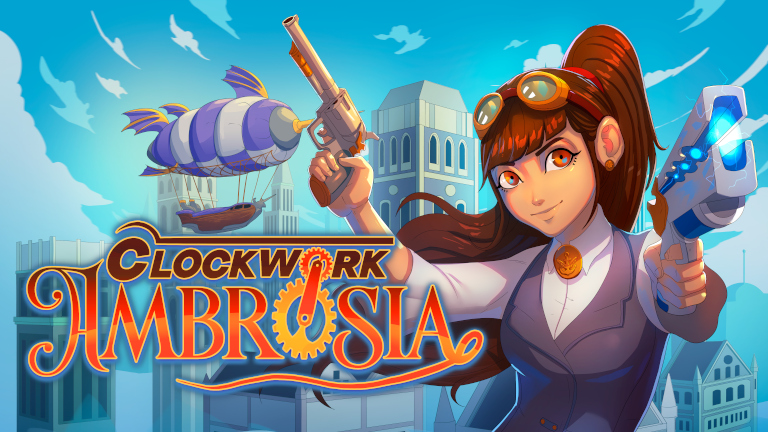
Ever since Gunstar Heroes provided players with the ability to combine two weapons into different shot types, it became clear that autonomy could elevate an action game. Clockwork Ambrosia, a steampunk metroidvania from solo developer Nathan Hiemenz (working as Realmsoft), is the culmination of a 14-year development journey. Freedom with firearms is at the core of Clockwork, resulting in a game with several stimulating ideas. But like the game’s own protracted production span, it takes some time for these ideas to fully ignite.
For better or worse, Hiemenz keeps the storytelling spare. Iris, an airship engineer-turned-pilot, is shot down by a mechanical dragon and crash-lands on the mysterious island of Aspida. Here, the human population has vanished and hostile robots have taken over. Interestingly, Iris is less the typical action hero, letting her weapon combos do a lot of the work when it comes to eliminating enemies. She’s fragile but packs a punch with her projectiles.
More Tinkering, Less Storytelling
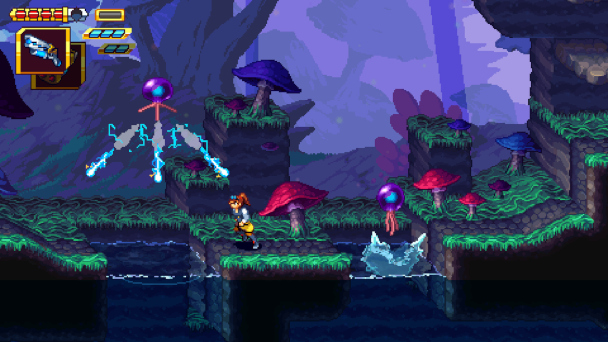
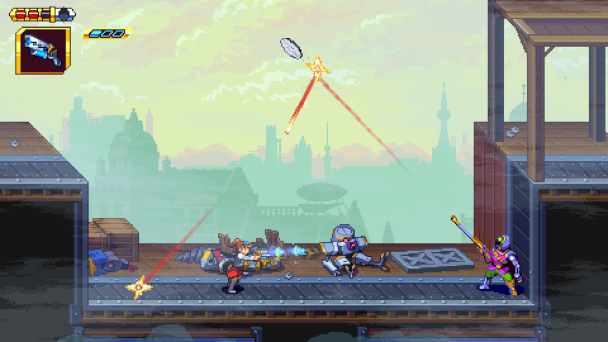
At the start, Clockwork hands you a Pulse Breaker pistol and lets you loose in a world that looks and feels like a lost Game Boy Advance cartridge. From the good-looking pixel art that resembles Capcom’s 2D side-scrolling efforts, to the solid animation and catchy chiptune soundtrack, the game is poised to produce pangs of nostalgia. Naturally, not everyone will appreciate the game’s retro leanings, but if you’re a fan of the 16/32-bit eras, there’s a lot to like aesthetically.
When it comes to weaponry, Iris can slot modifiers into each of four primary guns: the aforementioned Pulse Breaker, Missile Launcher, Revolver, and Grenade Launcher. Each can be fitted with up to six mods, which provide more than just simple stat improvements. Mods change how weapons actually behave, and many interact with each other in surprising ways.
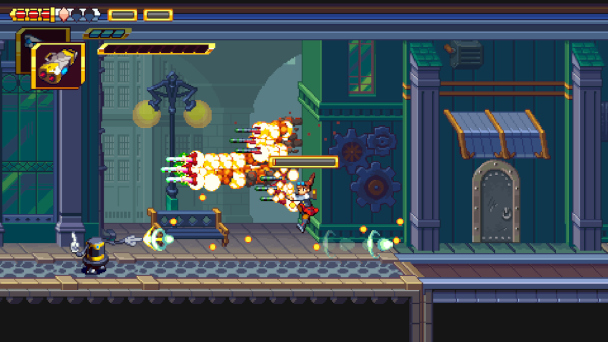
One mod might power up your shots but confiscate a round. If you scrutinize your arsenal, you might find a mod that provides bonus projectiles whenever one is skipped, creating some welcome shot synergy. Chain enough of these together and even your basic blaster becomes something potent. With more than 100 mods scattered across Aspida (and conveniently available from a vendor, too), there’s plenty of room for experimentation. And that kind of rule-based freedom is where Clockwork Ambrosia absolutely shines.
Unlimited Ammo, Mostly Unlimited Chaos
Of course, it helps that shooting foes is pretty satisfying. Iris can duck, jump, charge weapons, and later dash, and enemies have enough attack patterns to push you into using these moves and regularly changing up your loadouts. Pleasingly, you don’t have to worry about ammo. The unlimited supply means your quest isn’t interrupted by resource gathering, allowing you to focus on the sporadic gun-tuning breaks. Best of all, finding a new weapon configuration can feel exciting, especially when your new firearm decimates a horde of assaulting adversaries.
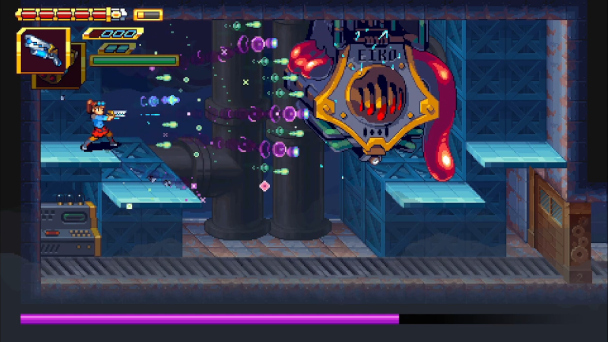
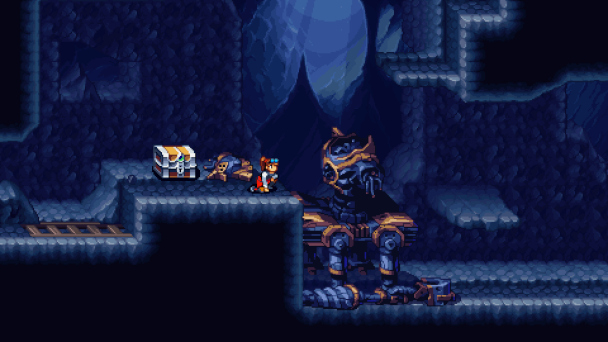
Expectedly, weapons are also your keys to the world, blasting open gated pathways. Abilities like dashing, wall jumping, and ceiling-traversal all give you access to previously sealed areas and all the relics hidden within. This cycle of shooting, exploring, and retooling your guns works well, especially across Aspida’s different types of environments, which include the de rigueur mines, forests, and underwater areas.
Locks, Boxes, and Blasting Through Rocks
Notably, Clockwork Ambrosia‘s exploration diverges from modern metroidvania convention. The adventure is more linear than most recent genre entries, with abilities opening up forward progression rather than opening the map in multiple directions. Realmsoft also keeps the exploration somewhat simple, with square-ish rooms on a gridded map rather than the crooked hallways and snaking chambers of some titles. As such, it’s easier to navigate without constantly checking your location. Whether that’s a strength or a limitation will probably depend on what you want from the genre.
That’s not the only contentious design decision. New mods arrive slowly enough throughout the early game that you might feel underpowered for a while. The weapons do eventually get a bit wild, but it takes a long time to get there, providing the kind of delayed gratification that might frustrate some. Other games get around this by giving you a taste of being overpowered before stripping it all away and making you regain it. I wish Clockwork did this. Instead, there’s a mildly stealthy section early on that slows things down.
Then there’s Iris herself: she’s pretty fragile. Even with some health upgrades bought from NPC vendors, a few mistakes can end a run. When you do die, you respawn in the general area where you died rather than at a distant save point, at least until your lives run out. On my run, most damage came from unexpected hazards rather than fights with non-boss enemies.
Flexible Steampunk Action That Largely Delivers
But these missteps don’t undermine Ambrosia’s ambitions much. Here’s a metroidvania that provides plenty of control over your weaponry, even offering some programming-lite rules to think about. In those moments where you get to experiment with weapons and feel a bit overpowered, Hiemenz’s 14-year-long effort shines.
Clockwork Ambrosia was played on PC with review code provided by the publisher
Overview
GAMEPLAY - 80%
CONTROLS - 65%
CONTENT - 75%
AESTHETICS - 75%
ACCESSIBILITY - 70%
VALUE - 75%
73%
GOOD
Clockwork Ambrosia might start slow, but once its weapon customization systems develop, the game becomes a satisfying metroidvania full of gun tinkering and rewarding experimentation. Its retro style and flexible combat system shine brightest when you’re turning ordinary firearms into wildly destructive creations.





The main image shows her dual-wielding. You can do that in the game, right?
Supposed to be 15-20 hours for anyone interested.