BLUE REFLECTION Quartet review

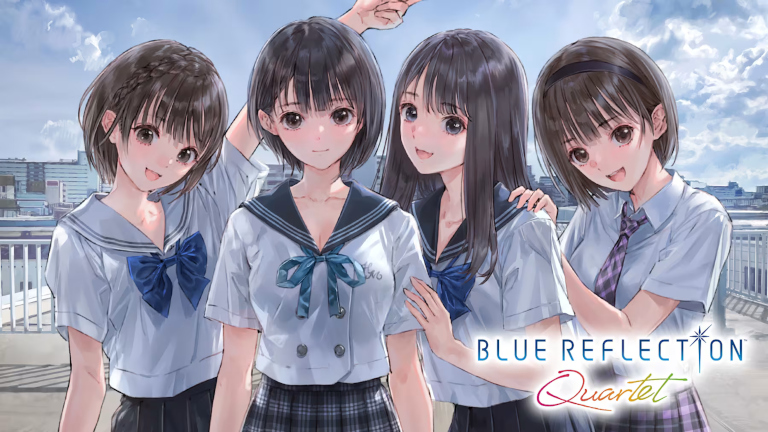
Few role-playing series have understood the magical girl genre as well as Gust’s Blue Reflection. Across its first two games, Gust proved that quiet conversations, emotional vulnerability, and genuine friendship could be just as captivating as dramatic transformations and spectacular battles. Naturally, those successes fueled Koei Tecmo’s ambitions and an anime and mobile title soon followed.
Yet while BLUE REFLECTION RAY and BLUE REFLECTION SUN pushed the property onto new mediums, neither captured the intimacy and emotional fragility that made the two mainline games so special. The release of BLUE REFLECTION Quartet bundles those four works readjusting the two non-console efforts. The result is a heartwarming reminder of why this BLUE REFLECTION resonated in the first place: not because its heroines can transform into magical warriors, but because their greatest strength is the compassion they show each other.
BLUE REFLECTION
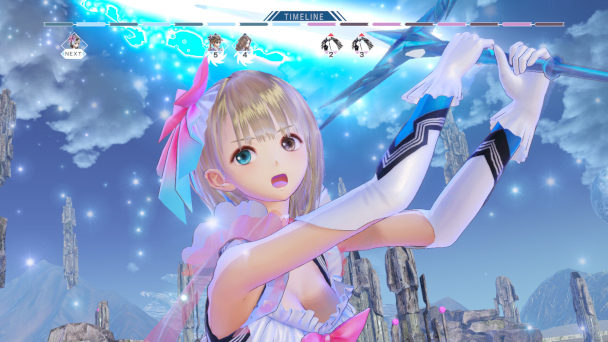
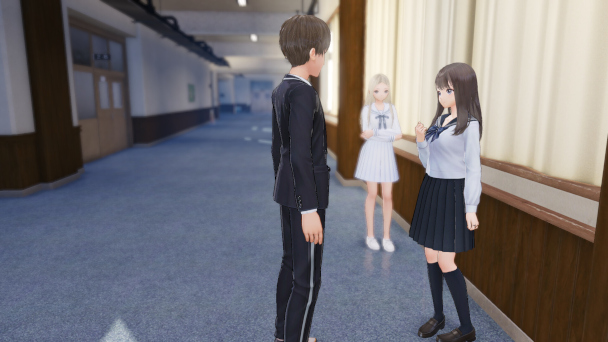
Gust’s experience with the Atelier series made the studio a natural fit for the magical girl genre, and 2017’s BLUE REFLECTION proved it. Rather than just focusing on spectacle, the game paired its transformation sequences and demon battles with a tender coming-of-age story. Ballet prodigy Hinako Shirai’s career-ending leg injury gives the adventure a melancholy undercurrent, making her powers as a Reflector feel more just as suited for confronting emotional trauma. For a genre that habitually flirts with wish fulfillment, that’s a welcome deviation.
Revisiting the game reveals some rushed exposition, but its blend of Sailor Moon-style heroics and intimate character drama remains exceptional. Days are spent exploring Hoshinomiya Girls’ High School, building friendships and helping classmates. These outward moments are counterblanced with excursions into the Common, a realm that shaped by each girl’s inner turmoil. Best of all, the game’s structure captures the episodic charm of a magical girl anime while emphasizing empathy over melodrama.
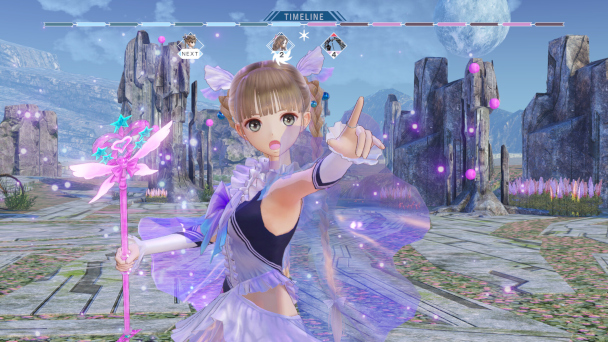
Combat’s timeline-based system is engaging without overshadowing the game’s relationships. Especially endearring are the expressive character animations, dreamlike environments, and the belief that magical girl stories are about healing people rather than defeating monsters. That emotional foundation became the blueprint for everything the series would attempt afterward.
BLUE REFLECTION: Second Light
BLUE REFLECTION may have been a modest commercial success, but its heartfelt take on the magical girl genre earned a passionate following, paving the way for 2021’s BLUE REFLECTION: Second Light. But rather than merely escalating the stakes, Gust doubles down on intimacy. Ao Hoshizaki awakens in a deserted summer school surrounded by endless water, where she and a growing group of girls with fragmented memories transform a lonely refuge into a genuine home. It’s an unusually serene setup, allowing the story to focus less on isolation and survival than on companionship, healing, and self-discovery.
That emphasis on relationships elevates Second Light above its predecessor. Seemingly inspired by the understated character work often associated with Kyoto Animation, the game often communicates through subtle glances, hesitant gestures, and quiet conversations rather than dramatic speeches. Hayato Asano’s wistful piano-driven soundtrack reinforces the contemplative mood, while each girl’s insecurities and memories unfold organically through everyday interactions instead of predictable character arcs. Few RPGs are as adept at making seemingly mundane moments feel emotionally significant.
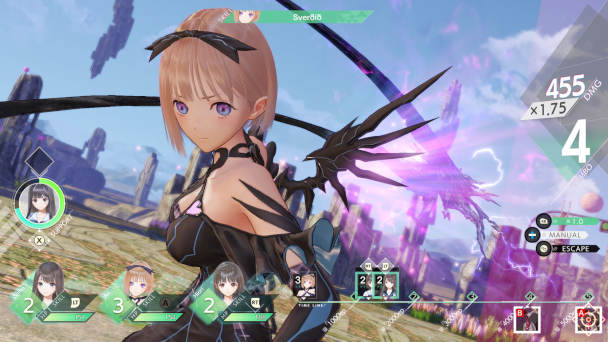
Outside those quieter scenes, Second Light expands on the original’s mechanics. Dungeon exploration is more rewarding, thanks to resource gathering and crafting, while combat deepens its timeline-based foundation with Ether management, powerful combo attacks, and satisfying Reflector transformations that reward careful planning over button mashing. Building facilities around the campus further strengthens the game’s central theme that people thrive through cooperation. By refining nearly every aspect of the original while preserving its emotional core, Second Light remains not only the high point of the series, but one of Gust’s finest role-playing games.
BLUE REFLECTION RAY
Unlike the games, BLUE REFLECTION RAY shifted its attention to an entirely new cast. The storyline follows outgoing and compassionate Hiori Hirahara, whose chance meeting with the shy Ruka Hanari awakens both girls as Reflectors. As with the game, that transformation allows them to enter the Common and confront the emotional baggage of others. Pleasingly, the series broadened its mythos in remarkable ways, with rival factions of magical girls and a conflict over whether painful emotions should be protected or erased outright. The original 24-episode anime devoted considerable time to developing its ensemble, allowing for a solid exploration of empathy, guilt, and emotional healing.
Unfortunately, BLUE REFLECTION Quartet condenses that entire narrative into an interactive recap that lasts about an hour. Rather than preserving the anime’s measured pacing and poignance, the adaptation races from one major event to the next. Essentially, it feels like the AI summary of a hefty tome that covers key events but lacks the texture and beauty. The result strips away the things that made RAY worthwhile: its intimate conversations, emotional sophistication, and measured character development.
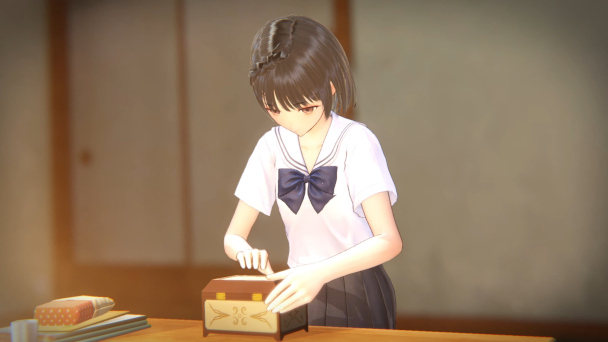
Making matters worse, the adaptation attempts to tell much of its summarization through the collection of scattered memory fragments. Unfortunately gathering recollections provide disjointed snippets that made it difficult to appreciate RAY’s larger narrative. For many, this will feel like busywork between abbreviated cutscenes. The one saving grace is the 3D character models that recreate the series’ designs. But they can’t really compensate for an adaptation that feels like more like a proof-of-concept than something that accompanies the mainline REFLECTION games.
BLUE REFLECTION SUN
If BLUE REFLECTION RAY struggled because it compressed too much, BLUE REFLECTION SUN stumbles for the opposite reason. Originally released as a free-to-play mobile and PC title, SUN expanded the universe with a new generation of Reflectors who faced the Ash, mysterious monsters born from emotional instability. The story introduced a male protagonist who served as the team’s leader while a large cast of magical girls battled these manifestations. Although the themes of overcoming trauma and supporting one another remained recognizable, SUN often felt more interested in steadily introducing new heroines than developing them like Gust did with Hinako or Ao.
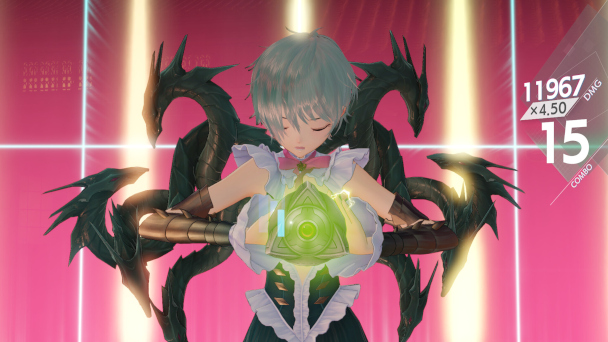
Expectedly, the game’s structure ‘reflect’-ed its live-service origins. Story chapters arrived episodically, delivering battles, character enhancement systems, and the steady drip-feed of daily objectives. While the writing occasionally flirted with Blue Reflection’s depictions of fragility, those moments were habitually interrupted by progression systems that prioritized long-term engagement. Unsurprisingly, BLUE REFLECTION just doesn’t fit cleanly into a gacha game framework.
BLUE REFLECTION Quartet wisely removes most of those live-service trappings, restructuring SUN into a rather concise campaign. Visually, the game replaces its original presentation with 3D character models. Of course, it’s only way to experience a game that disappeared when SUN’s servers were shutdown, allowing us to revisit a moment in BLUE REFLECTION history.
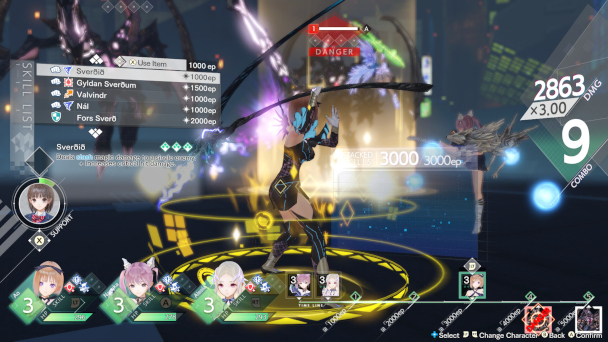
That said, the adaptation struggles to escape its origins. The narrative still carries the fragmented pacing of an episodic mobile game. Introductions and emotional-driven momentsare doled out in rapid succession. Like RAY’s recap, SUN is more of an archival curio than a satisfying standalone experience. Similarly, there’s the feeling that not enough time or resources were devoted into making this into a fully-realized component.
REFLECTIONS’ Gains and Loss
Quartetoffers several welcome quality-of-life improvements across its anthology. Character movement has been quickened, making exploration of Hoshinomiya Girls’ High School and Second Light’s campus less tedious. Menus have also been streamlined and transitions feel snappier. Sure, these aren’t transformative enhancements, but they smooth over a few of the rough edges that accompanied the original releases.
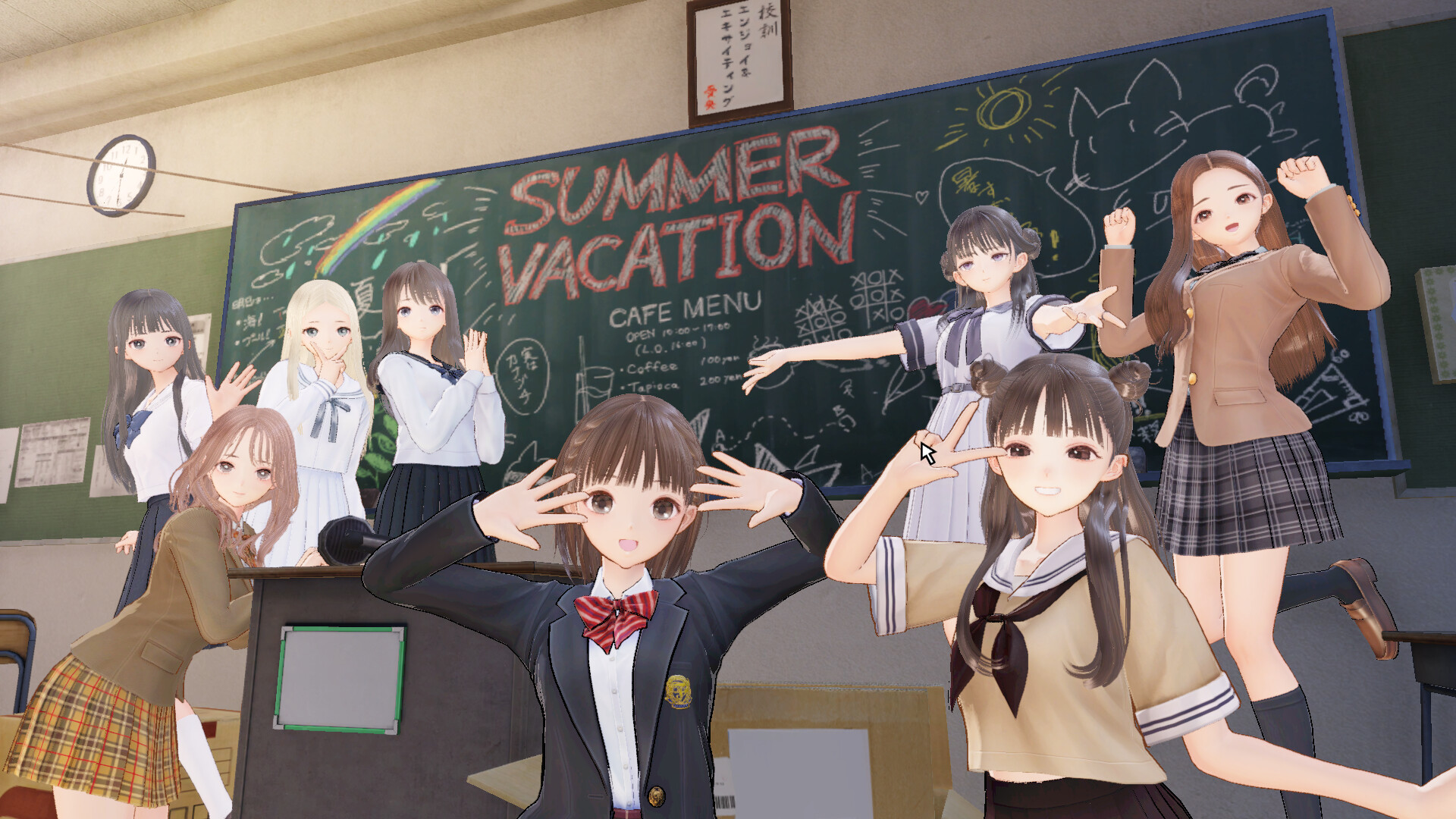
Unfortunately, a handful of questionable revisions accompany those conveniences. Several scenes involving bathing or wet clothes have been altered by adding excessive steam, opaque water, and removing clothing translucency. None of these moment were titillating to begin with and were used to convey vulnerability. As such, the edits undermine the script and feel out of step with a series built on emotional honesty.
Even with those frustrations, BLUE REFLECTION Quartet preserves the best parts of Gust’s magical girl saga. The original two role-playing games provide some of game’s best explorations of friendship, vulnerability, and healing. Meanwhile the RAY and SUN revisions’ offer an easy way to revisit the franchise’s rather second-rate spin-offs. In an era where publishers are increasingly willing to let spin-offs and online-only titles disappear, there’s something admirable about assembling an entire saga into a single package. Come for the two mainline games and considers the rest of the bundle interesting but flawed ancillaries. As Hinako Shirai would reminds us, our flaws can be our strengths.
BLUE REFLECTION Quartet was played on Switch 2 with review code provided by the publisher.
Overview
GAMEPLAY - 80%
CONTROLS - 75%
CONTENT - 85%
AESTHETICS - 80%
PERFORMANCE - 70%
VALUE - 85%
79%
GOOD
BLUE REFLECTION Quartet is at its best when it reminds you why Gust's magical girl RPGs earned such a devoted following. While the revised versions of RAY and SUN still contain compromises and some superfluous self-censorship is present, this is the most complete way to experience the Blue Reflection saga.




I was kind of hopeful they’d fix Ray and Sun. How do all the games run on Steam Deck?