Bad End Theater review
A Complex Tapestry of Subjective Truths

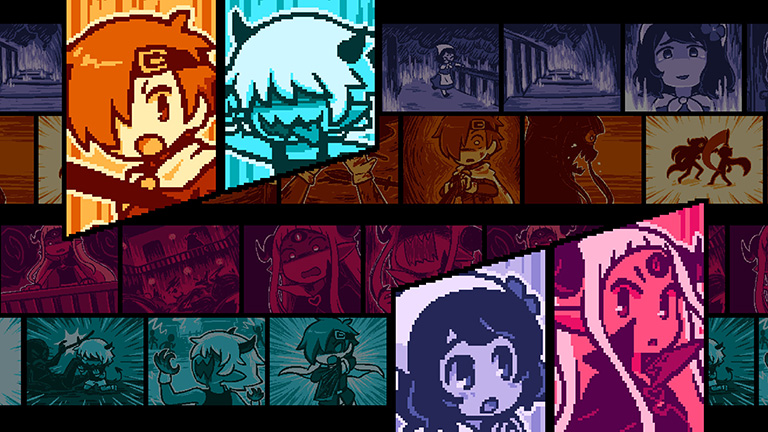
With its dark humor, intricate branching plotlines, and a structure that rewards curiosity, Bad End Theater isn’t your typical visual novel. As the title implies, NomnomNami’s game invites players to explore a web of tragic outcomes, each based on the choices made by its four lead characters. Bad End’s cumulative playtime is relatively short, typically lasting about two hours, while its individual plot threads might last a few minutes. Despite this succinct approach, the game’s impact is potent. There’s a good chance you’ll reflect on Theater’s capricious cast after the final curtain falls.
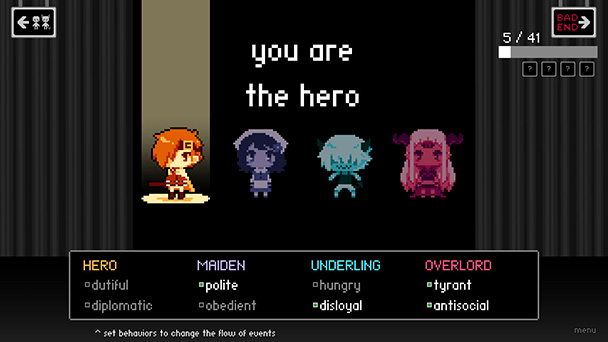
At its core, Bad End Theater is a puzzle pack of unfortunate stories. No matter which protagonist you select, either the Hero, Maiden, Underling, or Overlord, your decisions seem to inevitably push you toward an unsatisfying conclusion. In the realm of visual novels, these are referred to as bad ends, and you’ll witness everything from a dreadful death to finales that counter fairy tale tropes. Undoubtedly, witnessing a murderous warrior facing the repercussions of his bloodlust makes for compelling drama.
A Hero’s Quest, a Maiden’s Journey
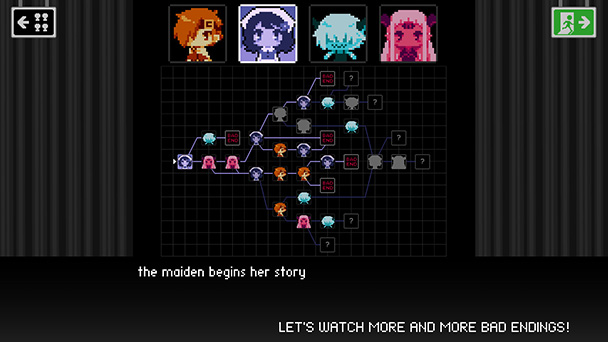
But Bad End’s biggest strength is how each person’s fate is intertwined with the other characters. Your choices made in one storyline can affect the possibilities in another story thread. As such, the game is more than just a passive visual novel. Theater is more of an interactive mystery where you’ll experiment to see all 40+ possible outcomes. Some might view the game as a simulation for the ripple effect, an exploration of agency, or even a deep-rooted need for closure. Likely, after getting a ‘Bad End’, you’ll quickly jump back in to see if a single altered decision can help elude misfortune.
I expect my fellow cinephiles to draw a comparison to Akira Kurosawa’s classic film, Rashomon. Both works are structured around the multiple perspectives surrounding a single event. Here, each viewpoint reveals new truths, contradictions, altering how you feel about each character. In Rashomon, the conflicting testimonies of a bandit, a samurai’s wife, the samurai’s ghost, and a woodcutter, explore subjectivity and shirk any kind of objective truth. Likewise, when Bad End Theater revisits key events, your perspective will likely undergo drastic shifts. As such, it’s easy to see how intentions can be misunderstood or even corrupted.
Where Whimsy Meets Darkness
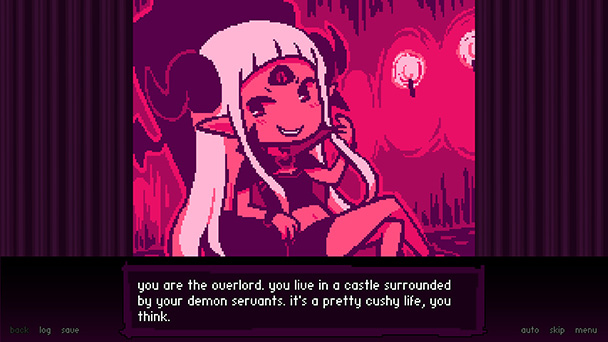
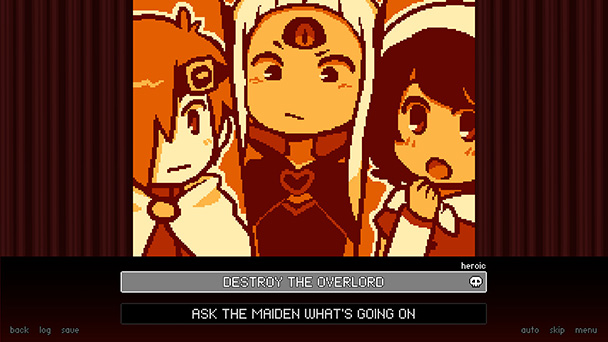
Bad End Theater’s aesthetics are commendable, using an appealing visual style to depict the game’s sporadically dark subject matter. The title’s hand-drawn character sprites are reliably expressive and rendered in pastel colors that contrast against the grisly fates awaiting them. Meanwhile, the chiptune soundtrack delivers playful melodies that are also juxtaposed with the Grimm Brother-styled violence. But despite the game’s dark atmosphere, there’s no realistic gore. Largely, the carnage looks rather cartoonish.
Although Bad End Theater concept is commendable, a few blemishes might bother players. One of the more notable issues is that it can be frustrating to figure out the specific character traits or choices needed to unlock certain endings. An addition or change to the storyline routinely signals which character players should switch to. But occasionally, revealing the game’s different character traits or unlocking endings can rely on trial and error. On the upside, there’s a flowchart system that tracks your progress and choices. However, it’s a read-only diagram, so you can’t jump to specific scenes or adjust character variables on the fly. That said, Theater’s interface allows you to quickly jump to the next in-game decision, so you’re not forced to re-read sections of exposition.
Of Loyalty, Leadership, and a Starring Role
Bad End Theater is a concise but creative visual novel that challenges you with unraveling a web of interconnected tragedies. With its use of multiple perspectives and striking art style, it’s a unique experience that should absorb visual novel aficionados. With protagonists that gradually reveal more of their motivations, Theater is a reminder of the complexities rooted in human (as well as demon) interaction.
Overview
STORY - 90%
INTERFACE - 75%
AESTHETICS - 80%
ACCESSIBILITY - 80%
VALUE - 75%
80%
VERY GOOD
Bad End Theater blends tragedy with a twisted puzzle, as you piece together doomed outcomes across four interconnected stories. Short but sharp, there’s just enough moral murkiness in this Rashomon-style dark fairy tale.


3 hours for $10 bucks is kinda steep.
Such a great game. Everyone needs to play it.
Agreed. Loved it and I’m not the biggest visual novel fan.