Asdivine Knot review
Faith, Fury, and Some Frequent Flyer Miles

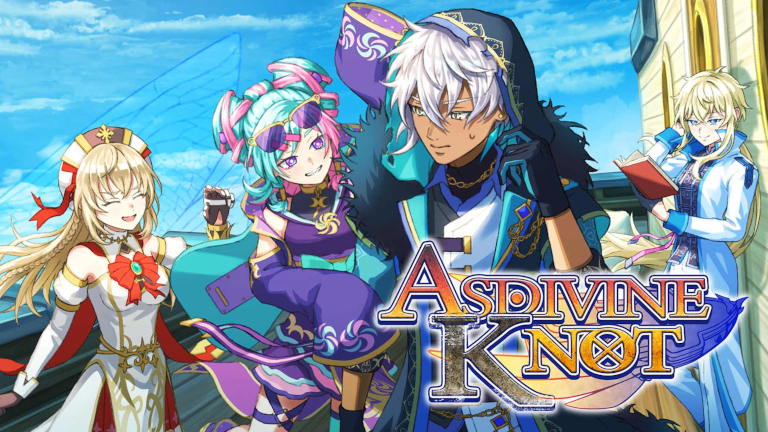
Unlike Asdivine Hearts’ rubix or Asdivine Kamura’s harbinger system, Asdivine Knot doesn’t deliver a distinctive hook right away. Here, developer EXE-CREATE assembles many of the familiar KEMCO ingredients. There’s brisk, turn-based battles, of course, alongside relationship-dependent endings, and a party obsessed with teasing its brooding lead. As such, the game relies on the Nexus Gauge to inject some tension into combat while a customizable airship provides motivation for the gathering and crafting.
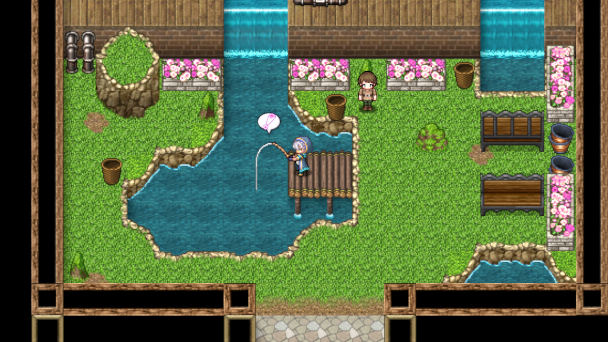
Of course, the familiarity is hard to ignore. Towns, dungeons, character portraits, and battle screens all resemble EXE-CREATE’s other recent RPGs. The result is that Asdivine Knot feel less like a new game and more remix of the seven previous titles in the franchise. Nevertheless, Knot demonstrates why this blueprint has endured. This is approachable role-playing, fueled by enough progression systems and conveniences to make two-dimensional dungeon crawling interesting.
So Long Beliefs, Hello Rebellion
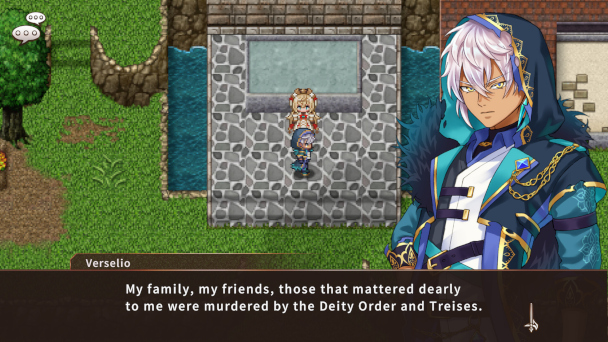
Knot begins on a surprisingly melancholic note. Verselio was raised to serve Treises, the deity tasked with protecting the world of Asdivine. As a cleric, he was responsible for carrying out the sacrifices Treises demanded, and the ritual eventually claimed people close to him. When he uncovers evidence that the faith he performed those sacrifices in service of is rooted in deception, he’s consumed by guilt and fury. Rather than continue serving a lie, Verselio flees his post and starts a rebellion aimed at bringing down Treises and the whole religious order.
While KEMCO’s prolific output isn’t often praised for its plotlines, Asdivine Knot is definitely a cut above many of their previous efforts. The setup is especially fertile, tackling everything from religious indoctrination, institutional power, and even the basic human need to believe in something. Best of all, Verselio’s companions all embody intriguing concepts as well. Marlie is a healer shaped by grief tied to the loss of her village, while Rhys is a vigilante chief leading her own coalition against the Order. Then there’s the regrettably named Musika, who brings rock energy to an otherwise pretty conventional fantasy setting.
The Sacred and the Silly
Sadly, Asdivine Knot doesn’t always make good on its content. Serious conversations can be interrupted by harem jokes, while characters rarely are allowed to show more personality than their single, defining trait. This is a game about finding that your belief system was rooted in deception and manipulation and that you were forced to kill innocents. But Knot often seems afraid to confront this issue directly, using humor as a coping mechanism. It almost feels like a writer came up with a deep and dark scenario, before another executive shoehorned in gags to keep it light. Since it’s an Asdivine game, you can at least look forward to relational-dependent endings which help offset the tonal whiplash.
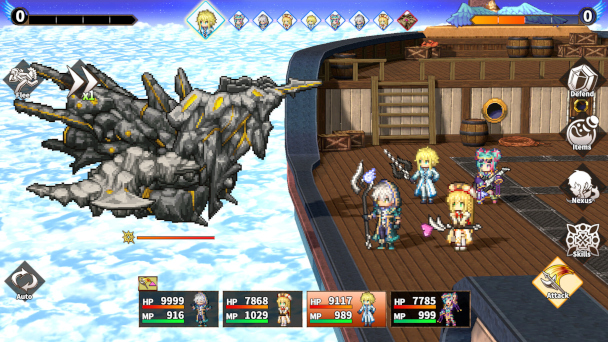
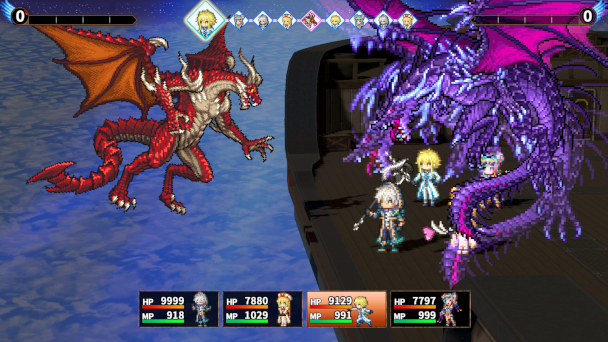
Knot’s combat uses a turn-based, side-view system where order is largely determined by speed. Standard attacks, elemental magic, buffs, debuffs, status ailments, and strikes than can hit multiple targets offer a familiar foundation. Here, elemental weaknesses matter, but manipulating speed and prioritizing certain opponents if often the key to success. On Normal difficulty, a party built around quickness and ready with status effects can make boss battles quite manageable.
Musika Brings the Jams
The one defining mechanic is the Nexus Gauge, which gradually fills as turns pass, allowing party members to spend portions of it on a unique Nexus Skill. This creates the occasional quandary to an otherwise straightforward approach to combat, where you can let the CPU auto-battle. You can use the meter for an immediate healing or defense now, bank some for an aggressive group attack, or save all five bars for a mighty Divine Nexus summon.
Musika’s Gig is the most interesting variation of these assault, since it provides a party-wide effect and changes the music to songs from previous Asdivine games. Naturally, I spammed it way too much. Sure, Nexus Skills and summons don’t reinvent turn-based combat, but they inject a bit of tension and the occasional reversal during boss fights. That said, conventional combat can grow repetitive. Conveniences likes multiple difficulty settings, battle-speed controls, optional animation removal, and adjustable random encounters try to help, but they all feel like band-aids on a serious wound.
Rank, Reset, Repeat
Expectedly, Knot’s character building isn’t too complicated. Party members all fill a recognizable role, while equipment, elemental rings, stat-enhancing seeds, and crafted parts allow for optimization. Elemental rings provide access to different schools of magic, giving a physical attacker the capacity for healing allowing multiple characters to exploit the same weakness. A bit of exploration can reveal permanent party bonuses that also apply to later recruits.
Leveling is connected to a rank system. Reaching level 50 raises the character’s rank, returning them to level one, while increasing their strength, and opening up additional abilities. Best of all, it gives the gratification of watching number rise. But the downside is that higher ranks and strong equipment can remove any strategy from basic encounters.
However, Knot’s lingering mobile-game economy is a rather unwelcome facet. Dyadlith earned through play can purchase robust weapons and permanent bonuses, making the campaign completable without additional spending. But the presence of separate XP, SP, and damage DLC signals that progress is artificially padded. That’s acceptable for a free-to-play mobile game, but vexing for a twenty-dollar one.
Home Is Where the Hangar Is
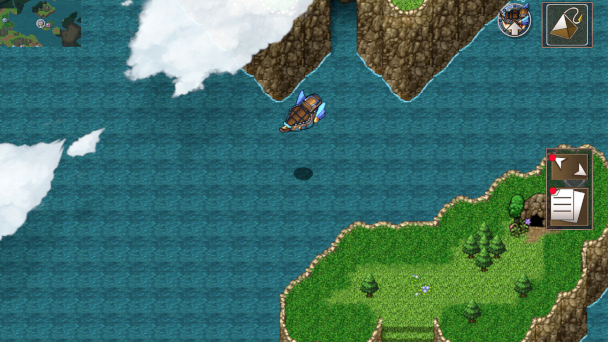
One of Asdivine Knot’s more remarkable features is the Whirlwind, which serves as a flying home for your home. Initially unable to become airborne, the vessel is a transport, workshop, and recruitment center. Restoring the Knot opens new regions, while turning empty spaces into 21 different type of rooms is engaging, especially when your efforts unlock new play systems. Best of all, it’s not just a cosmetic undertaking. Some rooms also require specific crew members and some spatial planning is required to maximize the potential for your versatile airship.
No, Asdivine Knot isn’t going to sway anyone who has grown weary of EXE-CREATE’s production-line approach to RPGs. Combat is easily broken, its visuals feel familiar, and the story habitually chickens out on being serious. That said, its combat is good looking and there’s just enough character development to drive progression. If KEMCO ever drops their monetization practice, their approach just might make a few role-playing fans into believers.
Asdivine Knot was played on PC with review code provided by the publisher.
Overview
GAMEPLAY - 70%
STORY - 75%
CONTENT - 70%
AESTHETICS - 60%
PERFORMANCE - 65%
VALUE - 70%
68%
OK
Look, Asdivine Knot isn’t going to convert anyone already tired of KEMCO’s familiar JRPG formula, but its crisis-of-faith story, Nexus Gauge, and customizable airship give the adventure more personality than you might expect. Combat eventually becomes easy and the mobile-style monetization is still annoying, but there’s enough charm and progression here to keep the faithful entertained.




KEMCO makes pure JRPG slop.