Marisa of Liartop Mountain review
Goodbye Bullet-hell, Hello Banter


Many games feel like polished products intended to be consumed by mainstream audiences. But some of the most endearing efforts channel the spirit of communal storytelling with a group of buddies. Codevelopers Alliance Arts (The Great Villainess: Strategy of Lily) and UnknownX’s (Touhou Danmaku Kagura: Phantasia Lost) Marisa of Liartop Mountain undoubtedly falls into the latter group.
While that last statement might seem like the start of a string of criticisms, Liartop Mountain manages to capture the improvisational energy of a tabletop gaming session with a group of friends. There are dozens of titles that deliver refined role-playing experiences. But Liartop Mountain’s charm stems from its deliberately scruffy approach. Instead of a tidy script, the game pushes you into situations where you’ll need to adlib, adapt, and deal with dice rolls. The best part? Running commentary from the Touhou gals. Their remarks even help hide some of the game’s faults.
A Tabletop Twist on Gensokyo
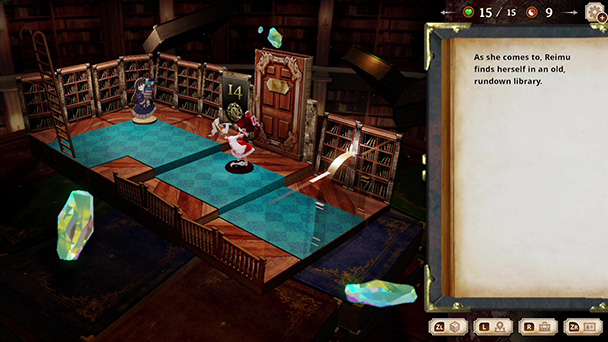
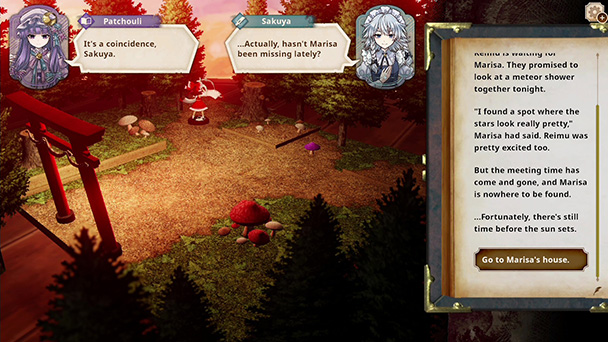
The game’s story follows Touhou’s optimistic shrine maiden Reimu Hakurei journeying to the to find her friend Marisa. This trek up the game’s eponymous mountain is presented as a board game, complete with miniature figurines, diorama-style backdrops, and fanciful dice.
Sure, the setup is pretty thin. But that’s the intention, allowing the interplay between observers Remilia, Flandre, Sakuya, and Patchouli to steal the spotlight. Not only is their banter often comical, but it also offers Reimu the occasional reprieve, providing stat-boost gifts. But most importantly, it solves the key problem with single-player role-playing games: you don’t feel secluded. At its best, Liartop Mountain surrounds you with playful personalities, making it feel like you were invited to board game night at the Scarlet Mansion.
Rolling in the Deep
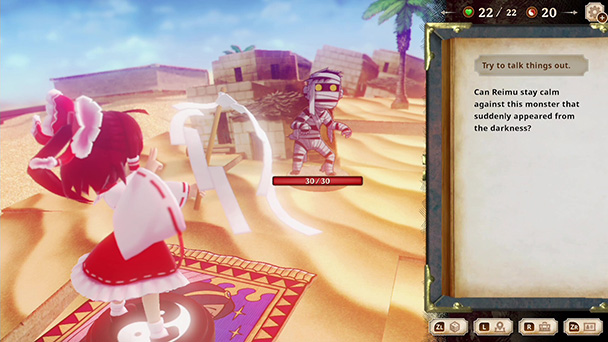
Combat and exploration in Liartop Mountain blend visual novel storytelling, lightweight dungeon crawling, and tabletop-style dice rolls. Fascinatingly, progress is rarely a straight path. Instead, encounters provide branching scenarios where stats, decisions, and rolls all carry equal weight. Yet, a failed roll doesn’t simply shut down your progress. It pushes the story sideways, forcing you to rethink strategies and embrace the comedic chaos that ensues.
As such, the game’s less about conventional min-maxing and more about experimentation. Reimu begins with six equippable dice slots, and these aren’t just generic six-sided cubes. Some favor higher numbers, others have identical faces, and some have internal low values.
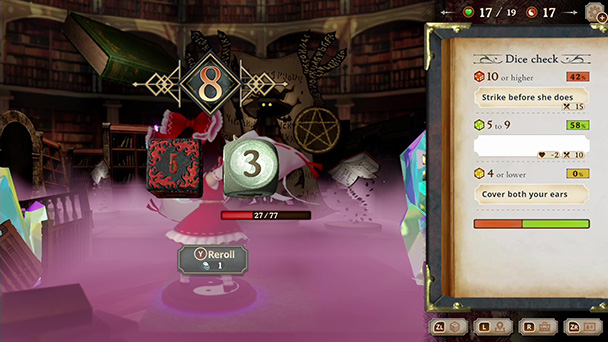
Battles revolve around rolling two dice to hit a target number for attacks or defenses, with success probabilities displayed in advance to help inform your decisions. As the game advances, enemies add complications by imposing roll restrictions, forcing you to rethink tactics and preventing the combat from becoming stale.
Bending the Odds with Cheat Points
Meanwhile, Cheat Points (or CP) act as a safety net against unlucky dice rolls, letting you bend the odds when the RNG isn’t in your favor. You earn them gradually through play, and each point can be spent to reroll a die or boost the result, giving you more control during both board events and combat encounters.
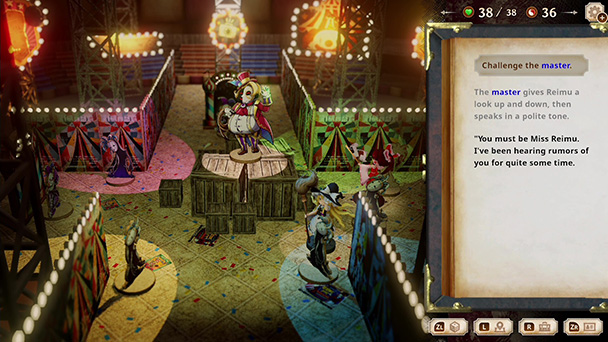
Because Cheat Points are limited, deciding when to use them becomes a strategic choice. This resource system ensures that while dice rolling drives the game, players aren’t completely at the mercy of chance. That said, there’s a definite dependance on luck. If that bothers you, you might want to seek out a more conventional title.
Backtracking becomes a recurring theme as the climb up Liartop Mountain plays out, and it’s here that the game risks tripping over its own playful looseness. Certain encounters, particularly the mid-tier battles and dialogue-driven events, reappear often enough that they begin to feel recycled rather than improvisational. As such, prepare for your patience to be tested when the same goblin ambush or narrative beat pops up for the fourth time within an hour.
A Campaign That Laughs with You and Occasionally, at You
Fortunately, the lively commentary from the Scarlet Mansion crew softens the impact of repetition, turning at least some of these retreads into opportunities for fresh punchlines rather than a tedious grind. Ultimately, your enjoyment will hinge upon how much tolerance you have for a campaign that occasionally chases its own tail.
Marisa of Liartop Mountain won’t be for everyone, but that’s part of its charm. A reliance on dice rolls and backtracking means that it doesn’t feel like a finely tuned RPG. But those blemishes are also what makes it feel distinct. Instead, the game fully embraces unpredictability, letting group banter transform what could have been tediousness into moments of laughter and surprise. If you’re the kind of player you can embrace that kind of unruliness, Liartop Mountain captures the feeling of sitting around the table with a group of boisterous friends, which is something that single-player titles often struggle with.
Marisa of Liartop Mountain was played on PC with review code provided by the publisher.
Overview
GAMEPLAY - 75%
CONTROLS - 70%
CONTENT - 70%
AESTHETICS - 75%
ACCESSIBILITY - 75%
VALUE - 80%
74%
GOOD
Marisa of Liartop Mountain trades bullet-hell precision for dice-driven chaos, turning Touhou into an energetic tabletop session with roguish friends. It’s unpredictable, and sometimes repetitive, but the Scarlet Mansion’s banter helps to keep the climb entertaining even when the dice rolls stop you in your tracks.




Looks like its been out for a week and I didn’t even notice. So many games are coming out now that anything that isn’t AAA doesn’t get reviewed. I miss the old days.