Irem Collection Volume 3 review
A Decent Collection That Lacks Proper Curation

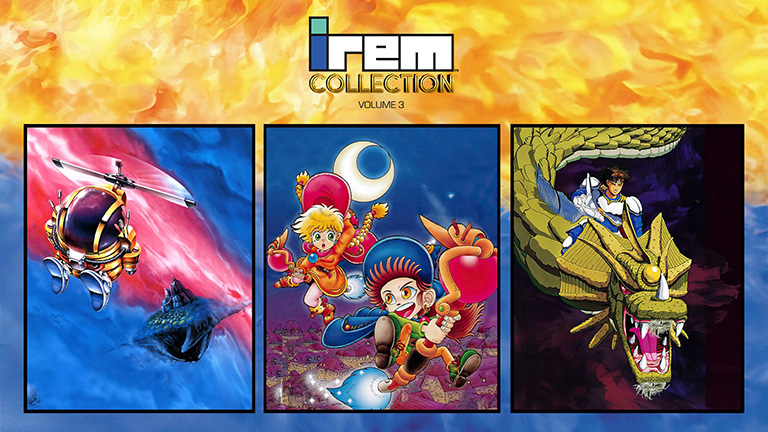
The third entry of the Irem Collection once again reaches into the company’s back-catalog with a trio of arcade-era titles. Sure, Chiyoda-based Irem Software Engineering might be best known for their R-Type series. But these ongoing anthologies highlight some of Irem’s lesser known, yet commendable efforts.
Although the gameplay found in this compilation rekindles the retro charms of these not-quite-classics, the collection stumbles when it comes to context. These are titles that deserve curation, and the lack of things like developer notes, marketing materials, and interviews remains an issue for Volume 3. For a project that’s undoubtedly aimed at retro enthusiasts, the absence of any extras feels frustrating, especially when measured against works like Atari 50: The Anniversary Celebration and The Making of Karateka.
A Capable, Little Copter
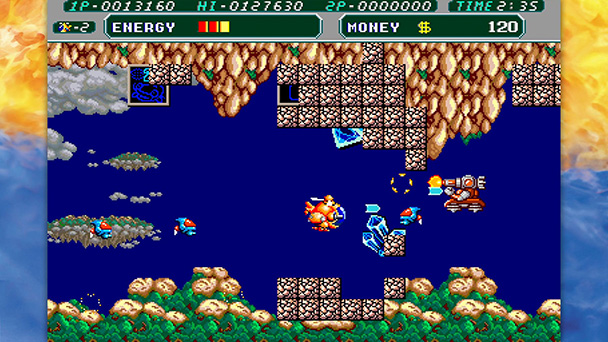
1987’s Mr. Heli no Daibouken (known as Battle Chopper in North America) is a whimsical blend of shoot-‘em-up action and exploration. Released in arcades and later ported to home consoles, Mr. Heli was Irem’s attempt to deliver a lighter, more whimsical alternative in an era where somber sci-fi shooters were abundant.
Here, players control a rotund little copter that defends itself with both horizontally-confined munitions as well as bullets and bombs that chip away at breakable blocks. Within many of these chunks are crystals that can be used to purchase indispensable power-ups. Undoubtedly, the tension between fighting off swarms of enemies and saving enough crystals for indispensable perks remains engaging nearly four decades on. In addition to the Japanese and North American arcade versions, Volume 3 also includes Mr. Heli’s Great Adventure, the PC Engine port. Save for a weaker soundtrack, it’s an astonishingly adept adaptation that showcases the capabilities of NEC’s console.
Riding the Sky Snake
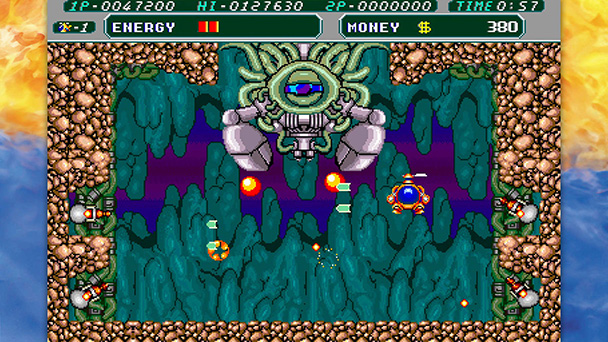
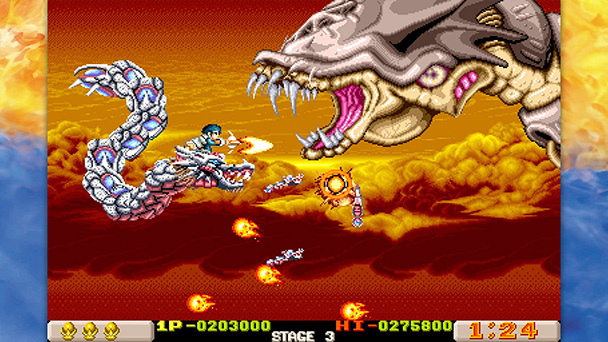
1989’s Dragon Breed is an accomplished horizontally-scrolling shooter that blends fantasy visuals with Irem’s traditional difficulty. Instead of the customary spaceship, you’ll ride across a flying dragon named Bahamoot. Initially, you’ll have to rely on the protagonist’s forward-firing crossbow to take down the formations of enemies that streak across the sky.
But your scaley steed is no pushover. You can use Bahamoot’s indestructible body to block projectiles and even encircle foes to kill them. Colored power-ups offer additional abilities, with red ones generating fireballs and gold orbs launching crescents that careen around the screen. Silver power-ups spawn a flock of small dragons while the blue ones summon electrical bolts from your dragon’s underside. Pleasingly, picking up power-ups of the same color strengthens each perk. Given Bahamoot’s formidable offensive abilities, Dragon Breed is invigorating and it’s easy to overlook that the need for protecting his rider.
Sweeping with the Magic Defense Force Gun Broom
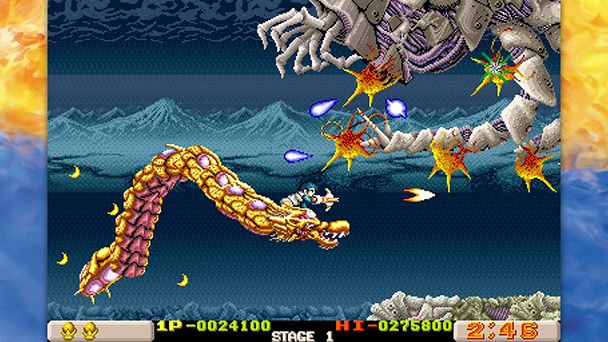
Released by Irem in 1992, Mystic Riders (aka Mahou Keibitai Gun Houki) arrived when arcade shoot-’em-ups were trying to evolve from the typical sci-fi and militaristic settings. And with its broomstick-riding wizards and fairy tale-inspired enemies, Riders represented a clear deviation from the alien-infested space stations of R-Type.
When it comes to gameplay, Mystic Riders will undoubtedly draw comparison to 1991’s Cotton: Fantastic Night Dreams which also centered on a witch who flew through colorful horizontal-scrolling levels and faced off against dreamlike opponents. The gothic visuals would later show up in 2007’s Deathsmiles, which would intensify the bullet counts and the sense of personality.
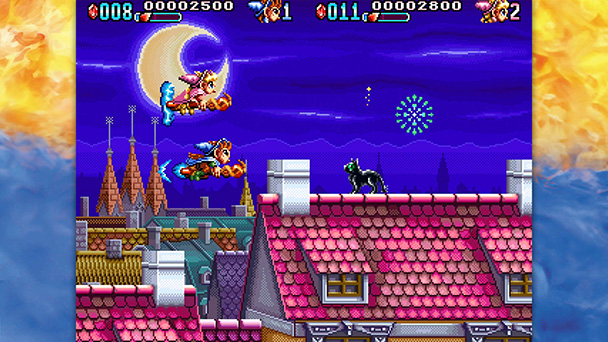
Like its peers, Mystic Riders ushered in a lighter take on the shooter, while adhering to the conventions of having adversity buzz around you. Beyond additions like melee-style attacks, the ability to fling your broom, and charging your weaponry, success required arcade essentials like quick reflexes and the ability to memorize patterns. Best of all, it’s one of Irem’s more lenient shooters that doesn’t force players to restart a stage after failure.
Entertaining Games, Solid Emulation, but Meager Extras
Expectedly, Irem Collection Volume 3 supplies the essentials that accompany modern emulation, from the ability to rewind play, wallpaper that can fill the peripheries of the screen, to shaders that simulate the look of playing on a CRT. And while the trio of titles on this anthology are all solid, a lack of curation or proper archival materials makes this a half-hearted effort. Sure, hardcore retro fans will appreciate being able to play Irem’s lesser-known works on Switch. But they’ll likely wish the collection had honored its subjects with more than just emulated code.
Irem Collection Volume 3 was played on Switch with review code provided by the publisher.
OVERVIEW
GAMEPLAY - 75%
CONTROLS - 70%
AESTHETICS - 70%
ACCESSIBILITY - 65%
PERFORMANCE - 70%
VALUE - 60%
68%
OK
Irem Collection Volume 3 delivers a fun trio of less-known shooters with solid emulation, but the lack of any historical extras feels like a missed opportunity. For all of its retro charms, Volume 3 doesn’t adequately honor its meager collection of material.


No one I know is paying $25 for three games. That used to buy a collection with 30 games. Maybe if they bundle all the Item Volumes on a single physical cart, I MIGHT bite.
Collections are three games now? I remember getting the Sonic Genesis Collection and it had 48 games. Shit, it had more unlockable arcade games (7?) than this.